July has historically been the strongest month for primary aluminium production, and 2025 was no exception. Global output exceeded 3.8 million tonnes, a month-on-month increase of 3.17 per cent. Although this marked a record high, the growth rate was slightly weaker than the 4.07 per cent recorded a year earlier.
In total, global primary aluminium production reached 6.373 million tonnes in July, lifting year-to-date (YTD) output to 42.724 million tonnes, up 1.3 per cent from 42.177 million tonnes in the same period of 2024. The pace of growth, however, was slower than the 3.83 per cent rise during January–July 2024.
Oceania & China behind the momentum dip
While evaluating what dampened the momentum, a series of causes popped up. One among them was increased production costs due to surging raw material prices, including energy. In July, particularly, primary aluminium production missed its pace due to the sluggish growth in China and Oceania. In China, output in July 2025 grew by only 3.17 per cent M-o-M, amounting to 3.87 million tonnes, compared to the growth rate of 4.1 per cent to an output volume of 3.71 million tonnes during July 2024. In Oceania, on the other hand, production increased by 2.6 per cent in July 2025 versus a hike of 5.2 per cent in July 2024. Moreover, the production volume in July this year totalled 158,000 tonnes, down by 2.53 per cent Y-o-Y from 162,000 tonnes.
What happened in Oceania?
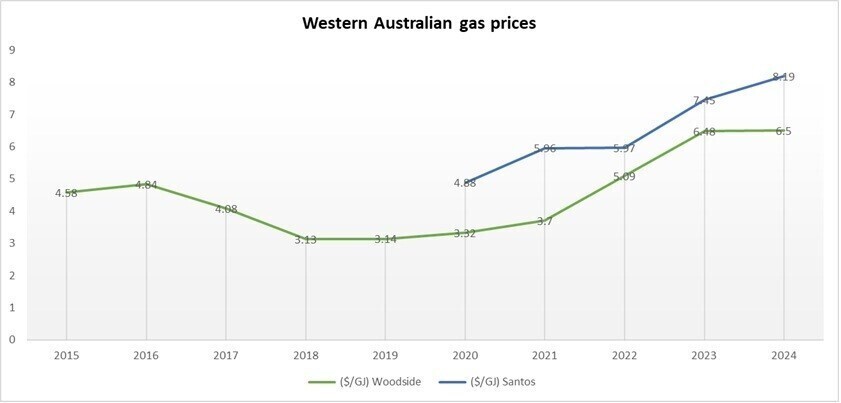
Australia, a key primary aluminium producer in the Oceania region, which otherwise sits on vast natural gas resources, is right now grappling with energy crises in the east coast and Western Australia. Since early July, Rio Tinto-owned Tomago facility is battling soaring power costs and a patchy supply of renewable energy. In August, the workers at the Tomago smelters informed that the plant could shut down by 2028 or even earlier, unless a new, affordable energy deal is secured, with both state and federal government support on the table to keep the operation alive.
Energy crisis happens when the demand for energy outstrips supply, resulting in high costs. This phenomenon started since the time geo-political tension between Ukraine and Russia broke out in 2022 and western countries stopped trading with Russia. Russia has been a major player in the world’s energy markets, being one of the top exporters of liquefied natural gas (LNG), which is the largest fuel source for electricity generation. Russia’s LNG exports halved since 2022 and prices remained high in many locations even years after the initial Ukraine-Russia tension. Given the industry's massive gas consumption, even a few dollars more per gigajoule translates into hundreds of millions in additional annual costs, potentially adding a staggering amount to the sector's energy bill. This surge is eroding margins, threatening global price competitiveness, forcing operators to scale back production, delaying upgrades, and even accelerating costly shifts to alternative technologies.
Saga of North America & GCC
Slower growth rate in North America and GCC’s primary aluminium production also slowed down the momentum of the world’s output in July. While in North America, primary aluminium output increased by 2.16 per cent M-o-M in July 2025 versus 3.4 per cent hike during the same period of the previous year, GCC’s primary metal output saw an escalation of 2.6 per cent versus 3.09 per cent. North America’s primary aluminium production in July amounted to 330,000 tonnes, compared to 334,000 tonnes, while that in the GCC countries stood at 520,000 tonnes against 533,000 tonnes a year earlier. These data reflect annual declines in both the regions by about 1.2 per cent and 2.44 per cent, respectively.
Even North America is facing a hit in primary aluminium production due to significantly higher and less competitive energy costs. Norway-based Hydro has told CNBC that a rise in power demand driven by artificial intelligence is likely to keep electricity prices at unaffordable levels to start new smelters in the near future. High energy costs are pushing the smelters shut down their facilities, instead of developing the domestic primary aluminium market as envisioned by Donald Trump’s 50% tariff goal.
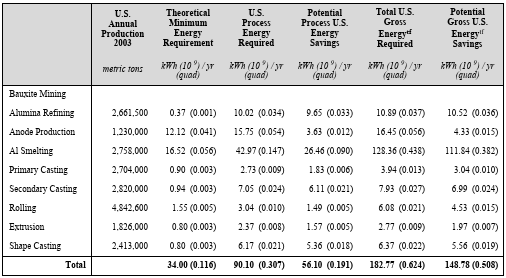
The US aluminium industry directly consumes 45.7 x 10⁹ kilowatt hours (0.16 quad) of electricity annually or 1.2 percent of all the electricity consumed by the residential, commercial, and industrial sectors of the U.S. economy. This is equivalent to the electricity consumed by 5,222,000 US households annually.
US energy consumption & savings
Primary aluminium producers in the US would ideally require a 20-year power contract at or below USD 40 per megawatt-hour. But in the current situation, power-purchase agreements for US renewable energy projects are in the range of USD 50 to USD 60 per MWh. Tech giants like Microsoft have signaled their willingness to pay even USD 100 per MWh for electricity from nuclear and fossil-gas plants to fuel their data centers, giving those firms an advantage over price-sensitive buyers in the race for electricity.
From the above data, the evidence is clear that energy crisis is the culprit for primary aluminium production slowdown across the world. Solution? Recycling is currently the most viable solution that requires 95 per cent less energy than the primary aluminium smelting.














_md.webp)








