China’s 45Mt aluminium cap pushes producers overseas as global dominance grows

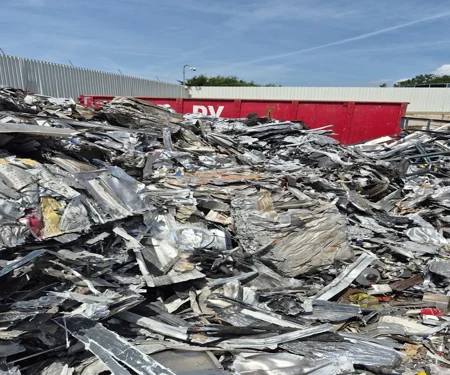
Stock image for referential purposes only
China’s aluminium industry is running close to its limits in 2026. As Shanghai aluminium prices near a three-month high, historically low raw material costs and strong smelter margins encourage producers to operate at maximum capacity. National aluminium output remains above Beijing’s 45-million-tonne cap, projected to reach 46 million tonnes by the ned of 2026. But with the ceiling still firmly in place, Chinese producers are taking projects overseas to Indonesia, Kazakhstan, Angola and Saudi Arabia, strengthening China’s position in the global aluminium supply chain.
Domestic capacity leaves little room to grow
In August, Chinese smelters were operating at 99.7 per cent of effective capacity, estimated by AZ Global Consulting at 45.26 million tonnes.
This is in line with AL Circle’s study that in the first half of 2026, China produced 22.34 million tonnes of aluminium, up 2.24 per cent Y-o-Y from 21.85 million tonnes in H1 2025.
An uninterrupted production trend may give it a boost of about 2.38 per cent during H2, taking the annual production cumulative of 2026 to 46.03 million tonnes, exceeding the production ceiling by 0.5 per cent, which, according to the nation’s output trend, is likely to keep surging.
Chinese producers are also benefiting from an oversupplied domestic alumina market. Alumina, the key raw material for aluminium smelting, remains in chronic surplus, keeping prices at very low levels and supporting smelter margins.
However, with domestic production already operating at such high utilisation rates, China’s overseas expansion projects venture on, raising production capacity, but beyond the national border.
Indonesia becomes a major overseas target
Indonesia has emerged as a major destination, helped by industrial parks, power infrastructure and logistics networks originally developed for the country’s nickel-processing industry.
Tsingshan Group, a major force behind Indonesia’s nickel expansion, has partnered with Chinese aluminium producers Huafon Group and Xinfa Group to develop the Hua Chin and Juwan aluminium smelters.
The existing infrastructure has allowed the projects to move rapidly.
Hua Chin began operations last year with an annual capacity of 480,000 tonnes. In May, the company applied to have its “HCAI” brand listed on the London Metal Exchange.
Juwan shipped its first aluminium to the United States in March, while Indonesian company PT Alamtri Resources Indonesia followed with its first shipment to the US in June. China’s Zhejiang Lygend Mining holds a minority interest in Alamtri.
The developments highlight how Chinese producers can continue adding aluminium capacity outside their domestic production ceiling.
Expansion stretches to Kazakhstan, Angola and Saudi Arabia
Chinese-backed aluminium projects are also emerging beyond Southeast Asia.
In Kazakhstan, Xinfa is preparing a full-cycle industrial park with planned aluminium capacity of 2.4 million tons per year. East Hope Group is separately developing a 1 MTPA bauxite-to-aluminium facility worth USD 12.6 billion.
In Angola, a Chinese consortium led by Hebei Huatong Wire and Cables Group is backing a new aluminium smelter in the Barra do Dande Free Trade Zone.
The project’s first phase has a capacity of 120,000 tonnes and was built using equipment transferred from China. The equipment likely came from an older smelter that was closed as part of China’s domestic capacity-replacement system.
That effectively gives the capacity-swap mechanism an international dimension, with equipment and production capability moving from an older Chinese facility into a new overseas project.
In Saudi Arabia, the Shandong Innovation Group is leading the Saudi Red Sea Aluminum Industry Chain Comprehensive Project to establish an integrated aluminium park, aimed at a 500,000 TPA production capacity. The Hangzhou Jinjiang Group has proposed a 1 MTPA aluminium smelter in Jazan, expected to benefit from the region’s integrated industrial infrastructure and energy availability.
These effectively give the capacity-swap mechanism an international dimension, with equipment and production capability moving from an older Chinese facility into a new overseas project.
China’s global aluminium share continues to rise
China introduced its 45-million-tonne aluminium capacity ceiling in 2017 after a rapid expansion in smelting.
By the end of that year, authorities had shut down 5.37 million tonnes of capacity and 6.19 million tonnes of “non-compliant” capacity, according to Wen Xiangjin, Deputy Head of the China Nonferrous Metals Industry Association.
Under the new system, companies seeking to build a greenfield aluminium smelter had to close an existing facility with equivalent capacity.
Strict enforcement of the policy encouraged technological upgrades across the industry, with newer and more efficient plants replacing older facilities. Producers also became increasingly capable of raising output with operational improvements and without formally increasing their stated capacity. This was described by AZ Global Consulting as “not an immutable physical limit.”
China already accounts for around 60 per cent of global aluminium production. Following the loss of aluminium output in Gulf countries during the Iran war, that share has risen to approximately 63 per cent.
The expansion of Chinese-backed smelters overseas could push that dominance further, particularly while domestic production remains constrained by the 45-million-tonne capacity ceiling.
For Chinese producers, the strategy is becoming clear: when there is little room to add capacity at home, build it elsewhere.
The expansion projects reflect China’s efforts to keep carbon emissions under control without exceeding its 45-million-tonne aluminium production cap within the country. However, they do not eliminate the broader challenge of reducing emissions associated with primary aluminium production.
LME aluminium price chart rises further to $3,325/t; stocks remain stable
Next articleAlcoa strikes $3.1b cash-and-stock deal for South32’s key aluminium assets
Grow with
AL Circle