AlCircle News Edited By "Aranya Mondal"

Aranya Mondal is a content writer with two years of professional experience in business writing, technical writing, web content, editing, and research. She handles content creation and editing for online and offline channels to support brand growth and global engagement.

Technology is reshaping Europe's aluminium recycling value chain - meet the players behind this change
An old car engine, a stack of used beverage cans, a demolished window frame and even a retired solar panel may look like waste, but across Europe they are increasingly being treated as valuable raw materials. What determines whether they end up in landfill or become high-grade recycled aluminium is one thing: technology. With the help of advanced technologies, recycling rates in Europe already exceed 90 per cent in sectors such as automotive and construction, while aluminium beverage cans are recycled at rates of around 75 per cent. Behind these numbers is a network of sorting specialists, furnace makers, recyclers and collection companies that are quietly reshaping the aluminium supply chain. For many recyclers, the process starts long before the metal reaches a furnace. The first...

China’s 33% red mud generation growth goes hand-in-hand with alumina production - ore beneficiation and waste utilisation in focus
China's alumina industry has been expanding steadily over the past six years. Production has increased from 71 million tonnes in 2020 to around 92.9–94.5 million tonnes in 2025, an overall rise of about 31–33 per cent. But behind every new tonne of alumina lies another, less visible story that begins in the bauxite mines and after the refining process leaves behind a highly alkaline by-product known as red mud. To understand why this residue is becoming an increasingly important issue, it is necessary to look at the raw material that feeds China's refineries. It all starts with the ore Every tonne of alumina begins with bauxite, but the quality of that bauxite determines how efficiently it can be refined and how much waste is left behind. Here, China faces a structural challenge. Only 25...

India’s aluminium consumption in transportation grows 14% in five years, yet vehicles carry only 40-50kg vs 160-200kg globally – know why
Aluminium consumption in India's transportation sector increased from 0.70 million tonnes in 2020 to 1.35 million tonnes in 2025, nearly doubling in five years at a compound annual growth rate (CAGR) of about 14 per cent. The growth momentum is expected to continue, with consumption projected to reach 3.82 million tonnes by 2035. In comparison, global transportation-sector aluminium consumption rose from 22.57 million tonnes in 2020 to 27.1 million tonnes in 2025, reflecting a CAGR of 3.73 per cent. However, growth in overall consumption masks a structural gap. Despite producing more than 28 million vehicles in 2023-24 and recording strong growth in electric mobility and transport infrastructure, aluminium use per vehicle in India remains significantly lower than in major automotive...

From record profits and EV demand shifts to giga-casting: Key developments in aluminium's downstream markets
The downstream and end-user segments of the aluminium industry delivered a diverse mix of developments, ranging from corporate earnings and infrastructure-led demand growth to changing electric vehicle sales patterns and new manufacturing technologies. Aluminium processors benefited from stronger prices in several regions, automakers continued increasing the metal's role in vehicle design, and innovations in casting and packaging highlighted how aluminium applications are evolving beyond traditional markets. At the same time, supply-chain concerns and regional demand shifts underscored the challenges facing some of the industry's largest consumers. Earnings diverge across downstream aluminium companies Recent corporate results showed that while higher aluminium prices supported several...

Aluminium producers see fiscal gains as Middle East crisis and China’s capacity cap fuel price rally
A supply shock in West Asia is reshaping the global aluminium market. Disruptions to smelters, shipping routes and regional energy supplies have tightened aluminium availability and pushed London Metal Exchange prices to a four-year high, bringing the market closer to the USD 4,000-per-tonne threshold. The disruption comes at a time when the global aluminium market has averaged a supply deficit of less than 0.5 million tonnes over the past five years. Also, the 45 million tonne cap on China's primary aluminium output leaves limited room for the country to increase production and offset any shortfall from the Gulf Cooperation Council (GCC) region. While consumers grapple with higher costs and supply uncertainty, aluminium producers are benefiting from higher prices. Improved realised...

Guinea's 150Mt bauxite export cap may create a market deficit of 33Mt - Can the world make up the difference?
For the past few years, Guinea has been the driving force behind the global bauxite trade. Production expanded rapidly, exports climbed to record highs, finding their way to refineries across the world. But after years of pushing output higher, Guinea is now considering a different approach - a possible export cap of around 150 million tonnes. Such a move would mark a major shift for a country that exported nearly 183 million tonnes in 2025. If introduced, the cap could remove almost 33 million tonnes from the market, raising questions about where the industry would find replacement supply. The proposal comes at a time when market conditions have changed significantly. Bauxite prices have fallen, freight costs have risen and concerns over surplus have grown. For Guinea, which holds an...

Trump eases aluminium and copper tariffs to accelerate domestic manufacturing investment
US President Donald Trump has signed a new proclamation revising tariffs on selected aluminium, copper and iron imports, introducing temporary changes aimed at encouraging domestic manufacturing investment while maintaining protection for key American metal industries. Under the revised framework, tariffs on certain steel and aluminium derivative products -including some agricultural machinery, residential heating systems, air conditioning units and ventilation equipment - will be reduced from 25 per cent to 15 per cent. The proclamation also widens the category of industrial products eligible for a 15 per cent tariff treatment. Mobile industrial equipment such as bulldozers and forklifts imported from countries covered under US trade agreements will now qualify for the lower rate. At the...

Middle East tensions push Japan’s aluminium prices higher as Gulf imports fall 13%
Japan’s aluminium market is facing growing uncertainty as escalating tensions in the Middle East begin disrupting one of the country’s most critical supply routes for the metal. For years, Japan has relied heavily on Gulf producers such as the United Arab Emirates and Saudi Arabia, with the region supplying around 20 per cent of the country’s raw aluminium imports thanks to its low electricity costs and large-scale smelting capacity. But the worsening crisis around the Strait of Hormuz is now exposing the risks of that dependence. The effective blockade of the waterway has disrupted bauxite and aluminium supply chains across the region, forcing some smelters in countries such as Qatar and Bahrain to reduce operations. Adding to the pressure, Emirates Global Aluminium PJSC - one of the...

Europe aluminium recycling facts: Amidst 8MT demand and 66% scrap export surge, recycling grows over 80%
Every year, millions of tonnes of aluminium scrap are collected, sorted and processed across Europe before being turned into new products. From used beverage cans and demolished buildings to end-of-life vehicles and industrial waste, recycled aluminium has become an important raw material in Europe’s shift towards a lower-carbon and more circular economy. Demand for recycled aluminium is also rising steadily. Europe’s aluminium scrap demand stood at around 6.6 million tonnes in 2021 and in 2025, it generated around 8 million tonnes - an increase of around 21.1 per cent - driven by stricter recycled-content targets, decarbonisation policies and growing demand from sectors such as automotive, construction and packaging. With demand for recycled aluminium continuing to rise, Europe’s scrap...

Press Metal Q1 net profit jumps 35% to a record MYR 624.5M on higher aluminium prices
Press Metal Aluminium Holdings posted a record net profit of MYR 624.5 million for the first quarter ended March 31, 2026 (Q1 FY2026), up 35.2 per cent from MYR 461.77 million a year earlier, extending its streak to a third consecutive quarter of record earnings. The aluminium smelter said stronger aluminium prices, higher sales volumes and lower input costs supported the earnings growth. Quarterly revenue rose 5.2 per cent to MYR 4.1 billion, driven by improved delivery volumes and firmer realised aluminium prices . The group declared a first interim dividend of 2.5 sen per share, payable on June 30, representing a payout ratio of 33 per cent. On a quarter-on-quarter basis, profit before tax increased 9.6 per cent, supported by firmer metal prices despite the ringgit strengthening...

Saint-Gobain to shut alumina-zirconia-silica line in Falconer, 79 jobs affected
Saint-Gobain is discontinuing production of its Alumina-Zirconia-Silica (AZS) line at the SEFPRO facility in Falconer, a move that will result in the loss of 79 union and salaried positions linked to the operation. Production on the AZS line is expected to end in August, according to a company statement released on Wednesday. The Falconer facility, formerly known as Monofrax, will continue operating its remaining product lines despite the shutdown. “This will not impact every product line at Falconer, and the facility will continue the production of its remaining product lines,” the company stated. “This decision comes after careful consideration and evaluation of Saint-Gobain’s core business goals and is in line with the company’s mission and strategy. The company values and thanks all...

Ukraine considers using red sludge from Mykolaiv alumina plant in roads after Korea pilot tests
Authorities in Ukraine’s Mykolaiv region are considering launching a pilot project to use industrial sludge, including possible alumina red sludge, in road construction after experimental testing in South Korea reportedly showed positive durability results. The proposal was discussed by Mykolaiv Regional Military Administration head Vitalii Kim during a broadcast with Media Center Ukraine following his visit to South Korea. According to Kim, cooperation with Korean companies has been ongoing since 2023, during which Ukraine supplied industrial sludge samples for testing in road-building technologies. Kim said an experimental road section built in South Korea using the material remained stable for around a year, encouraging authorities to consider similar applications in Ukraine once the...

With around 30% of aluminium imports linked to the Gulf, Japan carmakers face rising cost squeeze
Japan’s automobile industry is facing growing concerns as disruptions in Middle Eastern aluminium supplies continue to push prices higher, increasing procurement costs and raising fears of specialised alloy shortages through 2027. The country is considered one of the most exposed to the disruption because of its dependence on aluminium and alloy imports from the Middle East. Based on 2024 UN Comtrade data, Japan is the most reliant on the region among the world’s five largest aluminium importers. The Middle East currently supplies around 30 per cent of Japan’s aluminium and aluminium alloy imports, making the country particularly vulnerable as supply disruptions tighten the global market. Following rising geopolitical tensions since the end of February, aluminium prices on the London...

LME Aluminium offer price falls 0.56% on May 27 after touching four-year high; Opening stocks dip 0.04%
LME aluminium prices eased on May 27 compared to the previous session, while December 2027 contracts moved higher and cancelled warrants increased sharply. The LME aluminium cash bid price stood at USD 3,737.5 per tonne on May 27, down 0.55 per cent from USD 3,758 per tonne on May 26. The cash offer price slipped 0.56 per cent to USD 3,738 per tonne from USD 3,759 per tonne a day earlier. LME aluminium 3-month prices also declined. The 3-month bid price fell 0.46 per cent to USD 3,663 per tonne on May 27 from USD 3,680 per tonne on May 26, while the 3-month offer price dropped 0.49 per cent to USD 3,664 per tonne from USD 3,682 per tonne. In contrast, longer-dated contracts strengthened. The December 2027 aluminium bid price rose 0.40 per cent to USD 3,265 per tonne on May 27 from USD...

Alcoa gains 4.47% as aluminium prices hit four-year high amid China and Middle East supply fears
Shares of Alcoa gained sharply after aluminium prices on the London Metal Exchange (LME) climbed to their highest level in four years, supported by concerns over possible production cuts in China and continued disruptions in the Middle East. Alcoa shares closed at USD 71.38 on May 22 before extending gains to USD 74.57 on May 26 after touching an intraday high of USD 75.57. Between the May 22 and May 26 closing prices, the stock advanced around 4.47 per cent. The rally in the stock followed another strong move in aluminium prices. LME aluminium futures rose around 1.3 per cent to USD 3,697 per tonne as of May 26. According to LME data dated May 26, 2025, the c ash offer price stood at USD 3,759 per tonne , while the three-month offer price was at USD 3,682 per tonne, marking the highest...

Western governments’ critical minerals push raises fears of aluminium oversupply
Western governments are investing billions of dollars into critical minerals and strategic metals as they try to reduce dependence on China, but industry leaders are warning that the push could recreate the kind of commodity oversupply crises that once flooded global aluminium and other markets. Executives, investors and analysts say the race to secure supply chains for minerals used in electric vehicles, semiconductors, defence systems and renewable energy technologies carries the risk of creating far more production than global markets actually need. Brett Beatty, a partner at Resource Capital Funds, which supplies the US government with niobium and tantalum through its holdings in Global Advanced Metals said, “The biggest risk is we all do our own thing. We all generate multiples of...

Hindalco, NALCO jump up to 5% as global aluminium prices hit four-year high
Shares of Hindalco Industries Limited and National Aluminium Company Limited (NALCO) rose up to 5 per cent on Wednesday after global aluminium prices climbed to their highest level in nearly four years. Shares of Hindalco Industries gained 4.32 per cent to INR 1,151.50 on the NSE at around 10:30 am, while NALCO advanced as much as 5 per cent to INR 435.95 per share. The Nifty Metal index also emerged as one of the top-performing sectoral indices, rising nearly 3 per cent during the session. All 15 constituents of the index traded in positive territory, with Hindalco and NALCO leading the gains. Global aluminium prices surged amid concerns over possible production cuts in China and continuing supply disruptions linked to tensions in West Asia. On the London Metal Exchange (LME), aluminium...
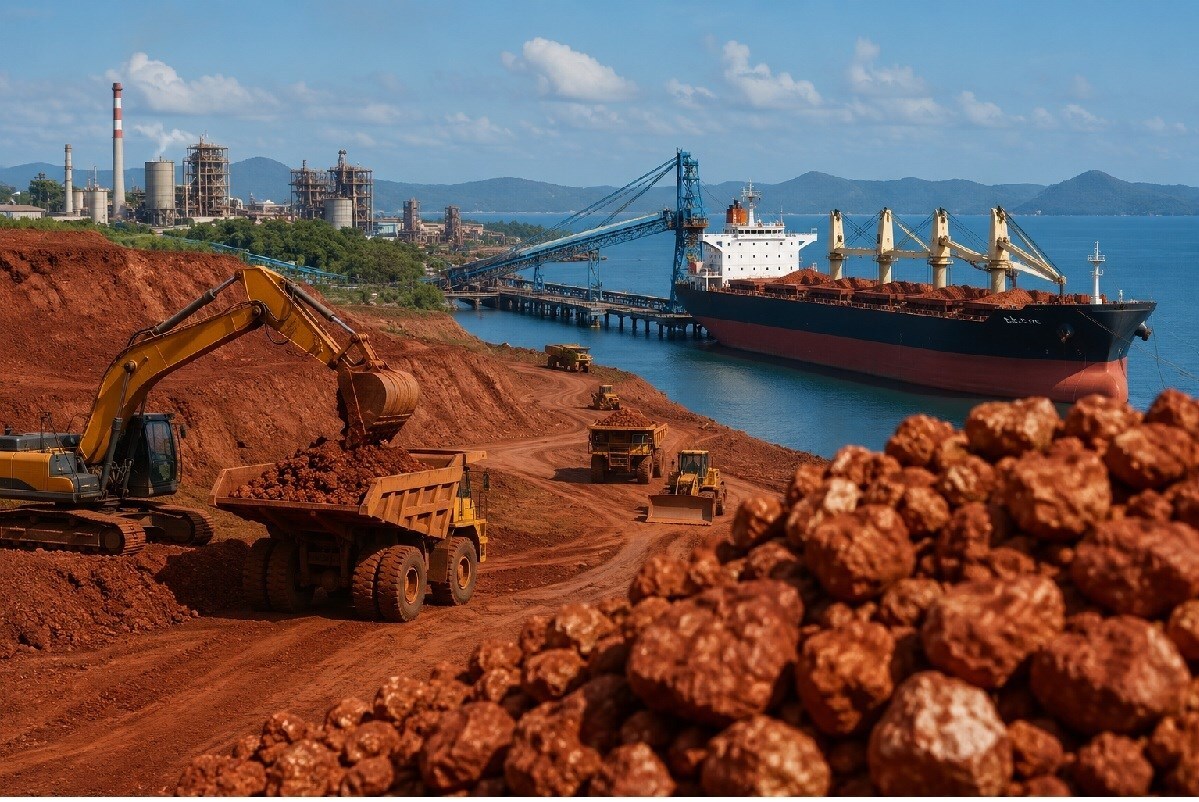
India’s bauxite production seen rising to around 45Mt, yet import dependency likely to stay 20%
India’s bauxite industry is entering a new phase of expansion as domestic production and imports rise simultaneously. The country produced around 25 million tonnes of bauxite in 2025, slightly higher than the 24 million tonnes recorded in 2024. However, despite increasing domestic mining activity, imports also surged sharply to nearly 4.9 million tonnes from 4.1 million tonnes a year earlier, marking year-on-year growth of around 20 per cent. The trend points to a larger structural shift unfolding in India’s aluminium sector. As refinery capacities continue expanding, aluminium producers are increasingly prioritising stable and high-grade bauxite supplies for long-term operations, making imported ore important alongside domestic production. India currently produces around 9.5 million...

