Europe aluminium recycling facts: Amidst 8MT demand and 66% scrap export surge, recycling grows over 80%
The image used in this article is generated with an AI tool and does not depict any real-time moment
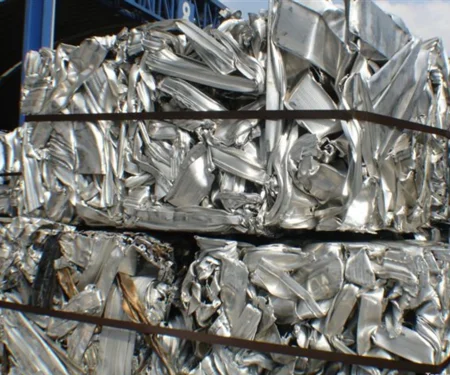
Every year, millions of tonnes of aluminium scrap are collected, sorted and processed across Europe before being turned into new products. From used beverage cans and demolished buildings to end-of-life vehicles and industrial waste, recycled aluminium has become an important raw material in Europe’s shift towards a lower-carbon and more circular economy.
Demand for recycled aluminium is also rising steadily. Europe’s aluminium scrap demand stood at around 6.6 million tonnes in 2021 and in 2025, it generated around 8 million tonnes - an increase of around 21.1 per cent - driven by stricter recycled-content targets, decarbonisation policies and growing demand from sectors such as automotive, construction and packaging.
With demand for recycled aluminium continuing to rise, Europe’s scrap generation and export is increasing as well. The region generated around 7 million tonnes of aluminium scrap in 2025, yet nearly 1.4 million tonnes - roughly 20 per cent of total volumes - is projected to leave the region instead of being recycled within Europe itself.
That growing dependence on recycled aluminium is making scrap increasingly strategic for Europe’s industrial and climate goals. Recycled aluminium uses only around 5 per cent of the energy required for primary production from bauxite ore, reducing energy consumption by nearly 95 per cent.
In Europe, it also generates around 92.4 per cent lower CO₂ emissions compared with primary aluminium production, while global emissions reductions can reach 96.6 per cent. Overall, every tonne of recycled aluminium can save nearly 9 tonnes of CO₂ emissions, strengthening its role as a critical low-carbon industrial resource.
Advanced technologies reshape Europe’s recycling industry
Much of the recent growth in Europe’s recycling sector is being driven by rapid technological changes aimed at improving efficiency, sustainability and material recovery.
Closed-loop recycling systems are becoming increasingly common, allowing aluminium to stay within the same product stream instead of being downgraded into lower-value applications. That is helping reduce dependence on primary aluminium while strengthening circular economy models.
Sorting technologies have also advanced significantly in recent years. Recycling facilities are increasingly using eddy current separators, X-ray transmission systems, robotics and automated sorting technologies to improve the speed and accuracy of aluminium separation. These systems are helping recyclers recover more material while lowering labour costs and improving overall efficiency. Alloy sorting technologies are also allowing producers to manufacture higher-quality recycled aluminium with more precise alloy compositions.
The industry is also finding new ways to recover valuable materials from waste streams that were previously difficult to process. Salt slag recycling technologies are helping recover aluminium and useful by-products from smelting waste, while high-temperature systems such as rotary furnaces and plasma arc technologies are reducing the energy needed during melting and refining operations.
At the same time, recycled aluminium is finding growing use in additive manufacturing and 3D printing applications, particularly for lightweight industrial components and advanced manufacturing.
Other technologies are improving metal purity and recovery rates. Nano-filtration systems, advanced filtration technologies and Laser-induced Breakdown Spectroscopy (LIBS) are helping recyclers remove impurities and identify alloy compositions more accurately. Waste heat recovery systems are also helping facilities improve energy efficiency and reduce environmental impact.
Research institutions are contributing to the innovation push as well. Scientists at Vienna University of Technology have developed nanocatalysts made from used batteries and aluminium foil capable of converting carbon dioxide into methane fuel. Meanwhile, engineers at Massachusetts Institute of Technology are advancing nanofiltration systems that can recover aluminium ions from industrial waste streams while reducing hazardous waste generation.
Deposit Return System (DRS) technology is also becoming a major driver of aluminium recycling growth across Europe, particularly for beverage cans. Consumers return used cans in exchange for deposit refunds, helping improve both collection rates and scrap quality. Countries including Germany, Norway, Sweden and Finland already operate some of Europe’s most advanced DRS networks using reverse vending machines, barcode recognition, AI-enabled sorting and automated collection systems. Companies such as TOMRA Recycling are playing an increasingly important role in developing DRS infrastructure and high-purity aluminium recovery technologies across Europe.
Other emerging developments include technologies designed to remove iron and manganese impurities from molten aluminium scrap, improving recycled metal quality. Internet of Things (IoT)-enabled systems are also helping recycling plants monitor and optimise operations in real time. But these are only part of the broader transformation currently reshaping the global recycling industry, as explored in the World Recycled Aluminium Market Analysis Industry Forecast to 2032 report
Europe’s recycling leaders ramp up investments
Several companies are now leading Europe’s aluminium recycling expansion through major investments and technology upgrades.
Hydro has emerged as one of the region’s most aggressive investors in aluminium recycling. The company is expanding recycling capacity across Europe, including a EUR 180 million recycling plant in Spain, while also advancing its HySort technology that uses LIBS for complex scrap sorting. Hydro is targeting up to 1.1 million tonnes of post-consumer scrap capacity by 2030.
Its subsidiary Alumetal is expanding advanced alloy recycling and renewable-energy-powered recycling operations in Poland and Hungary, with Hydro’s proprietary HySort technology expected to become operational at Alumetal facilities soon.
Befesa continues investing in aluminium salt slag recycling and hazardous waste recovery technologies that help recover aluminium and valuable by-products from industrial waste streams.
Meanwhile, TOMRA Recycling is developing AI-enabled sensor sorting systems, advanced alloy separation technologies and high-purity aluminium scrap identification systems that are increasingly being adopted across Europe’s recycling industry.
Constellium is expanding closed-loop recycling systems and automotive aluminium recovery technologies for aerospace and transport applications. At the same time, EGA Leichtmetall announced a EUR 145 million investment in late 2025 to expand aluminium recycling capacity in Germany, including 110,000 tonnes of sorting capacity and 153,000 tonnes of melting and casting capacity scheduled to begin production in 2028.
At the research level, AIT Austrian Institute of Technology is leading several EU-funded projects focused on advanced aluminium recycling, digital traceability systems and circular aluminium supply chains through initiatives such as RecAL.
Europe’s recycling success is also pushing scrap exports higher
Europe’s improving recycling rates are increasingly becoming linked to rising scrap exports. Recycling rates already exceed 90 per cent in sectors such as automotive and construction, while aluminium beverage cans achieve recycling rates of around 75 per cent. But as Europe collects and processes more aluminium to support circular economy and decarbonisation goals, overseas demand for low-carbon secondary aluminium has intensified as well.
Buyers, particularly in Asia, are competing aggressively for European scrap supplies.
As a result, Europe’s aluminium scrap exports have risen by roughly 66 per cent since 2014, highlighting how competition for recyclable low-carbon raw materials is intensifying globally. The shift has become especially visible over the past five years, even as Europe’s own demand for recycled aluminium continues rising.
Back in 2020, Europe handled around 6.2 million tonnes of aluminium scrap, with roughly 84.7 per cent retained within the region for recycling. Exports accounted for around 15 per cent of total volumes, equivalent to nearly 962,000 tonnes, according to IAI data.
By 2021, Europe managed around 6.7 million tonnes of scrap and exports climbed to nearly 1.2 million tonnes, representing close to 18 per cent of total volumes. Although exports eased slightly in 2022 to around 1.1 million tonnes, accounting for 16.2 per cent of roughly 6.9 million tonnes processed, the slowdown proved temporary.
In 2023, overseas shipments rebounded to nearly 1.2 million tonnes as Europe once again managed close to 7 million tonnes of aluminium scrap. Exports accounted for around 18.2 per cent of total volumes, reflecting stronger overseas demand for recyclable aluminium feedstock.
Then came 2024, when Europe managed around 6.9 million tonnes of aluminium scrap during the year, but exports surged to nearly 1.4 million tonnes - around 20.2 per cent of total volumes. The trend highlights growing pressure on Europe’s recycling ecosystem amid rising global demand for secondary aluminium and tightening scrap availability, according to the World Recycled Aluminium Market Analysis Industry Forecast to 2032 report.
Where is most of the scrap going?
Today, around 75-80 per cent of Europe’s aluminium scrap exports are directed towards Asia, making the region the largest destination for European scrap shipments. Countries such as India, China, Thailand, Türkiye and Pakistan continue increasing imports as global demand for secondary aluminium raw materials accelerates.
Europe exported 506,290 tonnes of aluminium scrap to India in 2021 before shipments declined by 8.3 per cent to 464,159 tonnes in 2022. Volumes later recovered to 499,936 tonnes in 2023 before easing slightly to 472,328 tonnes in 2024. In 2025, exports rebounded sharply by around 18.5 per cent year-on-year to 559,751 tonnes - the highest level recorded during the period.
China’s expansion has been even more dramatic. Europe exported 204,201 tonnes of aluminium scrap to China in 2021 before shipments surged by 77.4 per cent to 362,258 tonnes in 2022. Exports then climbed another 33.4 per cent to 483,428 tonnes in 2023 and increased further to 503,286 tonnes in 2024. In 2025, exports jumped another 24 per cent year-on-year to 623,919 tonnes, marking a fresh five-year high.
Thailand also emerged as a fast-growing destination. Europe exported 69,798 tonnes to Thailand in 2021 before shipments dipped slightly to 60,220 tonnes in 2022. Exports later surged by 73.9 per cent to 104,716 tonnes in 2023 and rose another 46.3 per cent to 153,201 tonnes in 2024 before easing to 130,212 tonnes in 2025.
Türkiye’s imports showed a more volatile trend. Imports stood at 139,672 tonnes in 2021, increased to 146,496 tonnes in 2022, fell sharply to 114,086 tonnes in 2023 and later recovered to 133,321 tonnes in 2024 and 142,351 tonnes in 2025.
Participate in our upcoming e-Magazine - Mine to Market: ALuminium Producers & Manufacturers 2026
The growing “scrap leakage” debate
Inside the industry, the rise in exports is increasingly being described as “scrap leakage”. The concern is straightforward: instead of remaining within Europe to support local recycling plants and low-carbon aluminium production, growing volumes of valuable scrap are being processed overseas.
The UK has become a major net exporter of aluminium scrap, exporting around 623,000 tonnes in 2025 while importing only around 90,000 tonnes.
The biggest reason remains price. Foreign buyers - especially in Asia - are often willing to pay significantly more for European scrap than local recyclers can offer. Countries including China and Türkiye continue expanding recycling capacity as they seek to lower emissions and reduce production costs, making imported scrap strategically important.
The United States has also added fresh pressure to global scrap flows. Washington recently doubled Section 232 tariffs on steel and aluminium products to 50 per cent while exempting scrap metal. The move created a lucrative arbitrage opportunity, allowing traders to import European scrap into the US tariff-free, process it there and later sell finished aluminium products behind tariff protection.
European aluminium scrap exports to the United States showed sharp volatility over the past five years, starting at around 14,499 tonnes in 2021 before dropping by nearly 61.5 per cent to 5,589 tonnes in 2022. Exports then rebounded by around 98.1 per cent to 11,073 tonnes in 2023 and rose another 13.4 per cent to 12,560 tonnes in 2024. The biggest jump came in 2025, when exports surged by nearly 191.6 per cent year-on-year to around 36,621 tonnes.
Brussels weighs export controls
Global trade rules are now adding another layer of tension to the debate. According to the OECD inventory of export restrictions on industrial raw materials, many countries importing European scrap already protect their own raw material supply through tariffs, licensing systems or export controls.
China imposes a 15 per cent export tariff on aluminium scrap, while Vietnam applies a 22 per cent tariff on aluminium waste and scrap under CN 760200. Malaysia maintains a 10 per cent export tariff alongside licensing requirements. Indonesia has implemented licensing systems on aluminium scrap exports and has also banned alumina exports.
Many European industry participants argue that these measures create an uneven market, with other countries protecting strategic raw materials while Europe remains comparatively open. The European Commission has already rolled out a metal scrap surveillance system in mid-2025 to monitor export flows more closely. The collected data is expected to support a formal review next year, after which policymakers may consider export duties, export licensing systems or mandatory recycled-content targets.
Brussels is also designing what it describes as a “balanced measure”, potentially involving export fees or restrictions on aluminium scrap exports. The aim is to preserve open trade while ensuring European industries retain enough recycled material to support industrial resilience and climate goals. A targeted consultation was launched in May 2026 ahead of the final regulation.
Industry remains divided
Despite growing political attention, the industry itself remains sharply divided over possible export restrictions. Scrap suppliers and traders strongly oppose export controls, arguing that high export volumes reflect weak domestic demand and insufficient European capacity to process mixed-grade scrap, particularly material from end-of-life vehicles.
The European Recycling Industries’ Confederation (EuRIC) believes the answer lies in strengthening domestic demand for recycled aluminium rather than imposing tariffs. Market participants estimate that a 25-30 per cent export tariff could add between EUR 50 and EUR 150 per tonne to export costs, while domestic scrap prices could rise by EUR 20-40 per tonne, especially for high-grade material.
For Europe, the aluminium scrap debate is no longer simply about recycling. It is increasingly becoming a wider discussion about industrial competitiveness, raw material security and whether the continent can retain enough recycled metal to support its long-term green transition.

Can recycling and innovation shield aluminium from global disruptions?
Next articleGlobal solar waste surge turns aluminium recovery into a strategic recycling opportunity
Grow with
AL Circle