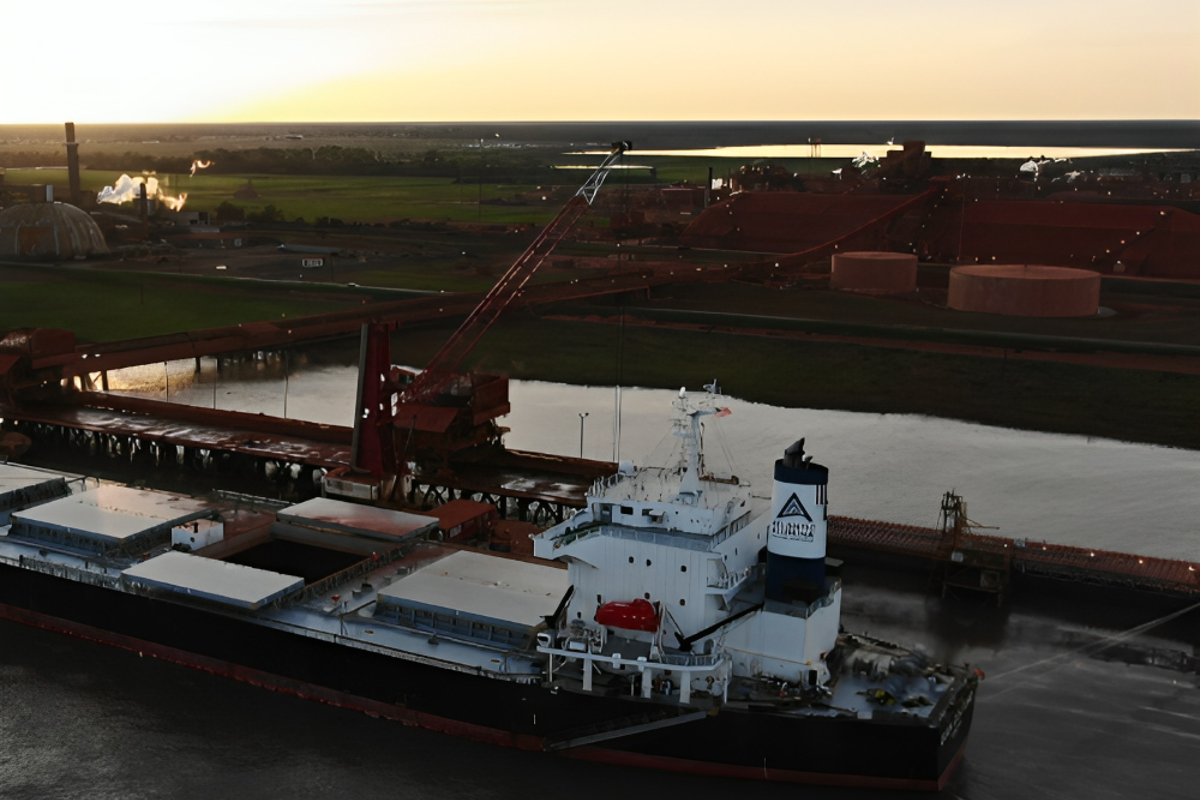
In the heart of Gramercy, Louisiana, a silent struggle unfolds. Atlantic Alumina’s refinery, the last remaining alumina plant in the United States, is grappling with the heavy toll of shifting trade policies on metal, cars and dozens of foreign exporters. What was once a thriving symbol of industrial resilience now stands at the crossroads of uncertainty and with it, the lives of more than 550 workers hang in the balance.
Atlantic Alumina, or Atalco, is the last operating alumina refinery in the US, between New Orleans and Baton Rouge. With 550 workers, the plant processes Jamaican bauxite into alumina, a white, sugar-like compound essential for making primary aluminium. Atalco supplies nearly 40 per cent of the nation's alumina needs. But despite its critical role, Atlantic Alumina finds itself vulnerable in a trade landscape that seems less about local empowerment and more about global politics.
“It’s been a very difficult operation,” said Mark Hansen, CEO of Concord Resources, which took majority ownership of Atlantic Alumina in 2021. “If our company closed, we would be the only point of failure for that entire industry in the United States.” His statement reflects the growing pressure trade policies have placed on the US aluminium industry. While tariffs on imported aluminium were intended to revive domestic production, they’ve done little to support alumina, the vital input still largely imported. With limited policymaker attention and no tariff protection on alumina, Hansen fears the industry’s foundation is at risk.
The federal government's announced tariffs, initially introduced to protect American industry, are paradoxically squeezing its very backbone. The refinery depends on imported bauxite, primarily from Jamaica. With tariffs and trade restrictions in place, the cost of raw materials has soared. For a facility already operating on tight margins, this has meant mounting financial strain and unpredictable supply.
The broader community in Gramercy is feeling the ripple effects. Families that have worked at the refinery for generations now fear job loss. Local businesses reliant on the plant’s economic activity worry about their future. Residents are caught in the growing tension between national trade agendas and regional economic realities.
For workers like Marvin Fleming, the issue is deeply personal. “Free trade did not work out well for us because it wasn’t free or fair trade,” he said. “In this case, we’re returning to a fair trade. Look, the United States can outcompete anybody.” Fleming’s sentiment highlights a broader frustration among those who feel left behind by decades of globalisation. Yet, his optimism is grounded in the belief that with the right policies, American industries can rise again, but only if they are supported, not strangled, by regulation.
“We are very encouraged by some of the actions that President Trump has taken,” said Charles Johnson, CEO of the Aluminum Association, referring to efforts to boost US smelting.
However, he emphasised that rebuilding domestic capacity could take up to a decade. In the meantime, the downstream aluminium sector depends heavily on foreign imports, particularly from Canada. Johnson and other stakeholders are urging exemptions for Canadian supplies, even as they support tariffs on low-cost metals from China.
The situation raises a crucial question: Are these trade measures truly serving the people they claim to protect? For the workers of Gramercy and countless others like them, the answer remains unclear. What is clear, however, is that without immediate attention and a balanced approach to trade policy, the US risks not only losing its last alumina refinery but also the trust of the very communities that power its industry.
Information source: https://www.nbcnews.com/