The global alumina market has endured a dramatic roller‑coaster in early 2025, witnessing a severe price slump in the first quarter and a raft of fresh supply hitting the market in the recent weeks. While analysts now eye a price floor in coming months, forecast revisions evidently highlights the fragility of near-term price momentum.
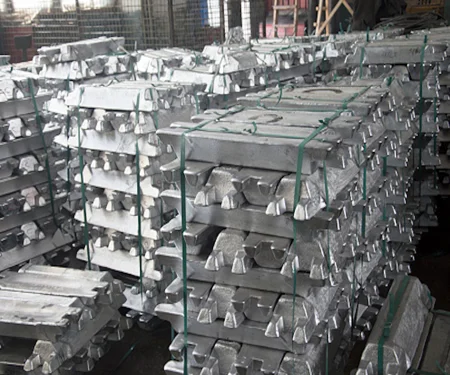
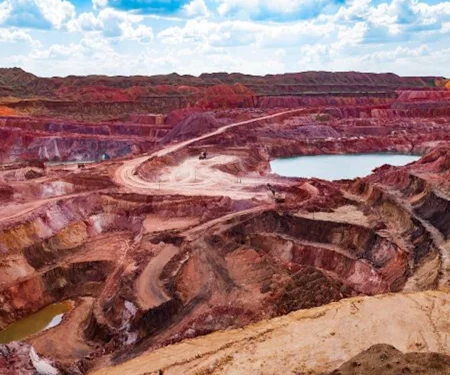
This AI-generated image is for representational purposes only
As of April 16, the benchmark price for Australian alumina stood at USD 347.50 per tonne on a FOB (Free on Board) basis — the price that covers the cost of transporting the goods to the port and loading them onto the ship, with the buyer covering the cost from that point onwards. This price point represents nearly a 50 per cent drop from where it stood at the beginning of January.
In comparison, Brazilian alumina exports are currently trading at a consistent premium over the Australian benchmark. The ‘FOB Brazil Atlantic Differential (AD)’ is a measure of how much more Brazilian alumina is fetching in the market relative to the Australian benchmark. As of the same date, this differential stood at a USD 20 per tonne premium. In other words, buyers are paying USD 367.50 per tonne for Brazilian alumina versus USD 347.50 per tonne for Australian alumina.
What’s noteworthy is that this USD 20 per tonne premium has remained stable throughout the first quarter (Q1) of the year.
Simultaneously, China’s domestic ex‑works Shanxi price slid to RMB 2,850 per tonne, reflecting widespread bearish sentiment.
The slump was primarily driven by the anticipated ramp-up of new refinery capacity across Asia. Indonesia’s Mempawah plant, a 1 million tonnes per annum JV between PT Inalum and Antam, began trial runs in late 2024, while Hangzhou Jinjiang and Shandong Nanshan each pushed ahead with million‑tonne expansions. Collectively, these projects promised to flood the market with an estimated 3 to 4 million tonnes of fresh alumina in Q2 and Q3, possibly leaving buyers reluctant to chase higher prices.
Reflecting the rapid supply wave, UBS has shaved roughly 20 per cent off its alumina price forecasts for the second through fourth quarters of 2025. After spot alumina topped USD 800 per tonne in December 2024, prices tumbled below USD 400 per tonne by late March — a correction faster than UBS had anticipated. The bank now projects an average price of around USD 440 per tonne for 2025, down from earlier estimates north of USD 550 per tonne.
Key to UBS’ reassessment is China’s record run rates, with output up 9 per cent year‑to‑date and new capacity additions slated to reach over 7 million tonnes in 2025. Meanwhile, Guinea bauxite imports to China rebounded by 25 per cent YTD, buttressed by the prospective restart of Emirates Global Aluminium’s Guinea Alumina Corporation mine and developing projects in Indonesia and India.
Overlaying the supply dynamics is a backdrop of intensified tariff volatility. US levies on steel and aluminium, re‑imposed under Section 232 with a baseline 10 per cent duty and country‑specific surcharges, have prompted smelters worldwide to reassess expansion plans and shipping routes. Though the US has granted a 90‑day respite on reciprocal measures for non‑Chinese suppliers, the looming prospect of renewed tit‑for‑tat duties clouds demand projections in major consuming regions.
Despite these speed-breakers, S&P Global Commodity Insights still forecasts only a modest alumina surplus in 2025, with market deficits set to re-emerge in 2026 as smelter growth outpaces refinery additions. That outlook underpins UBS’s more sanguine view on LME aluminium prices, which it expects to hold near USD 2,700 per tonne through 2025, supported by restrained smelter output growth and resilient end‑user demand.
Analysts now anticipate that the worst of the Q1 downturn is behind us. “We believe that downside from current levels will be limited, with a potential bounce if any capacity debottlenecks or delays occur,” notes Karen Norton, principal aluminium analyst at S&P Global Commodity Insights. Bauxite costs, which have eased from around USD 120 per tonne to USD 95 per tonne CIF China, may also stabilise alumina economics, particularly if inland refinery operators curtail output in the face of elevated transport expenses.
Lower alumina prices somewhat ease input pressures for aluminium equities, even as downstream demand uncertainty lingers. UBS remains constructive on names such as Norsk Hydro, Alcoa, and China Hongqiao, citing attractive valuations and robust cash flows through 2026.
In a nutshell, while the abyss of Q1 may have caught many off‑guard, fresher and larger quantity supply is now recognised and priced in, whereas at the same time tariff headwinds have a defined (if volatile) timeline, all leading to a nascent price floor to be taking shape.
Information credit S&P Global Commodity Insights and investing.com














_md.webp)
_md.webp)