Study shows heat-treated nano-alumina grains deliver 33% longer abrasive belt life
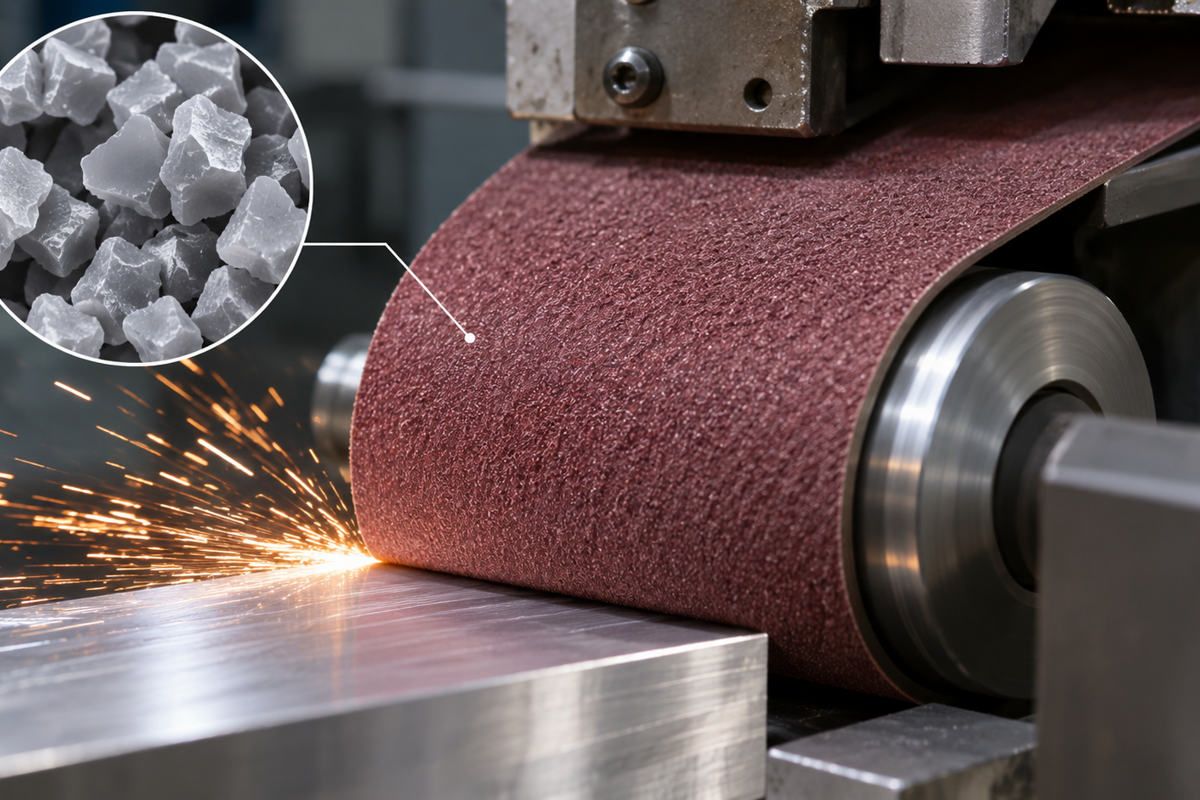
The image used in this article is generated with an AI tool and does not depict any real-time moment
A simple change in heat treatment could make industrial grinding belts last significantly longer. Researchers have found that applying a secondary heat treatment to nano-alumina ceramic abrasive grains can extend the service life of abrasive belts by 33 per cent under high material removal conditions. The process also increases the compressive strength of individual abrasive grains to 52.3 N.
Published in the Journal of Materials Science: Materials in Engineering, the study found that the best results were achieved by heating the nano-alumina grains to 1,500°C for six hours. The researchers examined how this additional treatment affected the strength, wear resistance and overall grinding performance of ceramic abrasive belts.
To know the futuristic market and value proposition of red mud, explore the report "A Comprehensive Analysis of Bauxite Residue (Red Mud): Sustainability, Resource Recovery and Strategic Recommendations"
Tackling the problem of early abrasive belt wear
Abrasive belts are widely used in industrial grinding to remove material from metal surfaces. However, working with high material removal rates can put considerable pressure on the abrasive grains, often leading to faster wear and a shorter working life.
The study defined high material removal conditions as operations involving a single-pass depth of cut of at least 0.5 mm. Under these conditions, conventional nano-alumina ceramic abrasive belts can struggle to maintain grinding efficiency and often wear out much sooner.
To address this problem, the research team introduced a secondary heat treatment process to modify the nano-alumina ceramic abrasive grains. They then tested the resulting abrasive belts to understand how well they performed under demanding grinding conditions.
The evaluations covered grinding performance, wear characteristics and overall service life, with particular attention to how the modified grains handled cutting depths of 0.5 mm or more in a single pass.
Discover how SEFAR® X-TREME tackles scaling challenges and enhances filtration performance in Kelly and Diastar pressure leaf filters. Join Sefar’s exclusive webinar!
How heat treatment improved abrasive performance
The researchers also examined the changes taking place within the ceramic grains to understand why the additional heat treatment worked.
By combining grinding tests with detailed microstructural analysis, they found that the process helped reduce two major causes of abrasive belt failure: abrasive wear and premature grain shedding.
Abrasive wear occurs when the cutting edges of the grains gradually become worn down during grinding. Grain shedding, meanwhile, happens when abrasive particles detach from the belt before they have reached the end of their useful life.
By reducing both problems, the secondary heat treatment helped the abrasive belts maintain their performance for longer under high material removal conditions.
Overall, the findings offer a practical way to improve the preparation of nano-alumina ceramic abrasive grains. The researchers believe that optimising the secondary heat treatment process could support the wider industrial use of these abrasive belts, particularly in demanding grinding operations where longer service life and better wear resistance are important.
Explore alumina and other essential inputs in the right grades from global suppliers on AL Biz.
Grow with
AL Circle













_md.webp)
_md.webp)