Jamaica approves duty-free LNG imports to boost bauxite and alumina industry competitiveness
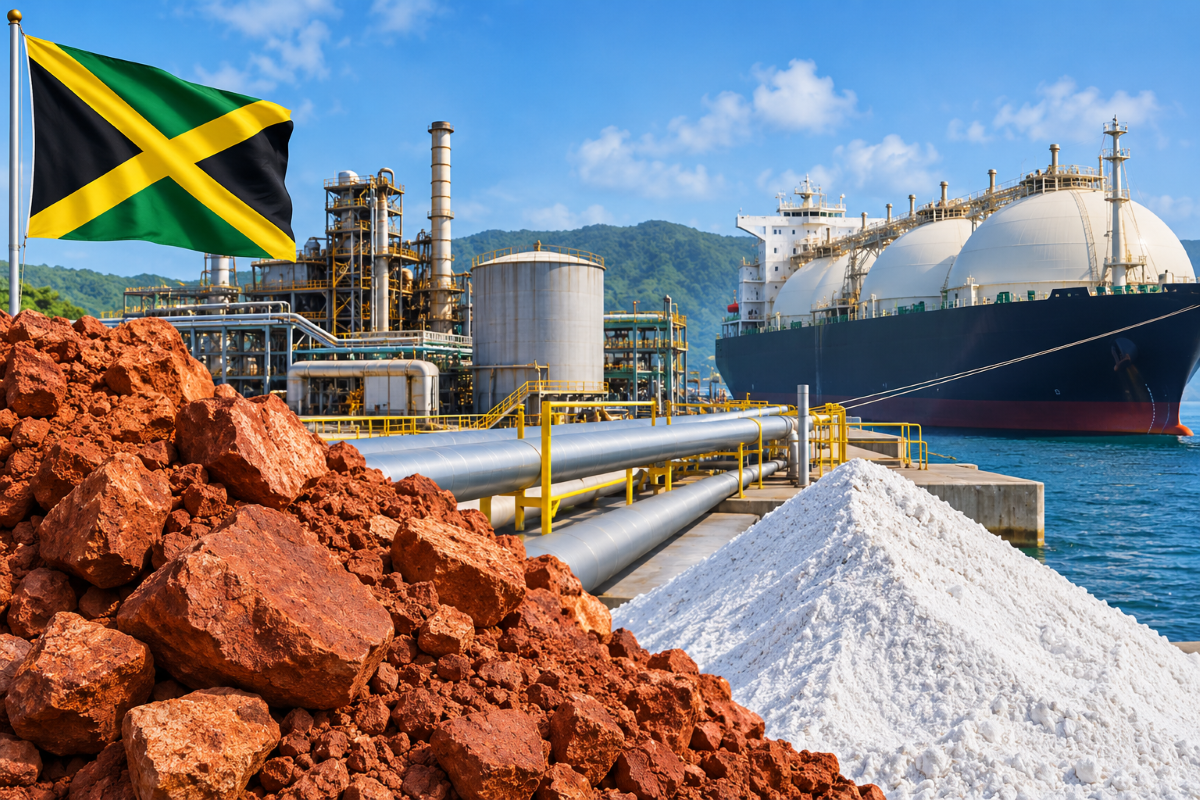
The image used in this article is generated with an AI tool and does not depict any real-time moment
Jamaica is looking to improve the competitiveness of its bauxite and alumina industry by reducing energy-related costs, with the Senate approving legislation that allows recognised bauxite and alumina producers to import liquefied natural gas (LNG) without paying import duties.
The measure, passed under the Bauxite and Alumina Industries (Encouragement) (Amendment) Act, is aimed at lowering operational expenses across the two sectors while encouraging a shift towards cleaner energy. The legislation was piloted by Minister of Foreign Affairs and Foreign Trade, Senator the Hon. Kamina Johnson Smith, who highlighted the industry's declining share of global production and the need to strengthen its position in the international market.
Jamaica seeks to reverse decline in global bauxite and alumina production
Explaining the industry's changing position, Senator Johnson Smith recalled that following the passage of the Principal Act in 1950, Jamaica shipped its first consignment of bauxite in 1952. Production expanded rapidly, and by 1957, the country had become the world's leading bauxite producer, accounting for nearly a quarter of global output.
Alumina production also increased steadily, particularly after the mid-1960s. However, by 1971, Jamaica had lost its position as the world's leading bauxite producer, and its share of global production continued to decline. From around 18 per cent in the 1970s, the country's share fell to two per cent of total world bauxite production in 2018.
The decline continued into recent years. By 2024, Jamaica accounted for just 1.4 per cent of global bauxite production, representing a similar share of the global alumina market, Senator Johnson Smith said.
Despite losing ground in the international market, the industry continues to play a significant role in Jamaica's economy. It accounts for 85 per cent of the country's mining output and 85 per cent of traditional exports. Export earnings reached approximately USD 612 million in 2025.
Explore: The most comprehensive and forward-looking industry-focused report – Global Bauxite & Alumina Market Forecast to 2036: Supply–Demand, Trade Flows & Price Outlook
The sector also demonstrated its economic importance during the COVID-19 pandemic, when it was among the least affected industries and remained one of Jamaica's largest sources of foreign exchange at a time when overseas inflows were particularly important.
Against this backdrop, the government is looking to attract investment and strengthen the industry's position as global aluminium demand continues to grow.
“We are now seeing an increase in investor confidence in the sector. Members should note that global demand for aluminium generally grew between 2015 and 2024, largely supported by increased demand in key sectors such as construction and transportation. So given its importance to Jamaica’s economy and given the growing global demand and appetite for investment, the Government is ramping up efforts to revitalise Jamaica’s bauxite and alumina industry and make it cleaner,” she stated.
LNG duty exemption targets energy costs and cleaner operations
Energy expenses remain one of the major challenges affecting the efficiency and competitiveness of Jamaica's bauxite and alumina operations. Senator Johnson Smith said the government is pursuing a strategy to diversify the country's energy mix while making energy more affordable and environmentally sustainable.
“One of the largest challenges to efficiency and competitiveness is the cost of energy, and the Government continues to pursue a strategy to diversify our energy mix and, of course, in the effort to deliver cheaper and cleaner energy,” she added.
She further emphasised that lower energy costs should also benefit manufacturers, helping them maintain their competitiveness and retain workers.
The government is therefore looking to move away from heavy fuel oil towards cleaner and more efficient alternatives. LNG has emerged as one such option, offering the potential for more stable generation costs, stronger energy security and a more efficient operating environment for industrial users.
“So, this is the lens through which the Government evaluates every energy decision. We have, therefore, been transitioning away from heavy fuel oil towards cleaner and more efficient alternatives. Liquefied natural gas is one such cleaner fuel, with added value that it contributes more stable generation costs, strengthens our energy security, and creates a more efficient operating platform for industrial users,” she stated.
Explore primary aluminium suppliers, product listings and trade opportunities on the AL Biz platform.
Senator Johnson Smith noted that LNG became one of the primary fuels used across several industries, including the global bauxite and alumina sectors, in 2015. Its adoption was supported by technological and logistical advancements, a lighter environmental footprint and ease of storage.
She also highlighted its environmental and operational advantages, including lower carbon dioxide emissions and the near elimination of sulphur oxides. For industrial users, LNG has also been shown to extend equipment life and reduce shutdowns.
Against this background, the government has proposed widening the concessions available under the existing legislation to include exemption from import duties on LNG brought into Jamaica by recognised bauxite and alumina producers. The measure is intended to encourage investment, support operational viability and stimulate growth across the two industries.
Government calls for investment in modernisation and workforce development
The proposed duty exemption has also received support from Government Senator Kavan Gayle, who said the legislation has important implications for the future competitiveness, sustainability and long-term viability of one of Jamaica's key productive sectors.
He highlighted the industry's contribution to the country's economic development over several generations, particularly through export earnings, foreign exchange, employment, infrastructure development and the livelihoods of thousands of Jamaican workers.
However, Senator Gayle stressed that the benefits of government concessions should extend beyond immediate operational cost savings. He said companies receiving such support should also invest in plant equipment, maintain operations, modernise production facilities and improve workforce skills.
“when you get this kind of investment, it must also lead to [investment] in the plant equipment, sustaining the operations, modernising the production, and upgrading the skills of the workforce.
“Don’t just take this concession just for the mere objective of it… it must translate into other factors of production. The workers also have a responsibility because they, too, have to cooperate with the productivity improvement. They also have to upgrade themselves on their own development,” Senator Gayle added.
Unlock key insights from leading companies and experts across the aluminium ecosystem with our e-Magazine - Mine to Market: Aluminium Producers & Manufacturers 2026
Grow with
AL Circle













_md.webp)
_md.webp)