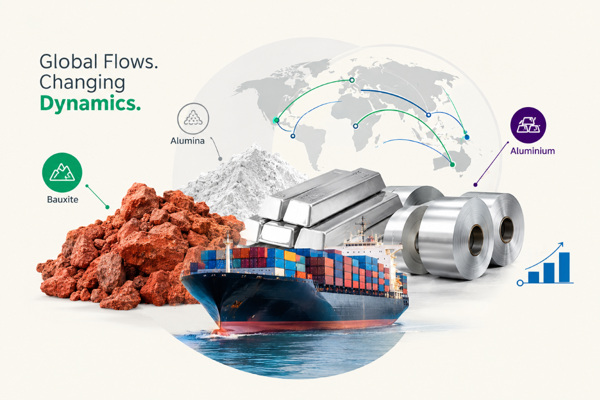
The global aluminium supply chain is facing a series of changes that extend from bauxite mines and alumina refineries to smelters, regional premiums and finished-metal trade. In 2026, the market’s direction is being shaped not only by production volumes but also by freight costs, export restrictions, shifting Chinese demand and tariffs. Developments across Guinea, Australia, China, Europe and North America point to a market where access to supply is increasingly as important as the availability of raw materials. Bauxite supply: Guinea’s cap meets a well-stocked China, but is it stable? Guinea remains central to the seaborne bauxite market, with its shipment connections to China demonstrating the importance of reliable logistics. A new sea-rail route has enabled a Guinea bauxite shipment...
Ghana is seeking investors to establish an alumina refinery, aiming to close a gap in its bauxite-to-aluminium production chain as the country prepares to phase out raw mineral ore exports by 2030. President John Dramani Mahama has identified the absence of domestic alumina refining as a key obstacle to retaining more value from the country’s mineral resources. Speaking during a panel discussion at the 2026 Financial Times Africa Summit on October 21, Mahama said Ghana could no longer rely on exporting raw materials while importing finished products. The government wants more processing to take place locally, creating jobs and expanding industrial activity. “We cannot continue forever to be the exporter of raw materials to the rest of the world and consumers of finished products,” Mahama...
Grow with
AL Circle

Impact Minerals Limited has raised about AUD 2 million (USD 1.37 million) from existing and new investors to advance its high-purity alumina plans and support ongoing project development amid market volatility. It is also progressing its Lake Hope HPA project towards feasibility in collaboration with Edith Cowan University, while integrating the Alluminous HiPurA® process to develop a scalable and cost-competitive production route. The company also continues to support Alluminous, where the HiPurA® technology is advancing with pilot plant commissioning underway in continuous mode. For the global aluminium value-chain 2026 outlook, book our exclusive report “ Global ALuminium Industry Outlook 2026 " In addition to HPA, the company is exploring the possibility of producing sulphate of...

Alumina Ltd (ASX: AWC) concluded the session on March 27, 2026, at AUD 1.45 (USD 0.94), down 1.69 per cent from the previous day's value, with a significant increase in trading volume as buyers came back to the market. Roughly 206.21 million shares changed hands during the day, far exceeding the usual average of about 10.49 million, indicating heightened investor participation amid ongoing volatility in aluminium markets. The company was valued at around AUD 4.21 billion (USD 2.73 billion), with an estimated 2.90 billion shares in circulation. The spike aligns with recent fluctuations in aluminium prices and weakness in the basic materials sector. In contrast to the usual volume of 10.49 million shares, trading registered a relative volume of 19.66. For the global aluminium value-chain...

The European Union (EU) has been discussing some changes around how its rules apply to aluminium and alumina trade, especially when it comes to how materials actually move across supply chains. At the moment, restrictions are in place for certain aluminium imports, but alumina, which is used to produce aluminium, is still being traded. This difference has started to raise questions about whether the current setup fully reflects how the industry operates in practice. One part of the discussion links back to the Aughinish Alumina refinery in Ireland. It is the largest alumina refinery in Europe; it processes bauxite into alumina, which goes into production. Some reports mention that a share of alumina from this facility has been supplied to Russian smelters, including those linked to Rusal....

Australia is considering a shift to ‘green’ aluminium and iron production using renewable energy. This could increase iron ore export earnings from about USD 116 billion to around USD 386 billion a year by 2060. Metal production uses large amounts of energy. Producing aluminium and steel without fossil fuels could reduce emissions and increase export value. Aluminium production currently accounts for about 2 per cent of global carbon emissions, while iron and steel add about 6-8 per cent. Australia is one of the world’s largest exporters of aluminium and iron ore, with about 55 per cent of the global supply. Most of this comes from the Pilbara region. However, Pilbara ore has lower iron content (55-62 per cent) and contains impurities (mostly in silica and alumina). This makes it...

While global attention remains fixed on China, a quieter transformation is unfolding across Africa and Asia. Across Africa and Asia (excluding China), metallurgical alumina production climbed from 13.8 million tonnes in 2024 to 14.5 million tonnes in 2025. That’s a gain of around 700,000 tonnes, or about 5 per cent year-on-year. On paper, it looks steady. In reality, it reflects a shift that’s being built piece by piece. 2025: A year of steady build-up What stands out in 2025 is not just the total output, but how it evolved through the year. Production averaged around 39,800 tonnes per day, but the path to that number was far from linear. The year opened quietly. Q1 came in at 3.4 million tonnes, weighed down by a softer February. Things began to turn in March, and that recovery carried...

Over USD 2.6 billion in Foreign Direct Investment (FDI) for the mining sector has been pooled by Nigeria in the last two and a half years. This has been updated during the Powering Africa Summit in Washington by Solid Minerals Development Minister Dele Alake. As pointed out by Alake, recent inflows, which were a result of reforms, are designed to make the sector more appealing to investors. These included a more robust regulatory framework, digitised licensing and better protection of mineral rights. Moreover, the authorities pushed efforts against illegal mining, leading to over 350 arrests in just one year. He added, “We have successfully de-risked and sanitised the mining environment, making it conducive to Foreign Direct Investment (FDI).” Also read: South32 pauses Worsley Alumina...

Shares of China Hongqiao Group declined more than 12 per cent in Hong Kong trading, after opening 8.41 per cent down and hitting HKD 30.18 (USD 3.86). The stock was last at HKD 30.24 (USD 3.87), down 12.35 per cent, with a turnover at HKD 2.246 billion (USD 288 million) and volume of 72 million shares. Explore- Most accurate data to drive business decisions with Global ALuminium Industry Outlook 2026 across the value chain The decline comes after the company’s 2025 results, where revenue rose 4 per cent year-on-year to RMB 162.35 billion (USD 22.73 billion), while net profit increased 1.2 per cent to RMB 22.64 billion (USD 3.17 billion). Overall gross profit margin fell by 1.4 percentage points to 25.6 per cent, due to weaker alumina margins. Also Read: WEEKLY: China's alumina prices inch...

What was once treated as a stubborn by-product of mining may now find a second life in industry. Researchers at the CSIR-Institute of Minerals and Materials Technology have worked out a way to convert leftover bauxite residue into refractory bricks capable of withstanding very high temperatures. Explore- Most accurate data to drive business decisions with Global ALuminium Industry Outlook 2026 across the value chain Residue from the bauxite extraction has, over time, added to the dust pollution and significantly altered the chemistry of nearby water bodies, thus making them more acidic. However, managing this residual material is a significant concern, especially in areas where mining activity is concentrated. The Bhubaneswar team has explored its potential as a raw material instead of...

Peripheral operations have been paused at the South32-owned Worsley Alumina refinery near Collie, in Western Australia, after a contractor sustained injuries at the site around 4 am on March 14. Emergency services and first aid were administered to the injured 47-year-old worker at the refinery. Explore- Most accurate data to drive business decisions with Global ALuminium Industry Outlook 2026 across the value chain South32 released a statement announcing a temporary suspension of work that is not fundamental to the safety and stability of the refinery. “We are taking steps to understand what has happened and assisting the relevant authorities with their inquiries,” the company mentioned. The miner expressed “deepest sympathies” for the worker’s family and colleagues and provided...

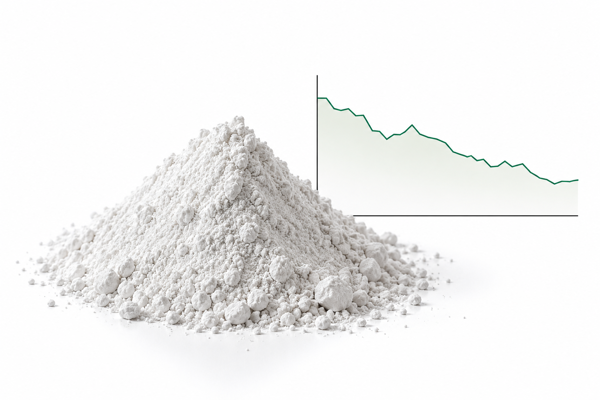
The rerouting of the raw materials away from the Middle East is suggested to be benefiting the Chinese aluminium producers. This is because China is receiving a higher amount of alumina, the precursor refined from bauxite, due to the ongoing US-Israeli war with Iran. As a result, the country is facing a surplus and boosted profits at its smelters, where alumina is turned into aluminium. The supplies to the Middle Eastern producers are throttled due to the near-total shipping halt in the Strait of Hormuz, accounting for nearly 9 per cent of the global aluminium. According to an analyst with the Shanghai-based broker Zijin Tianfeng Futures Co., Chen Jingmin, said that alumina is now "being dumped" on the global markets. The alumina dumping is directly reflected in the price, where in...

Vedanta Limited has been taking a variety of initiatives for a greater engagement of women in the aluminium industry. At present, women from Odisha’s local communities are increasingly stepping into technical roles at the Vedanta Aluminium refinery in Lanjigarh. This development indicates a gradual transition in the participation in operations at the world’s second largest alumina refinery. Explore- Most accurate data to drive business decisions with Global ALuminium Industry Outlook 2026 across the value chain Among these women employees is Priyanka Mahakhud, a control room operator at the company’s 5-million-tonne-per-annum alumina refinery in Lanjigarh, Odisha. Born and raised in the village, Mahakhud manages the refinery’s Distributed Control System (DCS), which functions as the...

The closure of the Strait of Hormuz has been causing concerns for primary aluminium supply around the world. At the same time, it is also raising questions about the supply of raw materials to the Middle East, a region heavily dependent on imported primary aluminium raw materials, many of which pass through the Strait of Hormuz. Situation intensified after Iran closed the Strait of Hormuz, one of the world’s most critical maritime shipping routes linking the Persian Gulf with the Gulf of Oman and the Arabian Sea. For the Middle East’s aluminium industry, the closure raises a pressing question: how resilient is a major aluminium-producing region that depends heavily on imported raw materials? While the region accounts for roughly 8–9 per cent of global aluminium output, its smelters rely...

China has proposed a unique strategy to address structural balances in heavy industries. While the country intends to strengthen supervision and management in industries such as alumina, copper, coal, and chemicals, the authorities aim at reducing production in sectors like steel manufacturing and oil refining. Details of the plan were presented by the National Development and Reform Commission, which described the initiative as part of a broader attempt to improve the way industrial activity is regulated and organised. Rather than focusing solely on cutting capacity, policymakers are looking to guide production more carefully and establish clearer oversight mechanisms, particularly in sectors that provide core industrial raw materials. Also read: China’s alumina and aluminium output move...

The Environmental Trust Ireland (ETI), an environmental organisation, is set to initiate a High Court case regarding the proposed expansion plans of the Russian Aughinish Alumina refinery in County Limerick. Scheduled to begin on March 4, the case relates to proposals to increase the height of the bauxite residue, i.e., red mud, storage area from 32 metres to 44 metres or 144 feet. Explore- Most accurate data to drive business decisions with Global ALuminium Industry Outlook 2026 across the value chain ETI has also expressed concerns over plans to expand the refinery’s quarry blasting area by an additional 9.6 acres, bringing the total quarry footprint to 20.75 acres. ETI is represented by the law firm, Hayes Solicitors Limerick. The president of the environmental organisation is the...

Africa Finance Corporation and the Federal Government of Nigeria have signed a deal to invest in three major mining projects. One of them includes USD 1.3 billion for an aluminium refinery project. This agreement was signed under the Solid Mineral Development Fund (SMDF), a sovereign investment fund designed to catalyse private sector-based growth in the mining industry. Under this agreement, both parties will carry out a geoscience mapping programme to improve mineral data and reduce exploration risks, encouraging more investors to participate in the sector. They will also create a joint investment vehicle to speed up exploration and mining development in Nigeria. The aim is to promote faster exploration, development, and eventual production from approved mining leases, particularly...

National Aluminium Company Limited (NALCO), a premier government-undertaking leading aluminium company in India, welcomed the BSNL Base Transceiver Station (BTS) at its alumina refinery in Koraput, Odisha. This BTS is equipped with Swadwshi 4G technology, India’s first fully indigenous 4G (5G-ready) technology developed through collaboration between Centre for Development of Telematics (C-DOT), Tejas (Radio Access Network), and TCS. For the global aluminium value-chain 2026 outlook, book our exclusive report “ Global ALuminium Industry Outlook 2026 " Amarendra Kumar Mishra, the Executive Director of the M&R Complex Alumina Refinery, with the Chief General Manager of BSNL Odisha Circle, Rudra Narayan Palai and other officials, was present at the ceremony. The network is cloud-native and...

Impact Minerals has shipped the first significant quantities of HiPurA high purity alumina from its Perth pilot plant to the United States, marking a key milestone in the company’s push into advanced battery materials. The 50 per cent-owned associate Alluminous dispatched approximately 15 kilograms of HiPurA HPA to Charge CCCV LLC (C4V) for initial test work under the Technology Development Agreement signed in December last year . The delivery comes just nine months after Impact invested in the technology, underscoring the speed at which the project has progressed from capital backing to product output. The material will undergo formal testing at C4V’s laboratory and pilot-scale facilities, with the goal of advancing product qualification for downstream lithium-ion battery markets. The...

Image for representational purpose After months of leaks from its red mud containment lakes, Atlantic Alumina’s refinery near Gramercy has submitted a site investigation work plan to the Louisiana Department of Environmental Quality (LDEQ), marking a critical step in addressing environmental violations recorded over the past two years. Filed on January 30, the plan is part of an agreement with regulators following dozens of violations documented by state and federal inspectors. The objective is to determine the extent of contamination caused by unauthorised discharges and runoff of “red mud,” the toxic by-product created when bauxite is refined into alumina. According to the LDEQ inspection report, initial lab analysis of the sludge detected carcinogens including cadmium, chromium and...