Gramercy alumina refinery files contamination investigation plan following red mud leaks
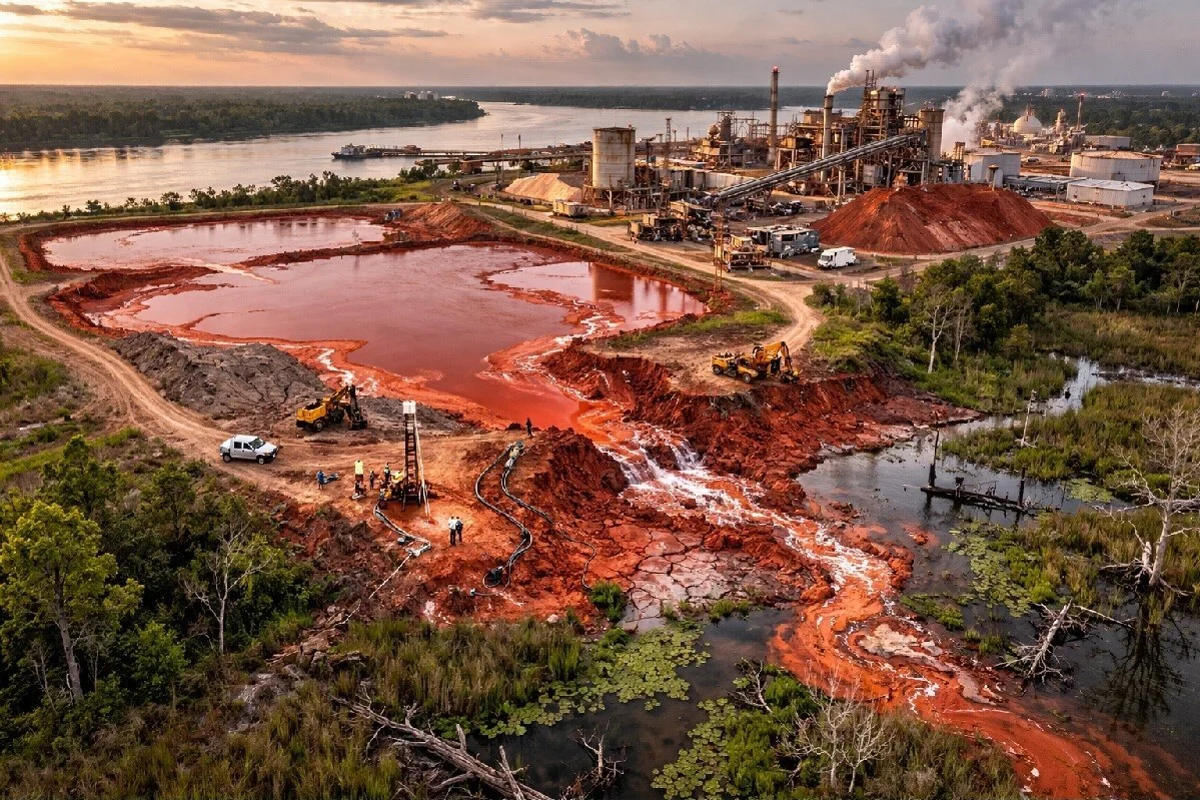
After months of leaks from its red mud containment lakes, Atlantic Alumina’s refinery near Gramercy has submitted a site investigation work plan to the Louisiana Department of Environmental Quality (LDEQ), marking a critical step in addressing environmental violations recorded over the past two years.
Filed on January 30, the plan is part of an agreement with regulators following dozens of violations documented by state and federal inspectors. The objective is to determine the extent of contamination caused by unauthorised discharges and runoff of “red mud,” the toxic by-product created when bauxite is refined into alumina.
According to the LDEQ inspection report, initial lab analysis of the sludge detected carcinogens including cadmium, chromium and arsenic, along with other highly corrosive chemicals at concentrations exceeding state and federal safety standards. The waste material eroded large levees surrounding Atalco’s containment lakes, destroying vegetation as it flowed through local drainage systems that ultimately reach the Blind River Swamp of Lake Maurepas.
To carry out the assessment, Atalco plans to hire Leaaf Environmental of Gretna. Under the proposal, investigators will drill 16-foot-deep soil borings near the red mud lakes and along erosion channels formed in the levees. A geologist will screen for lead every two feet using a handheld analyser before collecting samples for laboratory testing covering a broad range of heavy metals. The borings will then be converted into temporary groundwater monitoring wells, with water samples also sent for laboratory analysis.
The laboratory will apply Louisiana’s most stringent soil and water quality standards, according to Atalco’s proposal.
Professor Susan Richardson, an environmental analytical chemistry researcher at the University of South Carolina, reviewed the investigation work plan at the Illuminator’s request. She noted it calls for comparing the water samples to the Environmental Protection Agency’s highest quality levels set, meaning the testing should identify even slight amounts of contamination.
The work plan is currently under review, and a start date will be set once the plan is approved, LDEQ press secretary Meagan Molter said.
To learn about the global aluminium outlook, download our report: Global Aluminium Industry Outlook 2026
Violations mount as regulators maintain oversight
State and federal records show caustic waste leaks were first discovered at the refinery in August 2024 and continued for months before being contained. Approximately nine months later, inspectors identified additional leaks and erosion channels, prompting further citations from LDEQ.
Atalco agreed, without admitting to any wrongdoing, to allow state oversight of corrective actions and environmental remediation efforts. Regulators have not yet determined whether fines will be imposed.
Additional violations were documented during an October 8 LDEQ inspection, when the agency cited the refinery for six infractions. Most of the issues stemmed from the company’s failure to properly maintain operating records required under its air permit. On February 10, LDEQ issued a warning letter addressing those violations.
Expansion plans advance despite scrutiny
The refinery spans roughly three square miles where St. James and St. John the Baptist parishes meet along the Mississippi River’s east bank. Opened in 1958 as Kaiser Aluminum, the Gramercy facility remains the only operating bauxite refinery in the United States and the country’s sole domestic source of alumina feedstock.
While state regulators continue reviewing environmental compliance, the company’s Bermuda-based owner, Concord Resources Holdings Ltd., announced in January that it had signed an agreement with the Trump administration to expand operations under a US Department of Defense contract.
Upon completion, the expansion is expected to create 500 jobs and increase production to more than 1 million tonnes of alumina annually. The facility is also projected to produce up to 50 tonnes of gallium per year, a semiconductor metal the United States currently imports almost entirely. At Gramercy, gallium would be extracted from the same bauxite refined into alumina. The refinery now stands at a pivotal moment, balancing regulatory scrutiny with plans for strategic industrial growth.
Don't miss out- Buyers are looking for your products on our B2B platform

HES Fos and Alteo sign partnership agreement for hydrated alumina logistics
Next articleImpact Minerals achieves first HiPurA alumina delivery to US partner C4V from its Alluminous pilot plant
Grow with
AL Circle