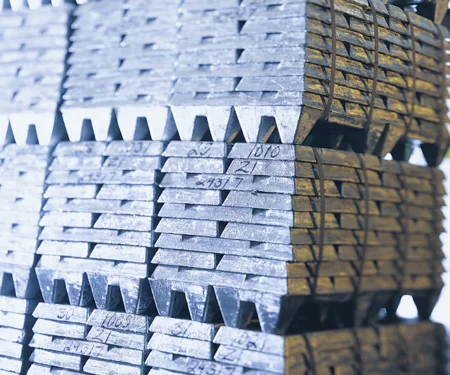
Pilbara is at the centre of Australia’s green metal transition, including iron ore and aluminium
Australia is considering a shift to ‘green’ aluminium and iron production using renewable energy. This could increase iron ore export earnings from about USD 116 billion to around USD 386 billion a year by 2060.
Metal production uses large amounts of energy. Producing aluminium and steel without fossil fuels could reduce emissions and increase export value. Aluminium production currently accounts for about 2 per cent of global carbon emissions, while iron and steel add about 6-8 per cent.
Australia is one of the world’s largest exporters of aluminium and iron ore, with about 55 per cent of the global supply. Most of this comes from the Pilbara region. However, Pilbara ore has lower iron content (55-62 per cent) and contains impurities (mostly in silica and alumina). This makes it difficult to use in low-carbon technologies. Keith Vining, CSIRO Group Leader, said, “Pilbara iron ores are challenging materials in existing low-carbon iron-making processes.”
For the global aluminium value-chain 2026 outlook, book our exclusive report “Global ALuminium Industry Outlook 2026"
Traditional steelmaking uses coal. Newer methods, such as direct reduction, use gas or hydrogen but require higher-grade ore. Researchers are trying to adapt these methods to work with Pilbara ore.
The aim is to process iron within Australia instead of exporting raw ore. This would increase value and create a larger industry. However, this change will take time and depends on several factors. Vining added, “We want to use existing technologies because the pathway for brand new technologies is so much longer.”
A major challenge is infrastructure. Large-scale renewable energy systems are needed to support production. The Pilbara region is remote, with limited facilities and high transport costs. Equipment must be transported over long distances, and workers need to travel in and out. “Most things have to go into Fremantle and get trucked to the Pilbara,” said Vining.
Also read: Nigeria garners $2.6 billion in Foreign Direct Investment in mining, 2-1/2 years post reforms
Energy costs are also high. Producing hydrogen from renewable sources is still expensive. This makes it difficult to compete with countries using cheaper methods.
Another issue is demand. Buyers must be willing to pay for low-emission iron products.
Some projects are already testing solutions. These include using natural gas as a temporary fuel, which produces lower emissions than coal. "Using that process is actually 50 per cent less CO2 intensive than using solid carbon in a blast furnace," Vining said. New plants are also being designed to switch to hydrogen in the future.
Research is also focused on improving ore processing. This includes removing impurities, improving pellet strength, and making grinding more efficient.
Don't miss out- Buyers are looking for your products on our B2B platform
Australia also faces competition from regions like the Middle East, where energy costs are lower. The Middle East already produces (Direct Reduced Iron) DRI using cheap gas. It also has high solar potential and gas fields that can store carbon dioxide during the shift to renewable hydrogen. If other countries invest first, Australia may lose this opportunity.
The Green Metals Innovation Network (GMIN) was launched in 2025 with USD 10 million from the Australian government. It brings together CSIRO and HILT CRC to coordinate research on low-carbon metal production.

Alumina production in Africa and Asia (ex-China) up 5% in 2025-exploring what drove the rise
Next articleWEEKLY: China's alumina stocks climb to a new high on import arrivals, rail congestion
Grow with
AL Circle