您想继续阅读英文文章还
是切换到中文?
是切换到中文?

THINK ALUMINIUM THINK AL CIRCLE

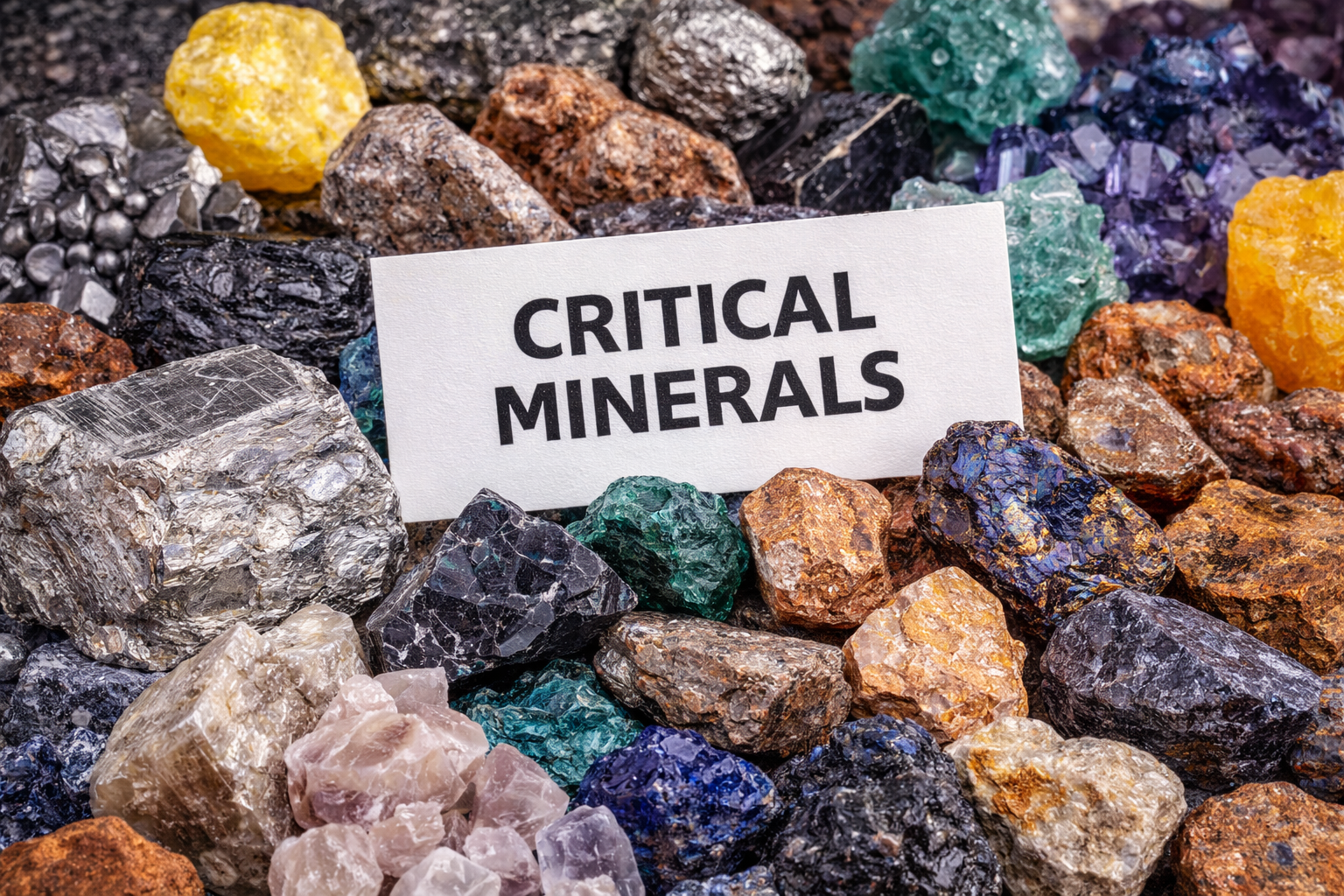
The image used in this article is generated with an AI tool and does not depict any real-time moment
The money tells the story. Western governments just committed USD 12.1 billion in new mining project capital through 30 partnerships at the 2026 PDAC conference, while the US launched its FORGE coalition, pulling in 54 nations and locking down 11 bilateral supply agreements in a single day. That spending is reactive. A new OECD inventory confirms global export restrictions on critical raw materials have hit an all-time high, with supply concentration for cobalt, lithium, and rare earths now exceeding 90 per cent among the top three producing nations. The structural shift is pulling capital down the entire Western mineral pipeline, from early stage exploration to commercial production, and five companies are positioned directly in its path: GoldHaven Resources (CSE: GOH) (OTCQB: GHVNF), Almonty Industries (NASDAQ: ALM) (TSX: AII), Brixton Metals (TSXV: BBB) (OTCQX: BBBXF), NioCorp Developments (NASDAQ: NB), and Energy Fuels (NYSE-A: UUUU) (TSX: EFR).
{alcircleadd}Analysts now project the global critical minerals market will nearly double to USD 715 billion by 2035, with North American investment growing at the fastest rate as defence budgets, AI infrastructure, and electrification demand converge on the same finite set of inputs. An April 2026 OECD working paper on critical minerals and clean energy applications reinforces the thesis: projects offering exposure to multiple designated critical minerals across defence, energy, and technology supply chains are now attracting the strongest institutional capital.
For the global aluminium value-chain 2026 outlook, book our exclusive report “Global ALuminium Industry Outlook 2026"
GoldHaven Resources (CSE: GOH) (OTCQB: GHVNF) just announced the upsizing of its previously announced non-brokered financing to gross proceeds of up to USD 1.2 million—due to strong investor demand. The additional capital is set to further strengthen GoldHaven's fully funded 2026 exploration program at its flagship Magno Project in the Cassiar District of British Columbia, and it's expected to support an expanded drill campaign targeting a large-scale, multi-phase mineral system with significant and critical metals exposure, including tungsten and indium.
"The level of investor interest reflects growing recognition of the opportunity at Magno," said Rob Birmingham, CEO of GoldHaven. "With drilling set to expand beyond our initial program, we are entering a catalyst-rich phase where we can begin to test the scale of this system across multiple high-priority targets. We believe Magno has the characteristics of a large, multi-phase mineral system, and this program is a key step in advancing that potential."
Magno is a district-scale polymetallic property spanning more than 37,200 hectares, carrying silver, tungsten, lead, zinc, and indium mineralisation. Tungsten is classified as a critical mineral by both the Canadian and US governments, and Canada currently has no primary domestic tungsten production. GoldHaven Resources has already submitted its drill permit application at Magno and filed a technical report covering the polymetallic system, positioning the project for its first drill program as the funding comes together.
"We are entering an exciting and highly strategic phase at Magno, where multiple high-grade zones and distinct mineralisation styles have now been defined across a large, consolidated land package," said Birmingham. "The combination of high-grade silver-lead-zinc mineralisation and growing exposure to critical minerals such as tungsten and indium continues to reinforce our view that Magno hosts the hallmarks, continues to reinforce our view that Magno is emerging as a compelling district-scale silver and critical minerals exploration opportunity in the Cassiar District."
The company is also active in Brazil, where an independent geological review of its 100 per cent -owned Copeçal Gold Project confirmed a large-scale, structurally controlled hydrothermal gold system. The review identified higher-grade gold enrichment at the West Target tied to fold hinge structures, and copper-gold vectors at the East Target supported by zoned sulphide assemblages indicating increasing temperature at depth. A Phase II drill program at Copeçal is planned for 2026, designed to test the high-priority structural and geophysical targets identified through that review.
Must read: Key industry individuals share their thoughts on the trending topics
The money tells the story. Western governments just committed USD 12.1 billion in new mining project capital through 30 partnerships at the 2026 PDAC conference, while the U.S. launched its FORGE coalition, pulling in 54 nations and locking down 11 bilateral supply agreements in a single day[1]. That spending is reactive. A new OECD inventory confirms global export restrictions on critical raw materials have hit an all-time high, with supply concentration for cobalt, lithium, and rare earths now exceeding 90 per cent among the top three producing nations[2]. The structural shift is pulling capital down the entire Western mineral pipeline, from early stage exploration to commercial production, and five companies are positioned directly in its path: GoldHaven Resources (CSE: GOH) (OTCQB: GHVNF), Almonty Industries (NASDAQ: ALM) (TSX: AII), Brixton Metals (TSXV: BBB) (OTCQX: BBBXF), NioCorp Developments (NASDAQ: NB), and Energy Fuels (NYSE-A: UUUU) (TSX: EFR).
Analysts now project the global critical minerals market will nearly double to $715 billion by 2035, with North American investment growing at the fastest rate as defence budgets, AI infrastructure, and electrification demand converge on the same finite set of inputs. An April 2026 OECD working paper on critical minerals and clean energy applications reinforces the thesis: projects offering exposure to multiple designated critical minerals across defence, energy, and technology supply chains are now attracting the strongest institutional capital.
GoldHaven Resources (CSE: GOH) (OTCQB: GHVNF) just announced the upsizing of its previously announced non-brokered financing to gross proceeds of up to $1.2 million—due to strong investor demand. The additional capital is set to further strengthen GoldHaven's fully funded 2026 exploration program at its flagship Magno Project in the Cassiar District of British Columbia, and it's expected to support an expanded drill campaign targeting a large-scale, multi-phase mineral system with significant and critical metals exposure, including tungsten and indium.
"The level of investor interest reflects growing recognition of the opportunity at Magno," said Rob Birmingham, CEO of GoldHaven. "With drilling set to expand beyond our initial program, we are entering a catalyst-rich phase where we can begin to test the scale of this system across multiple high-priority targets. We believe Magno has the characteristics of a large, multi-phase mineral system, and this program is a key step in advancing that potential."
Also Read: G7 focuses on critical minerals as US-EU tariff tensions test unity
Magno is a district-scale polymetallic property spanning more than 37,200 hectares, carrying silver, tungsten, lead, zinc, and indium mineralisation. Tungsten is classified as a critical mineral by both the Canadian and U.S. governments, and Canada currently has no primary domestic tungsten production. GoldHaven Resources has already submitted its drill permit application at Magno and filed a technical report covering the polymetallic system, positioning the project for its first drill program as the funding comes together.
"We are entering an exciting and highly strategic phase at Magno, where multiple high-grade zones and distinct mineralisation styles have now been defined across a large, consolidated land package," said Birmingham. "The combination of high-grade silver-lead-zinc mineralisation and growing exposure to critical minerals such as tungsten and indium continues to reinforce our view that Magno hosts the hallmarks, continues to reinforce our view that Magno is emerging as a compelling district-scale silver and critical minerals exploration opportunity in the Cassiar District."
The company is also active in Brazil, where an independent geological review of its 100 per cent -owned Copeçal Gold Project confirmed a large-scale, structurally controlled hydrothermal gold system. The review identified higher-grade gold enrichment at the West Target tied to fold hinge structures, and copper-gold vectors at the East Target supported by zoned sulphide assemblages indicating increasing temperature at depth. A Phase II drill program at Copeçal is planned for 2026, designed to test the high-priority structural and geophysical targets identified through that review.
Note: This article has been issued by PR NEWSWIRE and has been published by AL Circle with its original information without any modifications or edits to the core subject/data.

Responses