G7 focuses on critical minerals as US-EU tariff tensions test unity

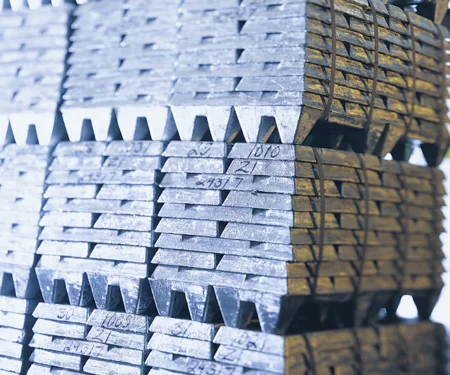
The image used in this article is generated with an AI tool and does not depict any real-time moment
On Wednesday, May 6, 2026, trade ministers from the Group of Seven (G7) convened in Paris to advance discussions on securing supply chains for critical minerals, even as renewed tariff tensions between the United States and the European Union threatened to test the bloc’s unity.
The talks build on earlier discussions held in Washington in February 2026, where G7 and allied officials prioritised securing critical minerals amid rising concerns over China’s dominance in global supply chains. At the time, participants, including the United States, United Kingdom, European Union and Australia, explored coordinated strategies to ensure access to rare earths, vital for technology and defence.
They also considered market support measures despite Washington’s reservations about price guarantees. The meeting further highlighted underlying trade tensions, with the EU urging the US to drop tariffs on steel-linked products to stabilise transatlantic ties.
For the global aluminium value-chain 2026 outlook, book our exclusive report “Global ALuminium Industry Outlook 2026"
France currently holds the G7 presidency. It is pushing to make critical minerals a central outcome ahead of the leaders’ summit scheduled for mid-June. French Foreign Trade Minister Nicolas Forissier struck an optimistic tone upon arrival, stating, “I believe we will make very concrete progress on rare earths and critical minerals, securing our supply chains and ensuring we are not held hostage by certain countries.”
Officials familiar with the talks indicated a broad consensus on reducing dependency on China, which dominates global critical mineral processing. However, divergences persist over the strategy and pace of diversification.
At the same time, trade frictions resurfaced after Donald Trump warned that Washington could raise tariffs on EU-made cars to 25 per cent from 15 per cent, citing alleged non-compliance with the Turnberry agreement reached last year in Turnberry.
Germany’s Economy Minister Katherina Reiche confirmed ongoing discussions with US counterparts, as Europe’s automotive sector faces mounting pressure from weakening Chinese demand, slowing global growth, and rising production costs.
Don’t miss out- Buyers are looking for your products on our B2B platform
Meanwhile, EU Trade Commissioner Maros Sefcovic noted that talks with U.S. Trade Representative Jamieson Greer had reaffirmed the need to uphold prior commitments. “We both clearly concluded that it's important to respect the deal with Turnberry from both sides,” Sefcovic said.
Beyond minerals and tariffs, ministers are also expected to address industrial overcapacity, largely linked to China, and to consider potential reforms to the World Trade Organization.

BoS contract rolled out for NTPC’s 900 MW solar facility
Next articleWomen in ALuminium, shaped by lessons and motivated by growth
Grow with
AL Circle