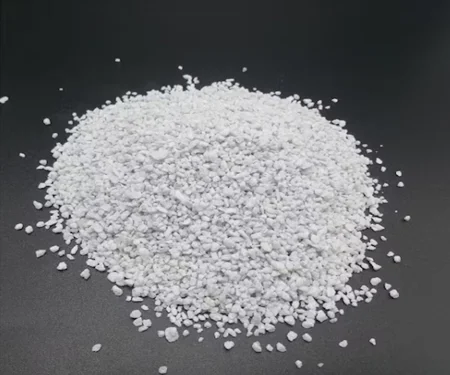
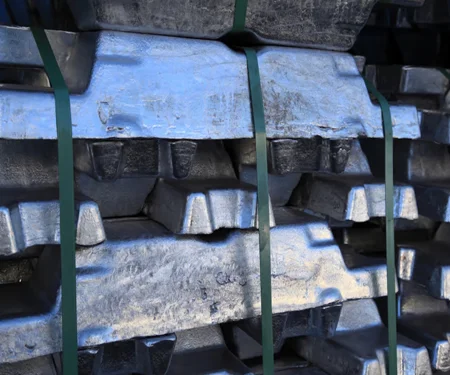
Through the first eleven months of 2024, the world’s metallurgical-grade alumina production stood at 125.66 million tonnes, reflecting a year-on-year increase of 1.91 per cent from 123.304 million tonnes, according to the latest data revealed by the International Aluminium Institute (IAI). Separately, the chemical-grade output amounted to 8.113 million tonnes, up 3.97 per cent from 7.803 million tonnes.
In November 2024, the world’s monthly production of metallurgical-grade alumina was 11.508 million tonnes, down by 3.22 per cent from 11.891 million tonnes in October, in tandem with the dip in daily average output. In November, the production each day was 100 tonnes less, standing at 383,500 tonnes versus 383,600 tonnes in October. However, on an annual basis, the world’s alumina production in November was 2.2 per cent higher than 11.256 million tonnes.
Production across regions
Metallurgical-grade alumina production in Europe (including Russia) rose 2.03 per cent M-o-M in November, slightly offsetting the world’s output. From 493,000 tonnes in October, Europe’s alumina production increased to 503,000 tonnes in November. But declines across the all other major alumina producing regions led to the downfall in the world’s November output.
In China, alumina production during November returned below 7 million tonnes, reaching 6.793 million tonnes, down by 3.25 per cent from 7.021 million tonnes in October. The output decreased to even lower than 6.802 million tonnes in September. However, on a year-on-year basis, China’s November alumina output edged an increase of 4.68 per cent from 6.489 million tonnes.
Since China’s metallurgical-grade alumina production increased each month over the year, the country’s total production through the first eleven months of 2024 recorded an annual hike, totalling 73.989 million tonnes, up by 3.29 per cent from 71.632 million tonnes. As a result, the country’s contribution to the world’s alumina output grew Y-o-Y from 58 per cent to 59 per cent.
China’s chemical-grade alumina production from January to November was 3.891 million tonnes, up by 2.77 per cent from 3.786 million tonnes.
Oceania, the second-highest alumina producing region, churned out 1.467 million tonnes in November, slightly down by 0.61 per cent M-o-M from 1.476 million tonnes. On a year-on-year basis, Oceania’s alumina output in November nudged a decline of 7.15 per cent from 1.580 million tonnes.
From January to November, Oceania produced 15.759 million tonnes of alumina, compared to 17.096 million tonnes during the corresponding period of the previous year. That reflected a sharp downfall of 7.82 per cent Y-o-Y.
Reasons for Oceania’s production downfall
Production curtailment at Alcoa’s Kwinana refinery in Western Australia could be attributed to Oceania’s alumina production drop. Experiencing a loss of $130 million in 2023, Alcoa Corporation decided to fully curtail its 222 million tonnes of alumina production capacity annually. Outdate infrastructure of the refinery, high operational costs, low-grade bauxite availability, challenging market conditions, and financial losses were some of the reasons behind Alcoa’s bold decision.
Matt Reed, Alcoa’s Executive Vice President and Chief Operations Officer, said the determination to curtail the 60-year-old facility is based on a variety of factors, including its age, scale, operating costs and current bauxite grades, in addition to current market conditions.
He added, “Today’s curtailment decision comes only after thorough and careful deliberation, and we acknowledge that this action will impact workers, business partners, and the community.”
The production cease also led to phased layoffs from 800 employees at the start of 2024 to approximately 250 in the third quarter of the year. This phenomenon will continue until the third quarter of 2025, when the employee numbers will be reduced to 50.
In 2023, the world alumina production was 134.815 million tonnes, meaning the output this year would need to achieve more than 9.155 million tonnes in December to beat the previous year’s record.