Vietnam’s aluminium bar, rods and profiles import to extend rise by 12% in 2019; China to top the list of suppliers
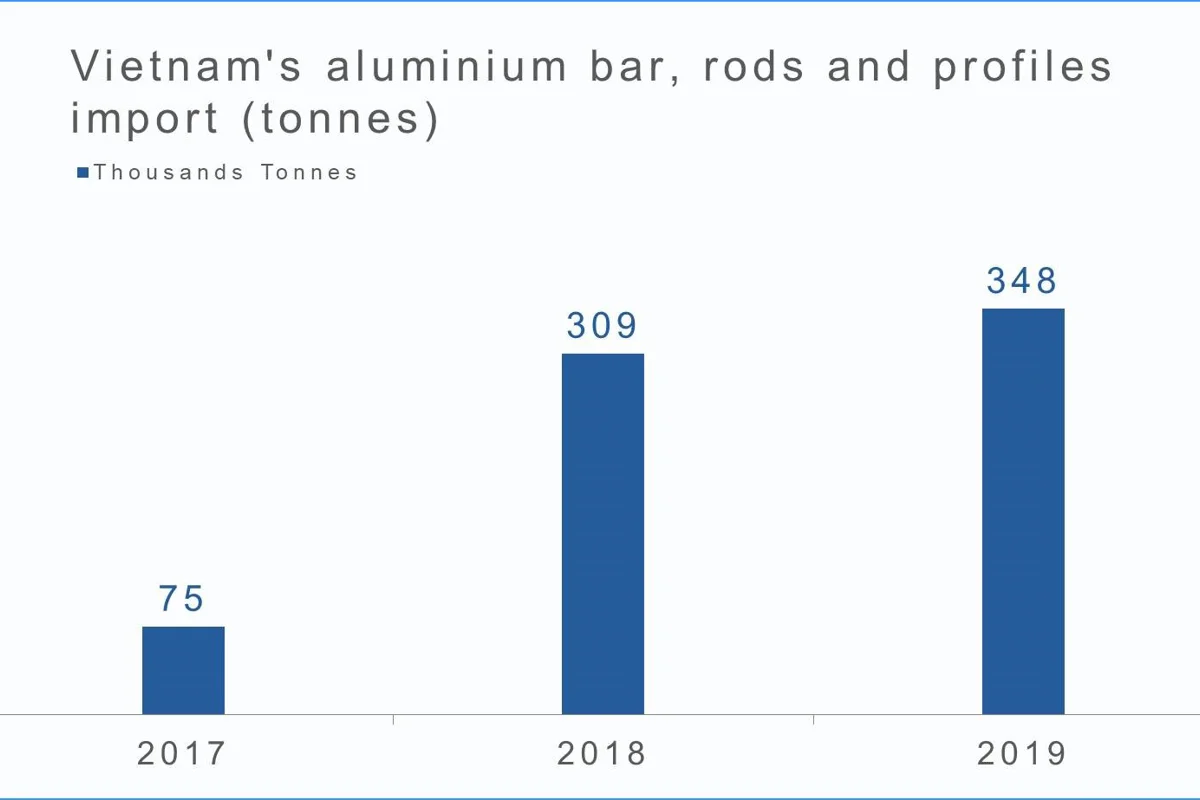
Aluminium bar, rods and profiles import by Vietnam is estimated to extend its rise this year, according to global export-import data. In 2018, Vietnam’s import of aluminium bar, rods and profiles had pegged at 309,748 tonnes, in contrast to 75,385 tonnes in 2017. This means the country’s import in 2018 had increased by 310 per cent from its previous year. In 2019, the import amount is likely to increase by 12 per cent year on year to stand at 348,137 tonnes.
Aluminium bars account for 4.2 per cent of Vietnam’s total imports. The major countries from where Vietnam imports are China, Japan, Malaysia, and South Korea. Leading the list, China this year is expected to supply 317,796 tonnes at US$1056 million, followed by Malaysia which is likely to provide 22,616 tonnes at US$41 million and Japan and South Korea 2,437 tonnes at US$13 million and 1,850 tonnes at US$11 million.
In contrast to this, China in 2018 had supplied 304,327 tonnes of aluminium bar, rods and profiles to Vietnam at the value of US$1050 million and Malaysia and Japan 575 tonnes and 2119 tonnes respectively.

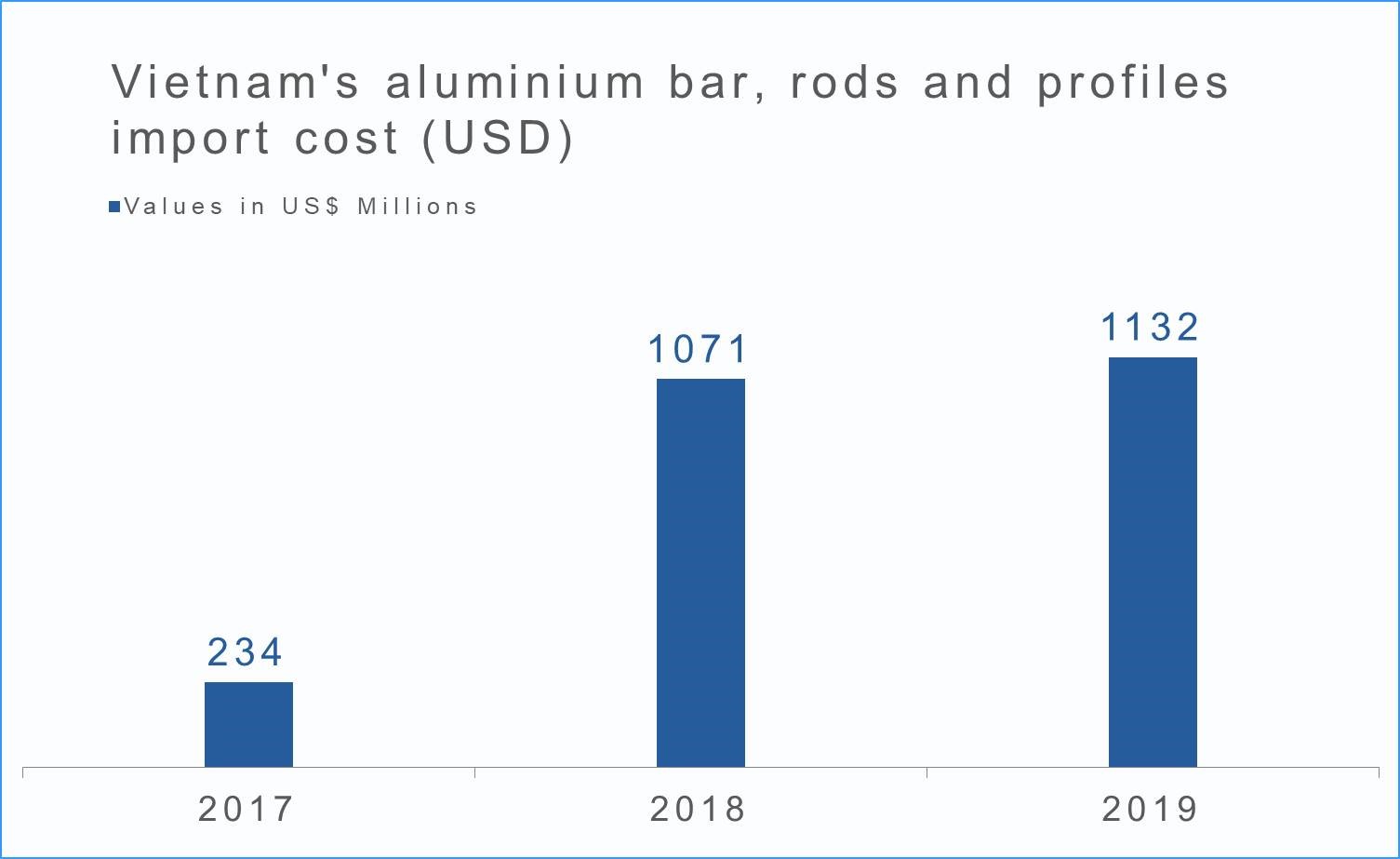
In consequence of the year-on-year rise in Vietnam’s aluminium bar rods and profiles import volume, the country’s import cost has been rising too. From US$234 million in 2017, the cost rose to US$1071 million in 2018, up 358 per cent. In 2019, the cost is expected to extend its rise to US$1132 million, up 6 per cent from a year ago.
Growth in Vietnam’s year on year aluminium bar, rods and profile import indicates that aluminium semi-finished products are becoming an obligatory raw material used in the construction industry across the globe. So to say, their use in building applications in the form of rolls, bars, and rods has been showing continuous and consistent growth over the past 50 years. Thanks to the characteristics and properties of aluminium as a material that have led to revolutionary and innovative changes in building techniques and architectural and engineering projects.
Ambienta acquires aluminium extrusion dies maker Phoenix International
Next articleASI certifies Hydro Aluminium Rolled Products operations against Chain of Custody Standard
Grow with
AL Circle