Semi-fabricated aluminium products (plates, sheets, and bars), recorded a slowdown in imports into the United States during the first half of 2025. According to the latest data from the United States Geological Survey (USGS), the decline reflected subdued demand from downstream industries and the sharp rise in tariffs that raised import costs.
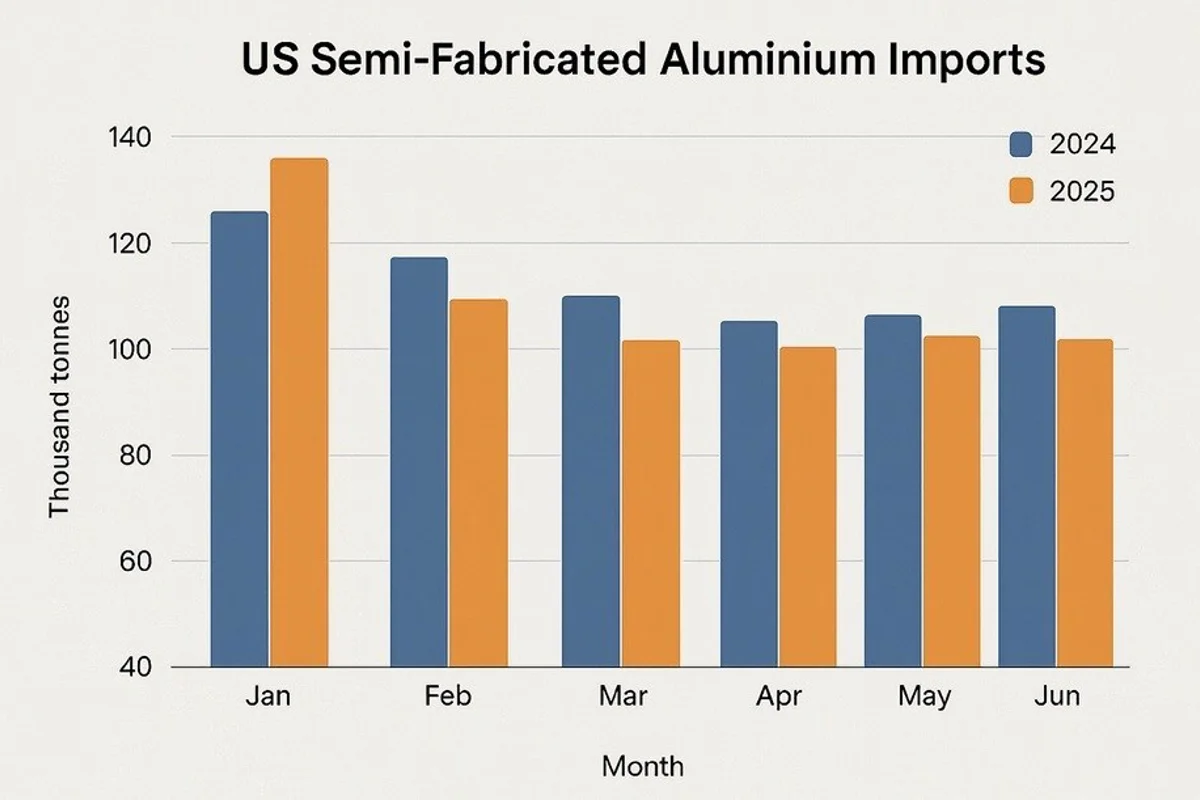
Semi-fabricated aluminium imports fell 617,000 tonnes in the first half of 2025, down 2.2 per cent from 631,000 tonnes a year earlier. Monthly inflows reflected mixed trends. In January, imports jumped to 125,000 tonnes from 98,400 tonnes a year earlier, an increase of 27 per cent. February shipments rose 3.4 per cent year-on-year to 101,000 tonnes from 97,700 tonnes. March also posted growth of 3 per cent, with imports rising to 98,600 tonnes from 95,700 tonnes.
However, the momentum faded in the second quarter as importers front-loaded purchases early in the year, anticipating higher tariffs. April shipments dropped 10.6 per cent to 101,000 tonnes from 113,000 tonnes, while June imports fell 7.3 per cent to 98,300 tonnes from 106,000 tonnes.
Tariffs bite, industries struggle
As tariffs rose and manufacturing demand weakened, aluminium imports fell sharply. The decline hit industries most reliant on semi-fabricated products—automotive, aerospace, packaging, and construction—which depend on plates, sheets, and bars for uses ranging from car body panels and aircraft frames to cladding and packaging materials.
Among them, the automotive sector was hardest hit, with certain components subjected to duties of up to 72 per cent. Legal uncertainty over tariff appeals added further pressure, leaving manufacturers uncertain about future costs and supply chain planning.
The sharp downturn in second-quarter imports was directly tied to policy changes. By mid-2025, the Trump administration had doubled aluminium tariffs to about 50 per cent, significantly raising import costs. Many companies brought forward shipments in the first quarter to avoid the hikes, but once the higher duties came into effect, volumes dropped. Elevated Midwest aluminium premiums and continued supply chain bottlenecks added to the burden, making large-scale imports increasingly uneconomical.
Overall imports mask uneven picture
While semi-fabricated imports shrank, total aluminium imports into the US rose slightly. Consumption-based imports reached 2.86 million tonnes in H1 2025, up 2 per cent from 2.80 Mt in H1 2024. However, imports of crude metal and alloys slipped 2 per cent, showing that tariff and demand pressures were uneven across different aluminium segments.
Manufacturing PMI reflects weak consumption
The contraction in semi-fabricated imports tracked the broader slowdown in US manufacturing. The Manufacturing PMI® stood at 49 per cent in June 2025, below the neutral 50 mark that separates expansion from contraction, even though it edged up from 48.5 percent in May.
The New Orders Index fell to 46.4 per cent, marking a fifth consecutive month of decline, signaling reduced demand for industrial materials like aluminium. While production improved to 50.3 per cent in June from 45.4 per cent in May, both employment and order backlogs shrank. The Prices Index remained elevated at 69.7 per cent, reflecting continued cost pressures. These trends directly translated into weaker aluminium imports, as automotive and packaging companies scaled back purchases in line with lower orders.
Suppliers gain and lose ground
The trade data also showed how tariffs reshaped supply sources. Imports from China collapsed 63% per cent to 33,500 tonnes from 90,200 tonnes a year earlier, after tariff escalation and restrictions on indirect transshipments.
Mexico’s shipments fell 22 per cent to 21,600 tonnes after losing exemptions. Brazil’s exports dropped 69 per cent to 6,380 tonnes, and India’s fell 47 per cent to 8,960 tonnes, as both countries lacked pricing flexibility to absorb the duties.
By contrast, suppliers that adapted to the tariff regime gained ground. South Korea’s exports rose 59 per cent to 124,000 tonnes, helped by competitive pricing and efficient logistics. Oman also expanded its share, with shipments rising 79 per cent to 47,200 tonnes compared with 26,300 tonnes in H1 2024.
Section 232 tariffs played the central role in reshaping aluminium trade. Rates, which started the year at 10 per cent, were lifted to 25 per cent in the early months of 2025 and climbed as high as 50 per cent by mid-year for semi-fabricated products. China felt the sharpest impact, while Mexico lost ground after its exemptions were withdrawn. Brazil and India also struggled to compete under the higher costs, leading to steep declines in their shipments. By contrast, Korea and Oman adapted quickly, using flexible pricing and targeted trade strategies to strengthen their position in the US market.
Looking ahead, semi-fabricated aluminium imports are expected to remain under pressure. Elevated tariffs and uncertain demand are likely to weigh on trade flows and reshape supplier dynamics well into 2026, with ripple effects across the entire US aluminium value chain.












_md.webp)
_md.webp)
_md.webp)







