Strained aluminium supply exposes Sri Lanka’s construction sector to an uncertain future
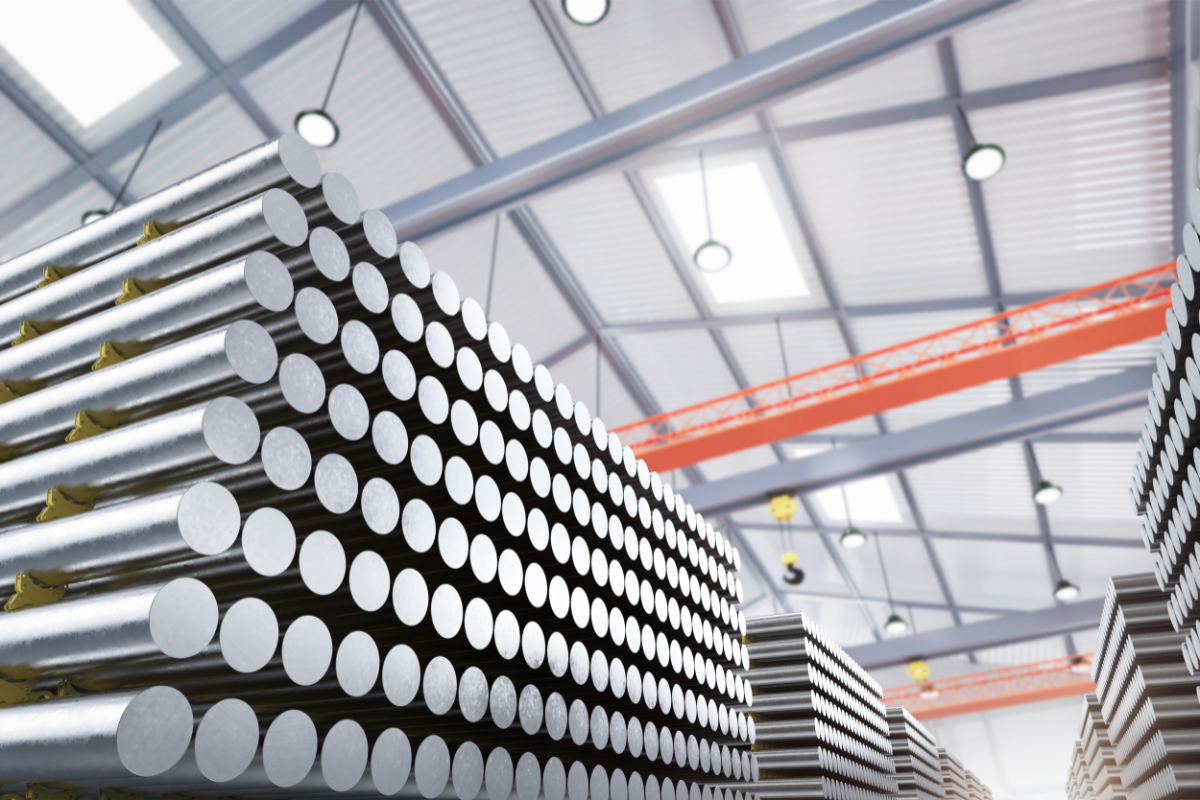
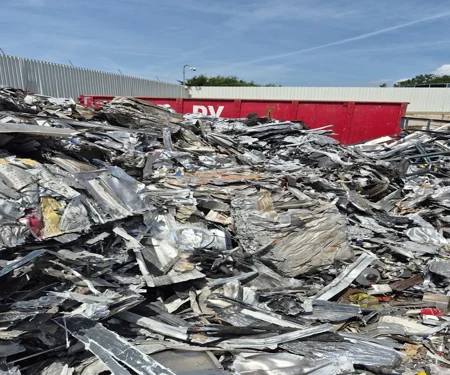
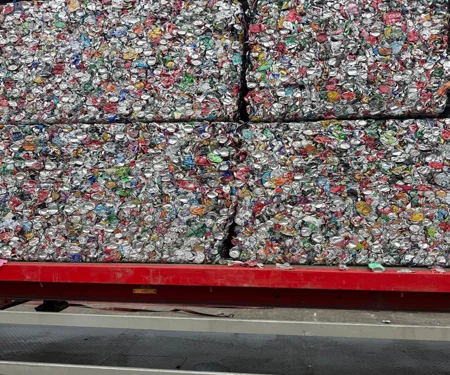
The image used in this article is a stock image for referential purposes only.
Sri Lanka’s construction sector, heavily dependent on aluminium, is hanging by the thread of uncertainty. Roughly 28,000 tonnes of aluminium is used in the construction sector of the nation. The two-week ceasefire in the Middle East conflict led to the reopening of the Strait of Hormuz, only to be closed soon after. With no domestic production of aluminium and full reliance on imports, the future of the Sri Lankan construction industry remains foggy.
Explore- Most accurate data to drive business decisions with Global ALuminium Industry Outlook 2026 across the value chain
According to the report of the Department of Census and Statistics, Sri Lanka, combining the GDP contributed by the construction sector throughout the four quarters to the Sri Lankan economy stood around LKR 963.94 billion (USD 3.8 billion), accounting for nearly 3 per cent of the national GDP of LKR 44.56 trillion (USD 141.2 billion).
The Department of Census and Statistics reported that as of Q3 2025, out of a population of 23.2 million citizens, the Sri Lankan construction sector has employed 8.1 million workers, which represents almost 35 per cent of the entire population.
On March 28, the Iranian missile and drone attacks hit the aluminium smelters of Aluminium Bahrain and Emirates Global Aluminium, disrupting the aluminium supply chain even further.
While Alba had already shut down three of its potlines linked to the blockade of the Strait of Hormuz trade corridor due to the ongoing Middle East conflict, the smelter damage has further curbed its aluminium shipment scenario, with an uncertain future of the smelter reopening until the resolution of the geopolitical tensions.
Don't miss out- Buyers are looking for your products on our B2B platform
How does this impact the Sri Lankan economy?
The supply squeeze has left the country’s construction industry in grave trouble. Sri Lanka sources the majority of its primary aluminium from Bahrain. On an average, Sri Lanka sources primary aluminium within the range of 3,000 to 6,000 tonnes.
In 2024, Sri Lanka sourced 14,941 tonnes of unwrought aluminium, out of which 5,235.73 tonnes were supplied by Bahrain, establishing its position as the largest exporter to Sri Lanka, contributing 35.04 per cent to the unwrought volume.
As of 2025, Bahrain shipped 6,098.18 tonnes to the country. The year-on-year surge of 16.47 per cent indicates the increased dependence of Sri Lanka on Bahrain.
Alba’s aluminium production situation, already cut by 19 per cent with the shutdown of its Potlines 1, 2 and 3 and further aggravated by the Iranian missile attacks, brings Sri Lanka to a critical juncture with an urgent need to redraw its import map.
Must read: Key industry individuals share their thoughts on the trending topics
Who are the alternative sources?
According to the records of Global Aluminium Trade Monitor by the International Trade Administration, the US, the top primary aluminium exporters to Sri Lanka in 2025, apart from Bahrain, are Malaysia, India and China.
Despite a slight Y-o-Y decline over the past 5 years, Malaysia remains a steady exporter of primary aluminium. In 2025, it shipped approximately 1.93 million tonnes of primary aluminium, and Sri Lanka sourced 1,711.03 tonnes from the country.
Malaysia stands tall as an alternative source for Sri Lanka to meet the requirement deficit of imported primary aluminium. The trade potential between the two nations is based on the following factors:
- A steady trade partnership with the 1982 Bilateral Investment Treaty
- Ongoing, in-progress Free Trade Agreement (FTA) negotiations, cutting off import tariffs
- Malaysia’s goal to widen its export base
India’s primary aluminium export volume added up to 1,509,768.08 tonnes, out of which 1,849.66 tonnes were shipped to Sri Lanka.
India-Sri Lanka trade relations are multifaceted, with the following factors driving the possibility for a hike in primary aluminium trade volume:
- India is a top trading partner and investor for Sri Lanka.
- Both countries have been linked by the India-Sri Lanka Free Trade Agreement (ISFTA) since 2000, which has allowed duty-free trade across borders, thereby boosting bilateral trade.
China is a major trading partner and import source of Sri Lanka. Its primary aluminium export volume in 2025 stood at 582,292.8 tonnes.
In 2025, 1,460.32 tonnes of primary aluminium were shipped from China to Sri Lanka. In the present context, China emerges as a potential trade partner of Sri Lanka with the possibility of increasing its primary aluminium export volume to the latter. This is based on the following factors:
- China’s plans to boost its aluminium export in the midst of a supply crunch due to the Middle East conflict
- Positive trade relations between China and Sri Lanka that bear the potential for a boost and improvement
Also read: Vietnam-China partnership aimed to solidify cross-border aluminium value chain
Another significant contributor to Sri Lanka’s primary aluminium imports could be Indonesia. Sri Lanka had sourced 395.31 tonnes from Indonesia in 2024, out of the 388,273.51 tonnes shipped by Indonesia, followed by a gap in the bilateral trade in 2025.
Given Indonesia has been strengthening its aluminium value chain through bauxite mining expansion and new alumina refining capacity, evident as the export volume in 2025 climbed to 552,409.41 tonnes (approx.), representing a 42.27 per cent increase.
Moreover, both nations have been negotiating a Preferential Trade Agreement to increase trade volumes, further adding to the potential of an expanded scope for the agreement.
Hence, there may be scope for renewing trade relations between the two nations.
The future of Sri Lanka’s GDP
If the alternative sources for primary aluminium import fall into place and fill in the deficit of the suspended Bahrain shipment, the construction sector of Sri Lanka, hosting a huge employment base and largely contributing to the nation’s GDP, will be able to stand steady.
However, in case Sri Lanka’s alternative trade partners are unable to fill the deficit, the USD 141.2 billion GDP would likely drop 3 per cent and slip to approximately USD 988.14 billion, with another long recovery period to follow.
Trading aluminium across borders? Find out the exact cost you need to bear for the embedded carbon in the product by using this CBAM calculator.

A Canadian first: Alumilex’s ALX2090 achieves PHI certification milestone for aluminium window performance
Next articleRolls-Royce unveils the Nightingale concept as its first electric convertible
Grow with
AL Circle