AL Circle
  • About us
  • Team
  • Careers
  • Blog
  • Interviews
  • FAQs
  • News
  • Promote With Us
  • Reports
  • e-Magazine
  • Business Leads
  • Featured Companies
  • Press Release
  • Contact Us
  • Terms & Conditions
  • Testimonials
  • Privacy Policy
  • Refund & Cancellation Policy
Aluminium Ecosystem App
app storegoogleplay
Aluminium Ecosystem App
app storegoogleplay
asi
MEMBER

A proud
ASI member

AL Circle Private Limited | CIN: U72200WB2017PTC221175

Registered Office: Ecospace Business Park, Block 3A, Unit 401A, New Town, Rajarhat, Kolkata, WB 700160

Corporate Office: Ecospace Business Park, Block 3A, Unit 401A, New Town, Rajarhat, Kolkata, WB 700160

© 2026 AL Circle. All rights reserved. AL Circle is not responsible for content from external sources.

alcircle logo
asi
MEMBER

A proud
ASI member

  • About us
  • Team
  • Careers
  • Blog
  • Interviews
  • FAQs
  • News
  • Promote With Us
  • Reports
  • e-Magazine
  • Business Leads
  • Featured Companies
  • Press Release
  • Contact Us
  • Terms & Conditions
  • Testimonials
  • Privacy Policy
  • Refund & Cancellation Policy
AL Circle: Aluminium Ecosystem App
app storegoogleplay

AL Circle Private Limited | CIN: U72200WB2017PTC221175

Registered Office: Ecospace Business Park, Block 3A, Unit 401A, New Town, Rajarhat, Kolkata, WB 700160

Corporate Office: Ecospace Business Park, Block 3A, Unit 401A, New Town, Rajarhat, Kolkata, WB 700160

© 2026 AL Circle. All rights reserved. AL Circle is not responsible for content from external sources.

AL Circle Logo
AL Circle
AL NewsAL BizAL Learn
AL NewsAL BizAL LearnAbout us
SIGN IN
Or

By clicking sign in, join free or continue with Linkedin, Google, I agree to the T&C and the Privacy Policy

Profile

U
0%

—

View & Update Profile
DashboardSaved ContentBlogFAQs
NewsPress ReleaseLightweighting the future: How material innovation is reshaping automotive manufacturing mobility
10 JULY 2026Bharath Krishna Rao

Lightweighting the future: How material innovation is reshaping automotive manufacturing mobility

Edited by
5 min read
Lightweighting the future: How material innovation is reshaping automotive manufacturing mobility

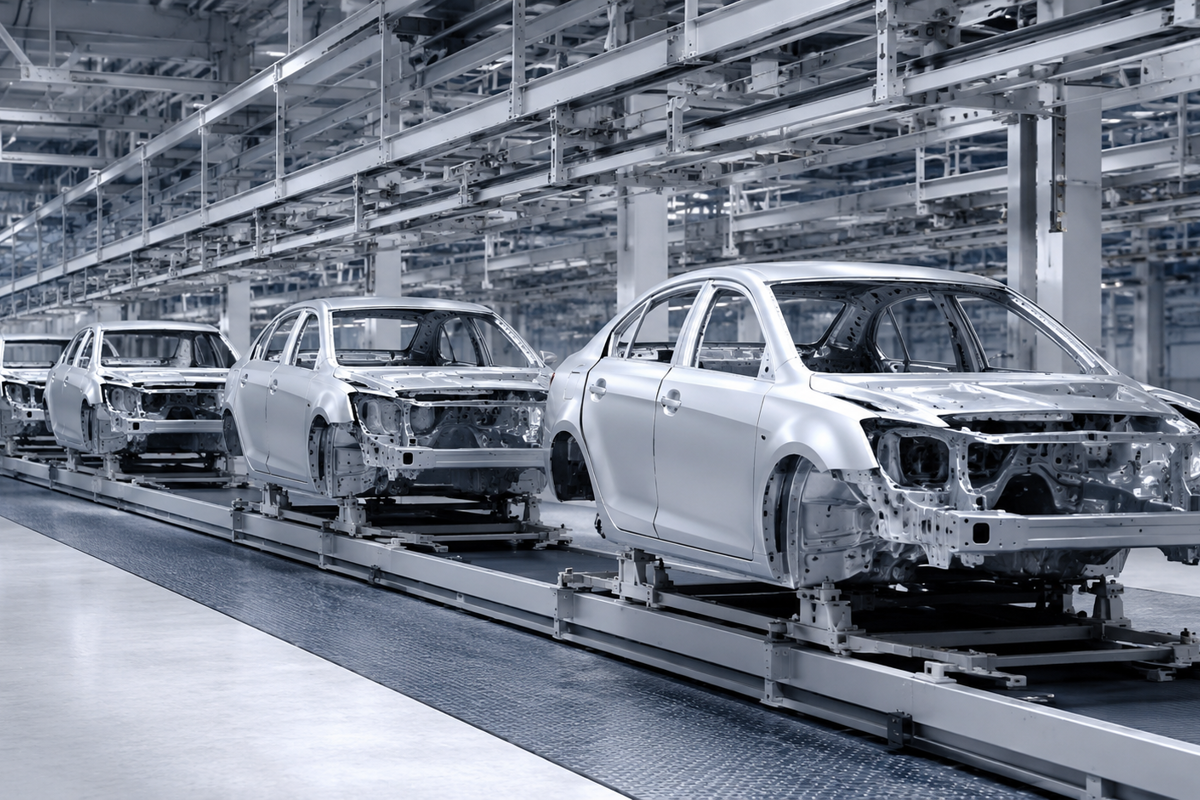
The image used in this article is generated with an AI tool and does not depict any real-time moment

India’s automotive industry is coming into a phase in which vehicles are expected to provide more while consuming less. Consumers want a better range, greater safety, powerful performance and more features, but they also expect vehicles to remain affordable and reasonable.

Advertisement

This creates a difficult engineering challenge. Every additional battery module, sensor, safety element or electronic system adds weight. A heavier vehicle requires more energy to move, reducing efficiency and increasing operating costs. In electric vehicles, it may also require a larger battery, which further increases both weight and price.

For India, lightweighting is therefore not simply a design trend. It is a significant path to making mobility more efficient, affordable and sustainable.

India produced more than 3.47 crore passenger vehicles, commercial vehicles, three-wheelers, two-wheelers and quadricycles during FY2025-26. The automotive sector contributes around 6 per cent to the country’s GDP and about 35 per cent to manufacturing GDP. Even a modest improvement in the material and energy efficiency of each vehicle can build a significant impact at this scale.

To know about the latest technical development of aluminium casting and market is growing to reach 24.2 Mt usage, explore our comprehensive report: “Global Aluminium Casting Market 2026-2032”

India cannot solve efficiency only through larger batteries

The weight challenge becomes even more important in electric mobility, particularly for two-wheelers and three-wheelers used for daily commercial operations. For these users, range, charging time and payload capacity directly affect earnings.

The usual response to range concerns is to add a larger battery. But a bigger batter also adds cost and weight, making the vehicle less efficient and requiring stronger components.

A more practical solution is to reduce the energy needed to move the vehicle. By using lighter materials and smarter vehicle design, manufacturers can improve range without simply increasing battery size.

A lighter EV can travel farther on the same charge, carry more load and reduce operating costs. It may also achieve the required range with a smaller battery, helping bring down the vehicle’s overall price. For India, lightweighting can therefore play an important role in making electric mobility more affordable and commercially viable.

The answer Is not to replace every steel component

Lightweighting is often reduced to a simple argument between steel, aluminium and composites. In practice, no single material can meet every automotive requirement.

Advanced high-strength steel can provide structural strength with thinner sections. Aluminium can reduce weight in battery enclosures, wheels, chassis parts and body panels. Engineered polymers can replace heavier components in selected non-structural applications. Composites can deliver high strength-to-weight performance, although their cost and recyclability remain concerns for mass-market vehicles. India needs a mixed-material approach in which every component uses the material best suited to its function.

This is particularly important because India is not a market where cost can be treated as a secondary consideration. Materials that work in premium global vehicles may not be commercially viable for an Indian two-wheeler, three-wheeler or entry-level passenger car. The right question is not which material is the lightest. It is which material delivers the required safety, durability, cost and recyclability at the lowest possible weight.

Local innovation will decide affordability

India’s INR 25,938 crore Production Linked Incentive scheme for automobiles and auto components is intended to support the domestic manufacturing of advanced automotive technology products. Material innovation should become an important part of this localisation effort.

India needs stronger domestic capabilities in high-strength automotive steel, aluminium alloys, engineering polymers, sustainable composites, material testing and advanced manufacturing. Greater localisation can reduce exposure to global supply disruptions while allowing materials to be developed for Indian road, weather and load conditions.

Indian vehicles face challenges that differ from those in many developed markets. They must operate under high temperatures, variable road conditions, heavy loads and demanding commercial-use cycles. Imported material solutions cannot simply be adopted without local validation.

Lightweighting must therefore be supported by Indian research institutions, testing centres, start-ups and manufacturers working together on commercially practical solutions.

For forward-thinking aluminium market insights amidst supply chain and price challenges, read "ALuminium LeaderSpeak 2026"

Safety and circularity must remain non-negotiable

Lighter should never mean weaker.

Vehicle security depends on structural method, controlled energy absorption and the behaviour of materials during a collision. New materials must experience rigorous crash, thermal, fatigue and environmental testing before they are deployed at scale.

The industry must also consider what happens after the vehicle achieves the end of its useful life. A mixed material vehicle may be lighter during the procedure but harder to dismantle and recycle. Manufacturers should design components for easier separation, clearly identify polymer grades and improve the use of recycled aluminium and steel wherever performance standards permit.

A competitiveness strategy for Indian manufacturing

India’s automotive industry cannot rely only on electrification to meet its future efficiency and sustainability goals. It must also improve how intelligently vehicles use materials.

Lightweighting can help extend EV range, improve payload capacity, reduce energy consumption and lower lifecycle emissions. Done correctly, it can also reduce dependence on larger batteries and expensive imported materials. The opportunity is not to build the lightest vehicle at any cost. It is to build the most efficient vehicle at price Indian customers and commercial operators can afford.

For India, material innovation is more than an engineering priority. It is a pathway to more competitive manufacturing, accessible electric mobility and a stronger domestic automotive ecosystem.

Note: This article has been shared By Bharath Krishna Rao, CEO & Co - Founder, Emobi and has been published by AL Circle with its original information without any modifications or edits to the core subject/data.

Tagged with:IndiaAluminiumAluminium alloy wheelsAluminium auto componetsAluminium automobilesAluminium batteryAluminium chassisAluminium casting

Grow with
AL Circle

KNOW MORE
Previous article

Designer Guillaume Bloget develops aluminium and cork kayak inspired by French lakes

Next article

Toyo Printing Inks and Toyo Ink Europe met with industry professionals at METPACK 2026!

Grow with
AL Circle

KNOW MORE

Responses

Related News

End User

Alcoa’s 16kg aluminium wheel could change fleet efficiency equation

End User

Fun Kids highlights Amazing Aluminium with podcast series

End User

Indian electronics makers turn to aluminium as copper costs squeeze margins

End User

New Alumotion JV brings robotised anode assembly to Canadian aluminium smelters

End User

Vishay launches aluminium nitride chip resistors for 5G, 6G and aerospace systems

End User

₹18b investment and 700 distributors: Aditya Birla Group launches Ultravolt wires and cables business

End User

Porsche's lightweight GT3 gets heavier, and that's the point

End User

Aludecor launches weather-responsive intelligent louvers with global remote access

End User

How PACKFINE advances aluminium beverage can manufacturing through automated production and quality control

End User

Canada doubles US steel and aluminium tariffs to 50% as trade war escalates

E-magazines

VIEW ALL
ALuminium LeaderSpeak 2024

ALuminium LeaderSpeak 2024

APRIL 2024, EDITION NO.23

ALuminium Casting Industry: Creating Opportunities for Future

ALuminium Casting Industry: Creating Opportunities for Future

FEB 2024, EDITION NO.22

ALuminium Middle East Focus 2024

ALuminium Middle East Focus 2024

JAN 2024, EDITION NO.21

Digital Transformation of the ALuminium Industry: Drivers and Changemakers of 2023

Digital Transformation of the ALuminium Industry: Drivers and Changemakers of 2023

DEC 2023, EDITION NO.20

Digital Transformation in the ALuminium Industry: Drivers and Changemakers of 2024

Digital Transformation in the ALuminium Industry: Drivers and Changemakers of 2024

JAN 2025, EDITION 29

ALuminium Industry: Focus Europe

ALuminium Industry: Focus Europe

NOV 2024, EDITION NO.28

The Modern-day world of ALuminium Flat Rolled Products

The Modern-day world of ALuminium Flat Rolled Products

OCT 2024, EDITION NO. 27

ALuminium Industry: Focus Asia

ALuminium Industry: Focus Asia

SEP 2024, EDITION NO. 26

Advanced Industrial Technologies in the ALuminium Industry

Advanced Industrial Technologies in the ALuminium Industry

JULY 2024, EDITION NO. 25

ALuminium Extrusions: Shaping the Future

ALuminium Extrusions: Shaping the Future

JUNE 2024, EDITION NO. 24

ALuminium LeaderSpeak 2024

ALuminium LeaderSpeak 2024

APRIL 2024, EDITION NO.23

ALuminium Casting Industry: Creating Opportunities for Future

ALuminium Casting Industry: Creating Opportunities for Future

FEB 2024, EDITION NO.22

ALuminium Middle East Focus 2024

ALuminium Middle East Focus 2024

JAN 2024, EDITION NO.21

Digital Transformation of the ALuminium Industry: Drivers and Changemakers of 2023

Digital Transformation of the ALuminium Industry: Drivers and Changemakers of 2023

DEC 2023, EDITION NO.20

Digital Transformation in the ALuminium Industry: Drivers and Changemakers of 2024

Digital Transformation in the ALuminium Industry: Drivers and Changemakers of 2024

JAN 2025, EDITION 29

ALuminium Industry: Focus Europe

ALuminium Industry: Focus Europe

NOV 2024, EDITION NO.28

The Modern-day world of ALuminium Flat Rolled Products

The Modern-day world of ALuminium Flat Rolled Products

OCT 2024, EDITION NO. 27

ALuminium Industry: Focus Asia

ALuminium Industry: Focus Asia

SEP 2024, EDITION NO. 26

Reports

VIEW ALL
Global Aluminium Casting Market Report
ACCESS
Global Bauxite & Alumina Market Forecast to 2036
ACCESS
Global Aluminium Industry Outlook 2026
ACCESS
Global Aluminium Casting Market Report
ACCESS
Global Bauxite & Alumina Market Forecast to 2036
ACCESS
Global Aluminium Industry Outlook 2026
ACCESS
Global Aluminium Casting Market Report
ACCESS
Global Bauxite & Alumina Market Forecast to 2036
ACCESS
Global Aluminium Industry Outlook 2026
ACCESS

Interviews

→
Daniel Vaknine

Daniel Vaknine

European aluminium EPR fees vary by country, PRO, packaging and recyclability

Secondary Aluminum Coalition for America

SACA bets on secondary aluminium to close US supply gap faster and at lower cost

Secondary Aluminum Coalition for America
Daniel Vaknine

Daniel Vaknine

European aluminium EPR fees vary by country, PRO, packaging and recyclability

Secondary Aluminum Coalition for America

SACA bets on secondary aluminium to close US supply gap faster and at lower cost

Secondary Aluminum Coalition for America

Diego Daluisio

China’s aluminium extrusion industry is going through a real transition, and I do not think the West has fully absorbed what it means

Diego Daluisio

Business Leads

VIEW ON AL BIZ
Aluminium Extrusion 6063 ScrapSELLING LEAD

Aluminium Extrusion 6063 Scrap

Aluminium Taint Tabor ScrapSELLING LEAD

Aluminium Taint Tabor Scrap

Aluminium UBC ScrapSELLING LEAD

Aluminium UBC Scrap

Aluminium Solar Panel FrameSELLING LEAD

Aluminium Solar Panel Frame

Diesel OilSELLING LEAD

Diesel Oil

Aluminium extrusions

Turn marketplace visibility into more relevant buyer enquiries.

Boost Your Listing

Business Cards

FEATURED

VIEW ALL