Malaysia’s rare-earth ambitions face a caveat: Can it control the full supply chain?
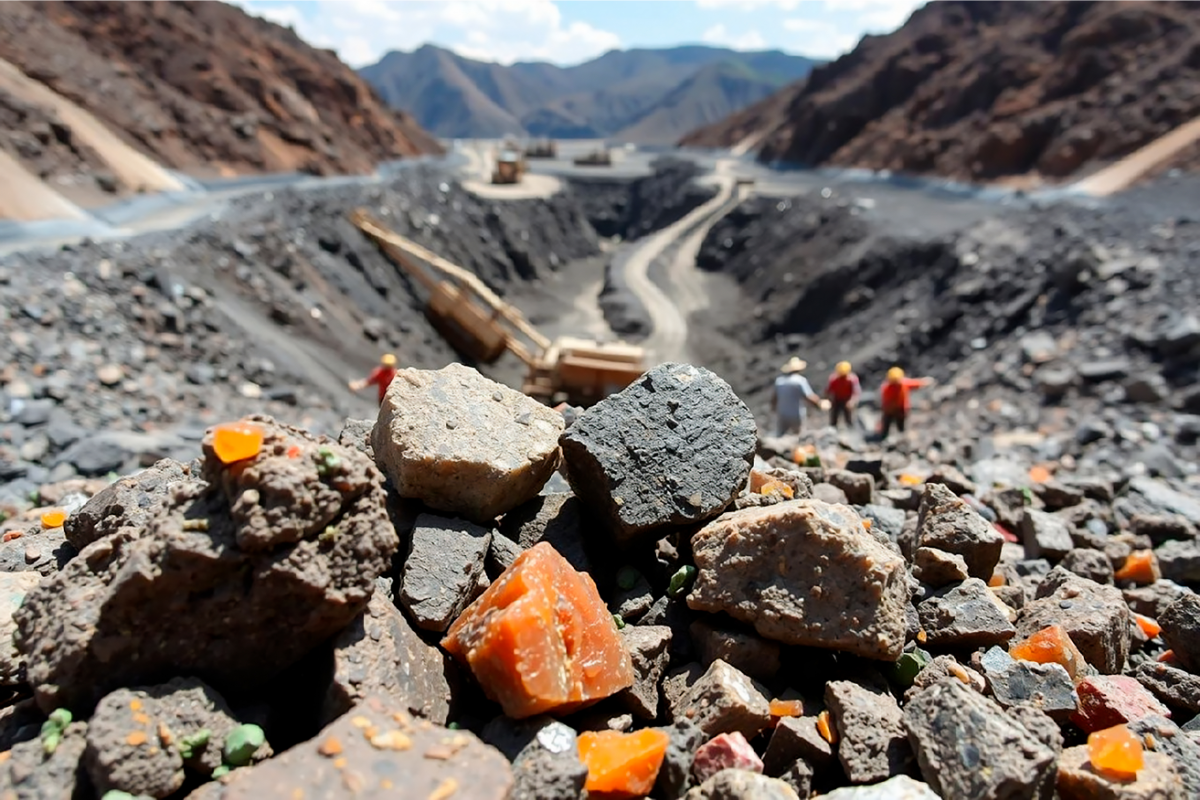
Stock image for referential purposes only
Malaysia is emerging as a rare earth hub by developing a domestic “mine-to-magnet” ecosystem spanning exploration, mining, separation, metals, alloys and permanent magnets. But, how is the venture faring?
A study by Hiu Dilangit Sasongkojati at the University at Albany, SUNY, puts Malaysia’s ambition under a microscope. Malaysia’s supply chain remains fragmented, with limited domestic upstream activity, heavy reliance on foreign technology and downstream manufacturers still dependent on imported processed metals.
To learn about the market potential of aluminium dross, explore “ALuminium Dross Processing: Generation, Recovery & Strategic Roadmap”
Malaysia has the resources, but not yet an integrated chain
Malaysia estimates around 16.2 million tonnes of inferred total rare-earth elements (TREE) in inferred resources or potential, concentrated mainly in Terengganu, Kelantan, Perak, Kedah and Pahang.
The country’s ionic-adsorption clays are particularly notable for their reported magnet and heavy-REE content. Yet the report underlines an important distinction: having resources does not automatically translate into domestic processing capability.
The Malaysian government values the potential resource at approximately MYR 747.2 billion (USD 175 billion). It estimates that developing the sector could attract roughly MYR 100 billion (USD 24.3 billion), of investment and create about 4,000 jobs. The study cites an International Energy Agency projection that Malaysia could capture around 12 per cent of global rare-earth refining capacity by 2030, potentially becoming the world’s second-largest refiner. That remains a scenario-dependent ambition, not a guaranteed outcome.
Malaysia is also trying to encourage local value addition. Since January 2024, the nation has maintained a moratorium on exports of raw or unprocessed rare earths, intended to push investors towards domestic refining and manufacturing rather than simple resource export.
Its upstream mapping identifies MCRE Resources in Perak, majority-owned by Southern Alliance Mining, as using technology rights from China Rare Earth Corporation, with material moving to China for further processing.
The situation captures a central question for Malaysia: owning the resources is different from controlling the technology and processing chain.
The China benchmark
Malaysia’s strategic importance must be viewed against China’s dominance of the global rare-earth industry. The study, using 2025 US Geological Survey estimates, says China accounted for about 69 per cent of global rare-earth mine production, or approximately 270,000 tonnes out of 390,000 tonnes, while the US accounted for about 13 per cent. Malaysia’s mine production was estimated at only 110 tonnes, or less than 1 per cent of the global total.
China also held approximately 52 per cent of global rare-earth reserves, compared with about 1 per cent for Malaysia. The concentration is even greater in processing and refining, where China controls roughly 90 per cent of global capacity.
To explore trade opportunities of aluminium consumables, visit AL Biz
Lynas anchors Malaysia’s existing rare-earth ecosystem
Malaysia’s most established strategic asset is its existing industrial infrastructure, particularly Lynas Rare Earths’ Gebeng operation, which provides commercial-scale separation outside China.
The study highlights NdPr alongside emerging Dy, Tb and Sm production, while identifying Malaco Group and SG4, an economic coordination platform for four Malaysian states, among the developing Malaysian midstream participants.
Downstream capabilities are also emerging. Shin-Etsu Malaysia manufactures rare-earth permanent magnets, while Bomatec produces magnet solutions. However, the report notes that these operations largely depend on imported processed metals.
Malaysia therefore already has elements spanning the upstream, midstream and downstream segments, but these do not yet form a fully integrated domestic chain.
That distinction becomes particularly important when assessing the country’s technological position. Foreign-operated technology within Malaysia can create industrial capacity without necessarily establishing technological sovereignty.
Technology, ownership and policy become the next test
Malaysia’s Strategic Trade Act 2010 can regulate specified strategic goods and technologies leaving the country. However, the study finds that inbound investment rules remain fragmented and are primarily geared towards economic development rather than systematic national-security screening.
It therefore separates two policy mechanisms. Strategic trade controls govern the movement of sensitive materials and technologies out of Malaysia, while investment-security regulations address who can acquire, influence or control strategic assets.
The distinction matters because controlling exports does not necessarily resolve vulnerabilities created through foreign ownership or influence. The study recommends a centralised national-security screening mechanism that could mitigate, or ultimately block, foreign investments considered to present unacceptable risks.
Malaysia’s federal-state structure adds another layer. States control land and mineral rights, while Kuala Lumpur retains important environmental, industrial and trade responsibilities. The report cites rare-earth royalty structures of 12 per cent in Perak, 10 per cent in Pahang and 15 per cent in Kedah, while also documenting tensions between state revenue interests and federal ambitions for downstream industrialisation.
The result is a complex ecosystem involving state resource sovereignty, federal policy, Chinese technology, Australian processing, Japanese and Korean manufacturing, Western capital and environmental considerations.
From resource potential to commercial capability
Technology transfer is an area requiring closer examination. Mining ionic clays, separating Dy and Tb, producing high-purity oxides, converting oxides into metals, alloying and manufacturing qualified sintered NdFeB magnets represent distinct industrial capabilities rather than one transferable technology.
Metallisation particularly remains an important link between separated oxide and magnet production.
The study also points out differences in the strategic value of rare-earth resources. Dy- and Tb-bearing feedstock has different implications from material dominated by La and Ce, while the potential presence of heavier elements such as yttrium introduces another layer of economic and processing complexity.
Unlock key insights from leading companies and experts across the aluminium ecosystem with our e-Magazine - Mine to Market: Aluminium Producers & Manufacturers 2026
A rare earth scope beyond geology
The study argues that Malaysia needs to strengthen economic-security policy alongside industrial policy.
Malaysia already has the Strategic Trade Act 2010, which controls designated strategic goods, technologies and dual-use items. Rare-earth products can fall under these controls when they meet specific technical specifications, including some high-performance magnets. Malaysia’s framework covers over 1,500 controlled strategic items.
But Malaysia lacks a centralised system to screen foreign investment in strategic industries on national-security grounds. The existing investment-review process assesses economic benefits and eligibility for incentives, but cannot block a transaction solely because it presents a national-security risk.
The report recommends a centralised investment-screening mechanism that could review, mitigate or block investments that risk placing strategic resources, technology or infrastructure under unacceptable foreign control.
Malaysia’s rare-earth future will depend not only on what it has underground, but on whether it can turn those resources into an integrated, commercially viable and strategically secure industrial supply chain.
Saudi Arabia identifies 114m tonnes of rare-earth and uranium-bearing ore in Madinah
Next articleChina Rare Earth Group in talks to acquire Shenghe Resources, putting MP Materials stake in focus
Grow with
AL Circle