LME aluminium price fades Middle East crisis gains despite a strained Gulf supply

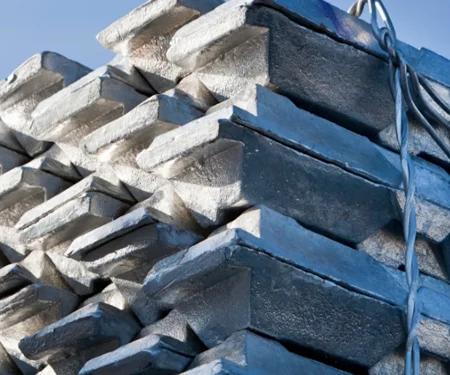
The image used in this article is generated with an AI tool and does not depict any real-time moment
The Middle East updates on rising geopolitical tensions continue to fill the board. Still, aluminium prices have all the gains triggered by the Middle East crisis that began on February 28 this year. The London Metal Exchange (LME) aluminium price chart recorded the three-month contract slipping back to USD 3,170.5 per tonne, slowly retreating to the range where it traded before the geopolitical tensions intensified.
The market’s calm comes even as updates from the Middle East about disruptions at Gulf smelters report nearly 2 million tonnes of annual production removed from global supply chains.
After reaching a four-year high of USD 3,855 per tonne at the close of June 2, aluminium prices have retreated as traders increasingly believe higher exports from China and Indonesia can offset lost Gulf output. Concurrently, in April, China’s aluminium exports jumped 15 per cent year-on-year.
Explore: The most comprehensive and forward-looking industry-focused report — Global Bauxite & Alumina Market Forecast to 2036: Supply–Demand, Trade Flows & Price Report
Emirates Global Aluminium (EGA) is steadily restoring operations at its Al Taweelah complex after sustaining damage from the Iranian missile attacks on March 28. The company expects its alumina refinery to resume production this quarter and had restarted 89 of 1,262 reduction cells by early July.
However, recovery across the region remains uneven. Aluminium Bahrain’s (Alba) operating status remains uncertain, while Qatalum continues to run at only 60 per cent capacity.
According to the International Aluminium Institute (IAI), Gulf aluminium production declined by 20 per cent during the first half (H1) of 2026, with smelter run rates cutting off about 5 per cent of global supply on an annualised basis.
China and Indonesia emerge as alternative suppliers
Robust profitability has enabled Chinese smelters to maintain production at close to 99 per cent capacity utilisation, backed by lower alumina prices and stronger aluminium margins.
As of year-to-date (YTD) May 2026, according to the International Trade Administration (ITA) data, China’s exports of all the aluminium product categories, viz., unwrought, bars, rods and profiles, foil, pipes and tubes, plates, sheets and strip, tube or pipe fittings, and wire, surged 10.46 per cent Y-o-Y to 2.68 million tonnes from 2.43 million tonnes in YTD May 2025.
Out of this, China’s primary aluminium exports jumped 53 per cent Y-o-Y to 247,118.28 tonnes from 161,504.74 tonnes recorded in YTD May 2025.
May shipments reached 595,000 tonnes, the highest monthly volume since November 2024.
Indonesia is also rapidly strengthening its position in the global aluminium market. Primary aluminium exports climbed to 311,770.95 tonnes from 211934.62 tonnes in YTD 2025, rising 48.99 per cent Y-o-Y.
New capacity additions continue to support export growth. The 480,000-tonne-per-year Hua Chin Aluminium smelter, a joint venture of Huafon Group and Tsingshan Holding Group, operating independently from China Hongqiao Group, has already ramped up production, while Alamtri Resources Indonesia is adding another 1 million tonnes of annual capacity and has begun shipping exports.
Longer term, Indonesia’s development pipeline includes as many as 11 new smelters with a combined production capacity of approximately 13 million tonnes annually.
Unlock key insights from leading companies and experts across the aluminium ecosystem with our e-Magazine - Mine to Market: ALuminium Producers & Manufacturers 2026
Physical premiums remain elevated
While futures markets have largely erased the geopolitical premium, physical aluminium markets continue to signal tighter supply conditions.
European importers appear to have benefited from inventory accumulated before the implementation of the EU’s Carbon Border Adjustment Mechanism (CBAM), particularly through Indonesian shipments to Europe in late 2025. However, uncertainty remains over how long those inventories can absorb ongoing supply disruptions.
That caution is reflected in regional premiums. Since the start of the conflict, the European duty-unpaid aluminium premium has increased by 65 per cent. Meanwhile, the Japanese aluminium premium has hit an 11-year high at USD 395 per tonne, suggesting that physical buyers are more concerned about Gulf supply risks than futures traders.
While the LME aluminium price chart suggests confidence that alternative supply can fill the gap, physical premiums indicate the global aluminium market remains wary of updates regarding the prolonged Middle East crisis.
Trading aluminium across borders? Find out the exact cost you need to bear for the embedded carbon in the product by using this CBAM calculator.
LME aluminium price chart declines further: Cash at $3,175/t; stocks dip nearly 1%
Next articleMozal aluminium shutdown cuts 30% of South32 output, triggers $117m charge
Grow with
AL Circle