German aluminium extrusion technology advances with Günther Wensing, H+H Herrmann + Hieber & Kind & Co. - discover the key technologies
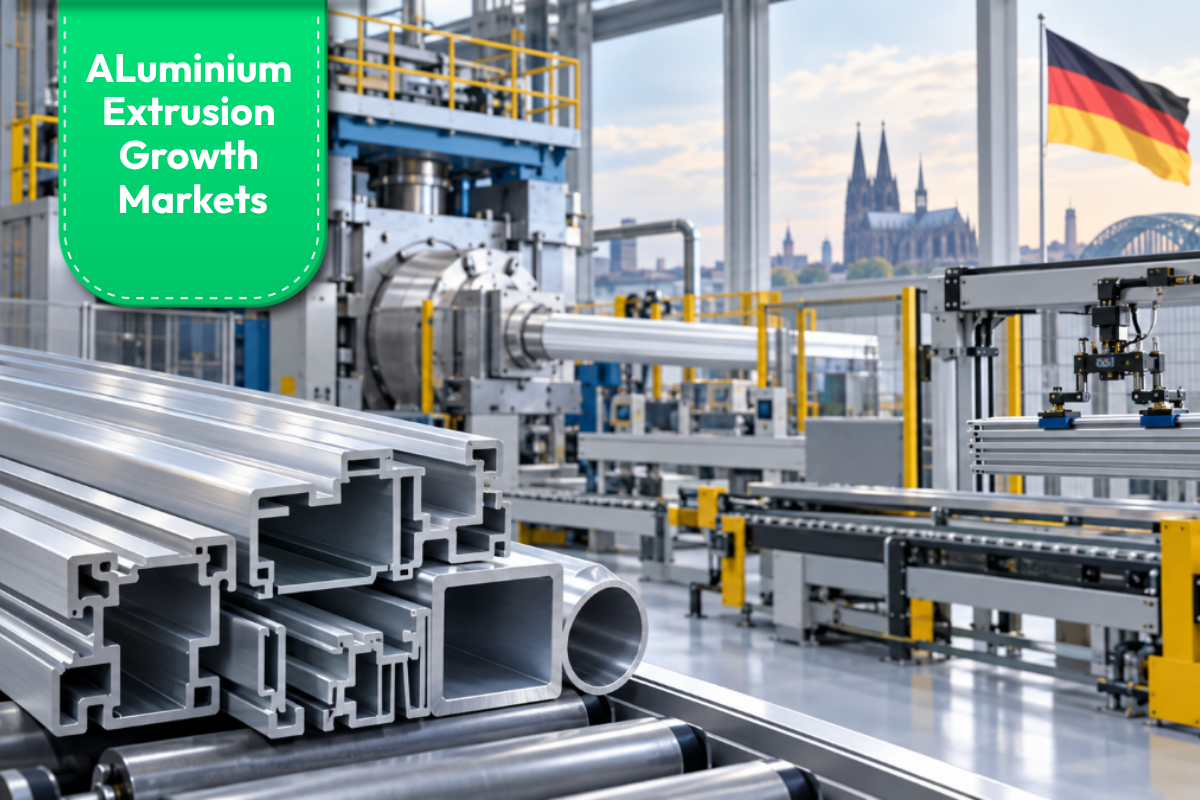
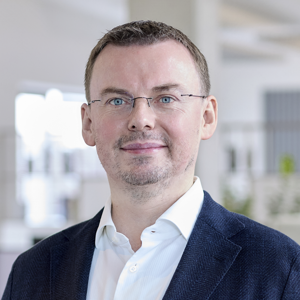
The image used in this article is generated with an AI tool and does not depict any real-time moment
Germany has long been one of Europe’s key markets for aluminium extrusions. Germany’s aluminium extrusion market was valued at USD 3,787.5 million in 2025 and is projected to grow at a 5.8 per cent CAGR through 2030, according to various industry sources. A large share of the Germany’s aluminium extrusion demand comes from the automotive, construction and machinery sectors. While automotive applications include EV components, chassis parts and structural assemblies, construction demand is supported by renovation and infrastructure projects, particularly for energy-efficient windows and façades. Machinery and industrial applications further broaden the market for extruded aluminium.
As demand evolves, extrusion plants are also looking for more efficient ways to produce and move profiles. The focus is increasingly shifting towards Extrusion Line, Profile Handling & Tooling Equip, with automation, energy efficiency and process control becoming important parts of plant upgrades.
Extrusion line, profile handling & tooling equip: German technology moves beyond conventional presses
Germany’s aluminium extrusion equipment sector is increasingly focused on hybrid-electric presses, automated handling and lower-energy heating systems, rather than simply adding conventional press capacity.
The change is taking place across the production line. On the Extrusion Line side, hybrid-electric systems combine electric servo drives for fast auxiliary movements with hydraulics retained for high-force extrusion operations.
SMS group’s HybrEx technology is one example. SMS says the system can reduce energy consumption by up to 55 per cent and increase productivity by up to 20 per cent, depending on the application. The technology is also being paired with fully electric scrap shears. In 2025, SMS supplied Hydro with an 8-inch, 25-MN HybrEx line featuring its electric shear.
The evolution is equally visible in Profile Handling. German and European extrusion plants are adopting AGVs/FTS, automated conveyors, stackers and destackers to move profiles between extrusion, machining, finishing and storage with less manual handling. For more information on technology and detailed sector-wise outlook, read our updated aluminium extrusion report - The World of Aluminium Extrusions to 2035 - Demand Forecast | Price Benchmarking | Plant Economics | Strategic Growth Sectors.
Newer systems can eliminate conventional spacers during profile stacking, while automated marking and tracking are also being integrated into downstream operations. The aim is to reduce handling time and labour requirements while maintaining profile quality.
On the Tooling Equip side, suppliers are increasingly combining process simulation, digital tools and production data to optimise extrusion parameters and reduce trial-and-error during die and process development.
Energy-efficient billet heating, electric heating and waste-heat utilisation are also becoming part of complete line upgrades. The result is a production model built less around a single machine and more around integrating the press, heating, tooling, handling and automation into one energy- and data-efficient system.
Connect with verified aluminium extrusion buyers and suppliers through the AL Biz marketplace.
Leading companies shaping Germany’s aluminium extrusion technology
1.Günther Wensing: Moving from stretch bending to automated profile processing
Germany-based Günther Wensing GmbH & Co. KG specialises in stretch-bending and automated profile-processing technology and has built more than 350 CNC stretch-bending machines.
The company has expanded beyond stretch bending into aluminium-profile machining, including sawing and milling, with solutions ranging from manually loaded machines to fully automated cells.
- CNC stretch bending: Its machines can be configured with up to 26 CNC axes and combine hydraulic and electric axes for controlled profile forming. The systems incorporate force and position control, online process-parameter monitoring and robot integration.
- Automated profile machining: Wensing’s sawing and milling cells can be integrated into automated production sequences covering bending, sawing, milling, deburring, cleaning and marking. Robotic loading and unloading can further reduce manual intervention.
- Digital process control: Profinet connectivity, remote diagnosis and online monitoring allow production parameters to be tracked and adjusted more systematically.
2.H+H Herrmann + Hieber: Automating profile movement and storage
H+H Herrmann + Hieber specialises in internal logistics and material-flow systems for long products, with a particular focus on aluminium extrusion plants.
The company entered the aluminium industry in 1989 and has developed from conveyor technology into a supplier of automated logistics systems covering profile transport, storage, stacking and handling.
- Automated extrusion logistics: Its systems include automatic process cranes, roller and chain conveyors, lifting platforms, vertical conveyors and transfer systems for moving profiles between different production stages.
- Profile stacking and handling: H+H supplies automated stacking and destacking equipment for aluminium profiles and other long products, helping streamline material flow after extrusion.
- 35-MN extrusion-line project: At Aluminium Laufen, H+H supplied the internal logistics system for a new 35-MN extrusion press, integrating process cranes, conveyors, vertical transport and a combination stacker capable of handling profiles and round bars.
- Retrofit and modernisation: The company has also developed updated gripper technology that can be installed on existing automatic cranes, showing its focus on upgrading installed handling equipment rather than only supplying new systems.
3.Wieters & Gerdes: Automating specialised extrusion processes
Wieters & Gerdes Industrial Automation GmbH contributes specialised automation to the extrusion plant through closed die-treatment and profile-sample-treatment systems, as well as process control, material-flow, crane and energy-management solutions. Its extrusion-related portfolio covers die treatment, profile-sample preparation, crane operation and energy management.
- WIAMAT 03: A closed, automated system for cleaning aluminium extrusion dies, developed to improve process efficiency while reducing operator exposure during die treatment.
- WIABOR 01: A closed system for treating aluminium-extrusion profile samples, bringing greater automation and consistency to sample preparation.
- CBC crane systems: WIA also supplies crane-related automation for material handling within industrial production environments.
- WIAEMS: Its energy-management solution is designed to help production facilities monitor and improve energy efficiency, an increasingly relevant issue for energy-intensive extrusion operations.
4.Kind & Co.: Focusing on the tooling side of extrusion
Kind & Co., Edelstahlwerk GmbH & Co. KG supports the aluminium-extrusion industry with specialised hot-work tool steels for extrusion dies and other highly stressed press components. Its materials are designed for tooling exposed to high mechanical loads, elevated temperatures, wear and thermal shock.
- Extrusion-tool steels: Its portfolio includes grades such as CS1, HP1, TQ1 and HTR for extrusion-related tooling applications.
- CS1: The chromium-molybdenum-vanadium alloyed hot-work tool steel is designed for mechanically highly stressed tools, including extrusion stems, press discs, inner liners and dies. It offers high wear resistance, high-temperature strength, toughness and thermal-shock resistance.
- HP1: Designed for extrusion dies requiring high toughness and for inner liners, HP1 offers high-temperature strength, toughness and thermal-shock resistance.
- Tooling support: Beyond steel supply, Kind & Co. provides material and tooling support for components exposed to repeated thermal cycling, mechanical pressure, impact and abrasive wear. The performance of each grade depends on factors such as the alloy being extruded, extrusion speed, billet temperature, tool design, cooling and heat treatment.
5.DIMA Machinery: Extending automation into downstream handling
DIMA Machinery develops machinery for the handling and packaging of aluminium profiles, covering several downstream stages between extrusion and finished-product preparation.
Although DIMA is Italy-based rather than German, its technology is relevant to the wider European aluminium-extrusion equipment landscape and can be retained in a broader Germany/European industry overview.
- Profile handling: DIMA supplies automated systems for moving and positioning aluminium profiles during downstream operations.
- Stacking and destacking: Its equipment includes automatic stackers and destackers, including systems for placing profiles into baskets with spacers and transferring them to subsequent handling stages.
- Pulling and packaging: Its portfolio includes puller machines, wrapping machines and polyethylene-enveloping systems, bringing profile handling and packaging into a more automated workflow.
Germany aluminium extrusion trade: Imports rebound as exports regain ground
As, Germany has long been one of Europe’s key markets for aluminium extrusions, its trade flows reflect the scale of that market. The country continues to rely more heavily on imports than exports for aluminium bars, rods and profiles, with import volumes roughly twice as high as exports.
In H1 2026, Germany imported 287,000 tonnes, down 3.4 per cent from 297,000 tonnes in H1 2025.
The import trend has been uneven. Volumes fell from 136,000 tonnes in Q3 2024 to 111,000 tonnes in Q4, before recovering to 143,000 tonnes in Q1 2025 and 154,000 tonnes in Q2. Imports then declined to 142,000 tonnes in Q3 and 122,000 tonnes in Q4 2025.
The recovery resumed in 2026, with imports climbing to 139,000 tonnes in Q1 and 148,000 tonnes in Q2. To know the global production, demand and consumption forecasts of aluminium extrusions, explore our report "The World of Aluminium Extrusions to 2035"
Exports have followed a similar stop-start pattern but ended H1 2026 slightly higher. Germany shipped around 152,000 tonnes of aluminium bars, rods and profiles in the first half, compared with approximately 150,000 tonnes in H1 2025, an increase of 1.3 per cent.
Exports fell from 77,000 tonnes in Q3 2024 to 68,000 tonnes in Q4, before recovering to 75,000 tonnes in both Q1 and Q2 2025. Volumes then slipped to 72,000 tonnes in Q3 and 62,000 tonnes in Q4.
The recovery became visible in 2026, with exports rising to 74,000 tonnes in Q1 and reaching 78,000 tonnes in Q2, up 5.4 per cent quarter on quarter.
For Germany’s extrusion industry, the focus is increasingly shifting from simply producing more profiles to producing them with greater efficiency, automation and precision - while imports and exports continue to shape the market.
Note: This is an exclusive coverage by AL Circle and may not be reproduced, republished or shared without prior permission.
China aluminium rod inventory stays high, processing fees edge up amid falling prices
Next articleNorth America’s aluminium extrusion demand is rising. Who is meeting the supply gap?
Grow with
AL Circle