Technology and advancements are the backbone of progress, continuously reshaping how we live, work, and interact with the world. Both are like the invisible thread that connects the simplest tasks to the most extraordinary feats, shaping how we live, work, and explore, from the flick of a switch that brightens a room to the complex orchestration of a spaceship soaring beyond our atmosphere. It is the bridge between imagination and reality, transforming ideas into tools, machines, and systems that redefine human potential.
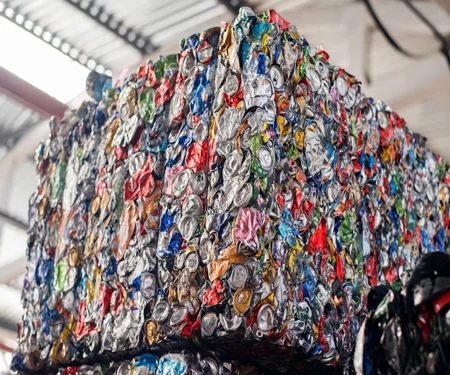
Technological progress is accelerating solutions to global challenges, from artificial intelligence optimising complex data analysis to renewable energy breakthroughs reducing our dependence on fossil fuels. In materials science, for instance, innovations in aluminium recycling and production are minimising waste, reducing carbon footprints, and creating stronger, more lightweight alloys that benefit industries ranging from automotive to aerospace. Modern advancements, such as AI-driven sorting, low-carbon smelting, and high-purity recovery from industrial scraps, are redefining how we reclaim and refine this versatile metal. As per AL Circle’s report, recycled aluminium usage across the world increased from 27.1 million tonnes in 2022 to 28.3 million tonnes in 2023. Usage is expected to increase to more than 29 million tonnes in 2024. To know more about the industry, get your hands on our newly launched report, "Global Aluminium Industry Outlook 2025".
Below is a list of some of the technological advancements in the aluminium industry –
- New recycling process ShAPE
The U.S. Department of Energy’s Pacific Northwest National Laboratory (PNNL) in Washington has pioneered a process known as Shear Assisted Processing and Extrusion (ShAPE), enabling the transformation of 100 per cent post-consumer aluminium scrap into durable extrusions. Impressively, the resulting products meet or exceed the stringent strength and flexibility requirements set by the American Society for Testing and Materials (ASTM) for common building-grade alloys. One of the most remarkable benefits of this innovation is its potential to reduce energy consumption by up to 90 per cent in the production of aluminium building components. The ShAPE process applies intense shear forces to deform scrap aluminium billets or bricks, effectively ‘pulverising’ impurities and dispersing them uniformly throughout the material’s microstructure.
- LIBS Spectrometer from Avantes
Aluminium recycling presents several challenges, including efficient alloy sorting and maintaining the purity and quality of recycled materials. Laser-Induced Breakdown Spectroscopy (LIBS) from Avantes has emerged as a game-changing technology, addressing these critical issues with precision. Material Recovery Facilities (MRFs) handle vast volumes of aluminium scrap, requiring accurate identification and separation of different metal grades. Traditional sorting methods often fall short, leading to inefficiencies and reduced material quality. Avantes' spectrometers offer a cutting-edge solution by enabling real-time, in-line sorting of aluminium alloys. This ensures precise classification and separation of distinct aluminium grades, optimizing the recycling process for downstream applications.
- Beer byproduct– the ultimate solution for extracting aluminium from e-waste
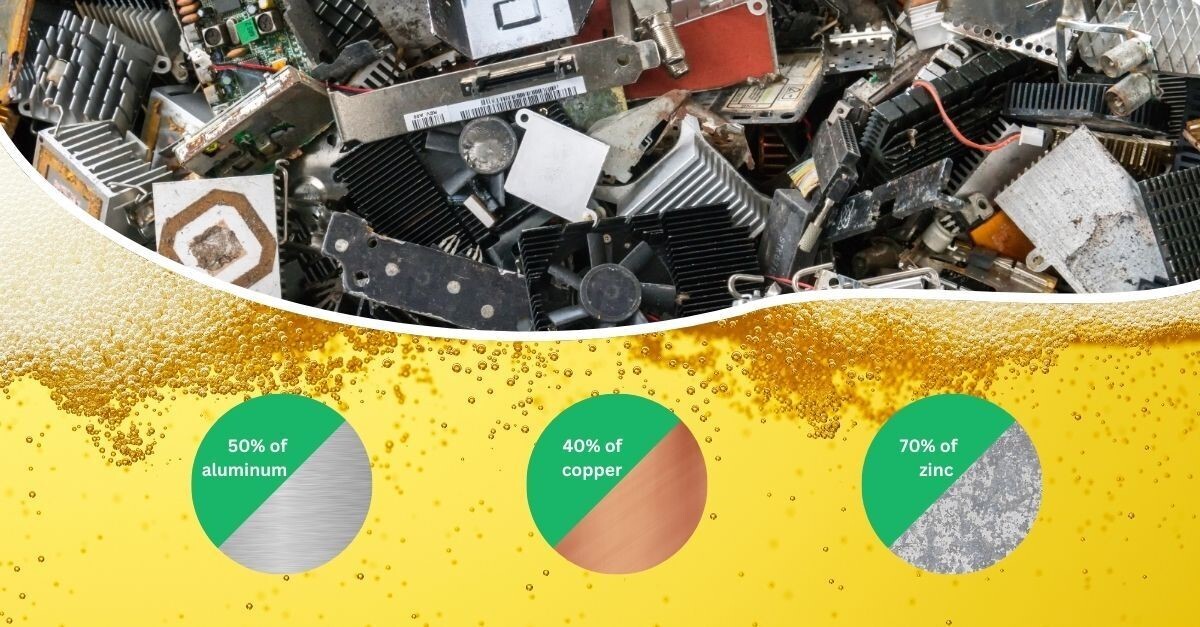
As global reliance on electronics continues to surge, the need for effective recycling solutions has become more urgent than ever. Electronic devices contain a complex mix of metals, including aluminium, zinc, and copper, making proper separation and recycling a significant challenge. However, recent research has uncovered an innovative solution in an unlikely source—spent brewer's yeast, a byproduct of beer production and a key ingredient in Marmite. Researchers collected 20 litres of spent brewer's yeast in their study, isolating the biomass from the brewing residue before drying it for further testing. Their experiments on metal solutions yielded remarkable results, successfully extracting over 50 per cent of aluminium, more than 40 per cent of copper, and over 70 per cent of zinc. Additionally, when applied to a polymetallic waste stream, the yeast facilitated the recovery of over 50 per cent of copper and an impressive 90 per cent of zinc.
- First ever AI sorting technology in Spain
Urbaser, a global leader in environmental solutions, is making a groundbreaking investment in automated sorting technology. By mid-2024, the company will deploy an AI-powered waste-picking robot at its Algimia facility in Valencia in collaboration with UK-based technology provider Recycleye. Equipped with advanced computer vision, the innovative robot is designed to enhance waste sorting efficiency by recovering valuable materials often missed at the final stages, preventing them from ending up in landfills. This strategic move strengthens Urbaser’s commitment to sustainability while unlocking new revenue opportunities, reinforcing its dedication to environmental excellence.
- VisionCycle introduces AI sorting for aluminium & copper scrap
Boston-based VisionCycle has launched an artificial intelligence (AI) division to enhance the recovery of copper and aluminium scrap. This initiative aligns with global Net Zero goals and carbon reduction efforts and promotes material circularity and sustainability. VisionCycle reports an impressive 99 per cent accuracy in sorting copper and aluminium, thanks to its proprietary Vision Valve. This computer-based vision system shreds scrap into sortable particles for seamless separation. Operating with just 0.5 kilowatts of power, the system processes approximately 120 pounds of material daily. VisionCycle introduces a more efficient and sustainable alternative to traditional copper recycling by eliminating energy-intensive steps and heavy machinery.
- Veolia Southwark IWMF's solution for smarter recycling
A cutting-edge robotic arm is enhancing operations and boosting recycling efficiency at Veolia’s Southwark Integrated Waste Management Facility (IWMF). As part of the facility’s aluminium recycling process, the robot efficiently removes paper, card, mixed plastics, and beverage cartons—materials often containing aluminium layers—to ensure effective recycling. Leveraging AI-driven innovation to accelerate ecological transformation, Veolia will integrate data from this system into its GreenUP strategy. This will enable more informed decision-making, optimise facility performance, and track seasonal variations in waste composition. The robotic system features a camera, a 6-axis robotic arm, a pneumatics system, and a compute box. Using compressed air and a silicon gripper, it picks up items, rotates them to align with the correct sorting bin, and propels them into place with a controlled air blast.
- Aluminium from retired aircraft gets a new lease on life
Singapore-based start-up Nandina REM is revolutionising aircraft recycling with its innovative approach. The company repurposes materials, including aluminium, into high-quality, ultra-low-emission, and fully traceable resources. These recycled materials are suitable for use in new aircraft and a wide range of products, including battery casings for electric vehicles, benefiting industries such as aviation and automotive. With support from major global trading houses like Sumitomo and aluminium industry leaders such as Press Metal, Nandina REM utilises advanced technology and material science to maintain the integrity of aluminium alloys. By providing high-grade secondary aluminium to manufacturers, the company reduces dependence on primary aluminium, driving a more sustainable future.
Technology and innovation is the heartbeat of progress, and the aluminium industry proves that sustainability and technology can go hand in hand. From AI-driven sorting systems to unexpected solutions like beer byproducts, these groundbreaking advancements are redefining how we reclaim, refine, and repurpose aluminium. As waste transforms into opportunity and efficiency reaches new heights, the industry is moving toward a future where every discarded scrap holds the potential for reinvention. Whether it's giving retired aircraft a second life or using intelligent robots to perfect recycling, these innovations remind us that the metal of tomorrow is already being forged today. With every breakthrough, we inch closer to a world where sustainability isn't just an ambition—it's reality, shaped by the very materials that build our future.













_md.webp)
_md.webp)
_md.webp)