Beyond recycling, what shapes aluminium’s sustainable future? Explore AL Circle’s Sustainability & Recycling 2026 magazine
What does it take to make aluminium truly sustainable? Is recycling more metal enough, or does the industry need to rethink how aluminium is produced, used and recovered?
These questions are becoming increasingly important as the global aluminium industry faces growing resource constraints, uncertain supply chains, geopolitical pressures and rising expectations for environmental responsibility.
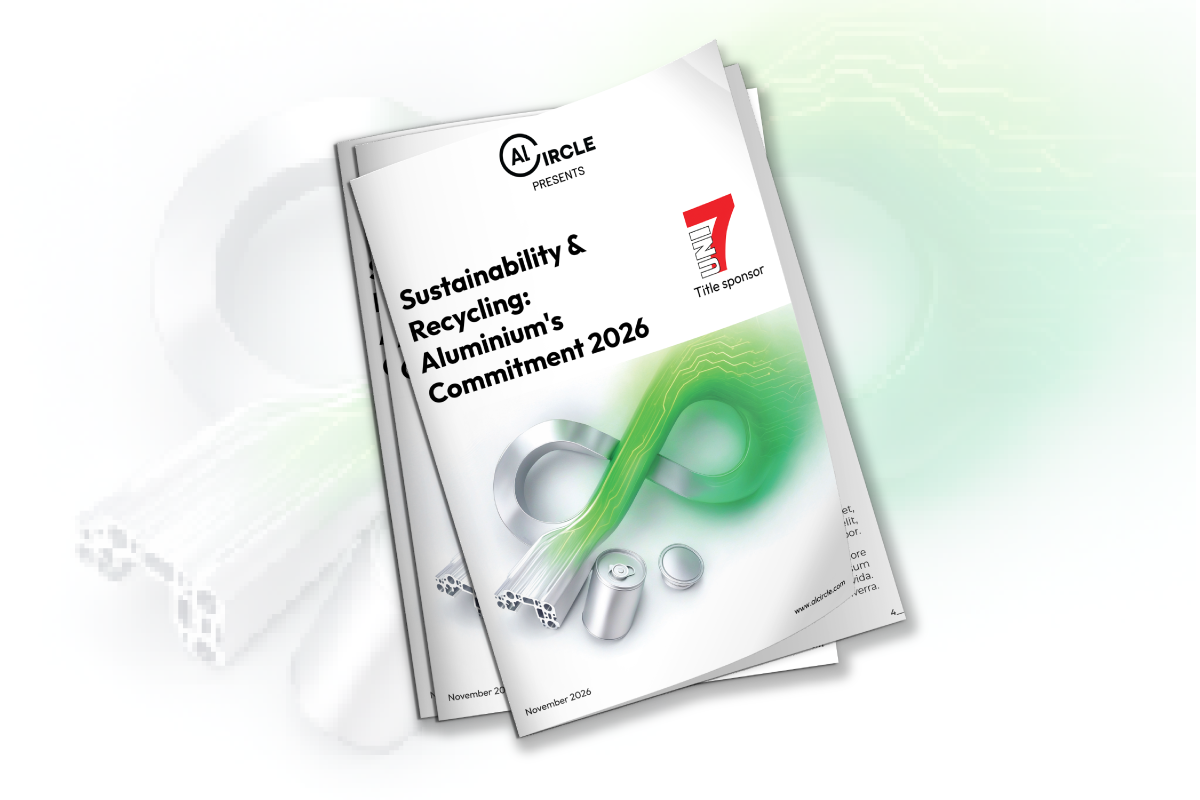
Against this backdrop, AL Circle is pleased to launch the second edition of its magazine, Sustainability & Recycling: Aluminium’s Dual Commitment 2026. The publication explores two priorities that must move forward together: keeping aluminium in circulation for as long as possible and reducing the environmental footprint of producing it.
Bringing together voices from across the aluminium value chain, this edition takes a closer look at the progress being made, the technologies creating new opportunities and the challenges that still need to be addressed.
For years, aluminium recycling has been recognised as an effective way to conserve resources and reduce energy consumption. Today, its importance goes much further.
With increasing demand for aluminium across packaging, automotive, construction and renewable energy applications, securing a reliable supply of recycled metal has become a strategic priority. For many countries and manufacturers, access to secondary aluminium is now just as important as expanding primary production.
Aluminium has a remarkable advantage here. It can be recycled repeatedly without losing its inherent properties. But that advantage means little unless the industry can collect, sort, process and return used aluminium to production efficiently.
Some sectors are already showing what is possible.
Aluminium beverage cans remain one of the strongest examples of circularity in action, with a global average recycling rate of approximately 76 per cent. Brazil, a long-standing leader in can recycling, reportedly achieved a 100 per cent recycling rate in 2025, demonstrating what well-established collection systems and industry participation can accomplish.
But the next chapter of aluminium recycling extends well beyond beverage cans.
As solar energy installations expand worldwide, aluminium used in photovoltaic frames and mounting structures will increasingly become an important source of recoverable metal. At the same time, ageing buildings, end-of-life vehicles and industrial scrap present opportunities to bring valuable aluminium back into the production cycle.
The question is how effectively the industry can capture these resources before they are lost.
Participate in AL Circle's upcoming e-Magazine Smart ALuminium: Advancing Industrial Technologies in 2027 to showcase the advancement of technologies in aluminium recycling
However, recycling finished aluminium products is only one part of the story. The aluminium industry must also find better ways to manage the residues and by-products generated during production.
Bauxite residue, widely known as red mud, remains one of the industry's most persistent environmental challenges. Billions of tonnes have accumulated globally, while only a small proportion is currently put to productive use.
Aluminium dross presents a different but equally important opportunity. With the right processing technologies, valuable metal can be recovered while reducing the amount of waste requiring disposal.
Across the industry, researchers and technology providers are developing solutions to address both challenges. However, moving from promising research to commercial-scale implementation is rarely straightforward.
To know the world's future aluminium recycling market and its growing trends, download our report: World Recycled ALuminium Market Analysis Industry Forecast
Technology must be economically viable, suitable for industrial operations and supported by appropriate regulations.
This edition explores how the industry is approaching these challenges and what it will take to turn more industrial residues into useful resources.
Even with stronger recycling systems, the world will continue to need primary aluminium. This makes reducing emissions from aluminium production just as important as increasing recycled metal consumption.
From cleaner electricity and more efficient smelting operations to improved refining processes and advanced manufacturing equipment, the industry is exploring several pathways towards decarbonisation.
Renewable energy is already becoming an important part of corporate sustainability strategies. Ball Corporation, for example, has committed to achieving 100 per cent renewable electricity globally by 2030.
Meanwhile, advances in furnace stirring, thermal management, energy-efficient extrusion equipment, emissions control and industrial automation are helping manufacturers explore ways to reduce energy consumption and improve operational efficiency.
One particularly interesting area covered in this edition is aluminium's potential role in energy generation itself.
Aluminium-air technology uses the electrochemical oxidation of aluminium to generate electricity. AlumaPower is exploring this potential through its proprietary rotating Fuel Disc™ technology, designed to enable the use of lower-purity aluminium as an energy source.
Although challenges remain in scaling such technologies, the development raises an interesting possibility: could recycled aluminium play a greater role in emerging energy applications?
It is a reminder that aluminium's contribution to sustainability may extend well beyond its traditional industrial uses.
To address these all, AL Circle once again has brought together the voices shaping aluminium's sustainability journey. One of the highlights of Sustainability & Recycling: Aluminium’s Dual Commitment 2026 is the range of industry perspectives featured throughout the magazine.
While the edition endorses the voice of esteemed associations including the Aluminium Stewardship Initiative (ASI), Can Manufacturers Institute (CMI), European Commission and Abralatas, it brings key insights from Ball Corporation, Uniseven Engineering & Infrastructure, ABB, AlumaPower, Alumex and Crown Holdings, among others.
Their perspectives explore some of the most important questions facing the industry today. How can aluminium recycling systems become more efficient and resilient? What will encourage greater use of secondary raw materials? Which technologies can help manufacturers lower emissions without compromising productivity? And how can the industry translate sustainability commitments into measurable results?
From responsible sourcing and closed-loop recycling to industrial innovation and decarbonisation, the magazine offers readers a broader understanding of the changes taking place across the aluminium value chain.
It also highlights an important reality: there is no single technology, policy or initiative that can make the aluminium industry sustainable. Meaningful progress will depend on how effectively these efforts work together. That is the central theme running through the second edition of AL Circle's Sustainability & Recycling: Aluminium’s Dual Commitment 2026.
Explore the edition here as its digital copy is live on our platform. Print copies will be distributed at ICSOBA 2026 from November 15-20 and European Green Aluminium Summit from November 18-19, 2026.
Grow with
AL Circle












_md.webp)