From Hormuz to Washington: How 2Mt of Gulf aluminium puts US imports under pressure and disrupts global supply chains
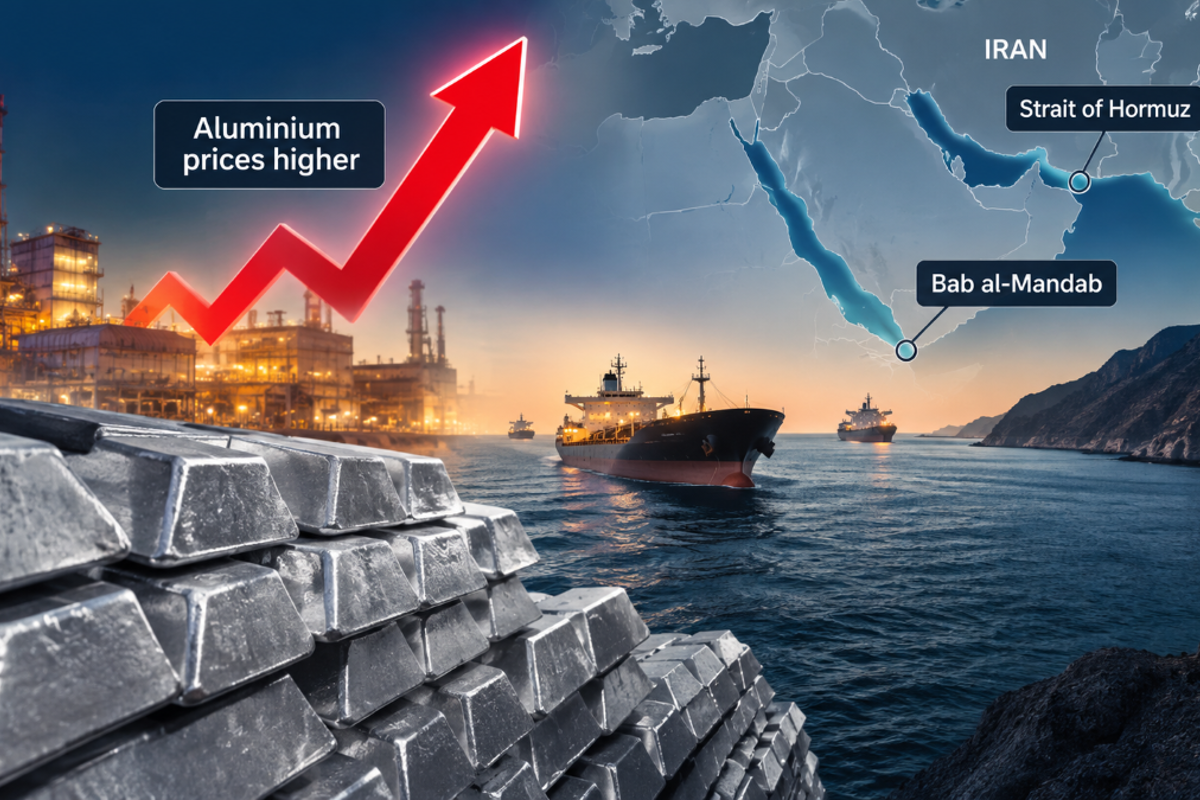
The image used in this article is generated with an AI tool and does not depict any real-time moment
Aluminium is increasingly getting caught in the fallout from the Middle East conflict. What began as a disruption to two of the region’s critical shipping routes - the Strait of Hormuz and Bab al-Mandab - is now affecting aluminium production, shipments and prices. The pressure is particularly significant for the Gulf, home to some of the world's major aluminium producers, and is beginning to expose the supply risks faced by major importing markets such as the US.
Why the Strait of Hormuz matters for aluminium
The scale of the aluminium exposure becomes clear from the volume of metal that normally moves through the Strait of Hormuz. The route handles around 5.14 million tonnes of primary aluminium annually, equivalent to approximately 75 per cent of the region’s total production.
Hormuz also serves as a major passage for around 20–21 million barrels of crude oil and petroleum liquids every day, representing about 20–30 per cent of global consumption.
The concentration of aluminium capacity around the region makes the disruption particularly significant. The Middle East - including the UAE, Saudi Arabia, Iran, Oman, Qatar, Turkey and Bahrain - has combined aluminium capacity of around 6.92 million tonnes per year, while total alumina capacity stands at approximately 4.95 million tonnes annually.
With so much production and trade connected to the region, disruption to shipping can quickly spill over into industrial operations. The International Energy Agency (IEA) has assessed the impact of the conflict on the aluminium industry, particularly major alumina refineries and smelters across Saudi Arabia, Qatar and the UAE.
Explore- Most comprehensive and forward-looking industry-focused report — Global Bauxite & Alumina Market Forecast to 2036: Supply–Demand, Trade Flows & Price Outlook
Gulf smelters take the hit
Emirates Global Aluminium’s (EGA) Al Taweelah smelter near Khalifa Port in Abu Dhabi suffered severe damage and an uncontrolled power loss, forcing potlines to shut down. Aluminium Bahrain’s (Alba) large single-site facility also sustained structural impact.
Even facilities outside the immediate Hormuz disruption have felt the pressure. Sohar Aluminium has reduced export shipments to varying degrees.
The effect at Al Taweelah is particularly stark. Its alumina refinery produced 602,000 tonnes in H1 2026, compared with 1.14 million tonnes in H1 2025, after production was shut down on 28 March.
The disruption has also reached Iran. Aluminium producers including Salco, Hormozal Aluminium and Ahmadhi Aluminium have seen their aluminium sales decline.
With facilities facing production losses and shipments being curtailed, the supply impact is beginning to extend beyond the Gulf itself.
The market responds as supply tightens
That pressure is increasingly reflected in aluminium prices. The IEA analysis cited in the article links the disruption around Hormuz and Bab al-Mandab to falling aluminium supply, with prices rising from around USD 2,500 per tonne to nearly USD 4,000 per tonne over a year.
The futures market is showing another side of the disruption. Aluminium futures on the London Metal Exchange (LME) have declined, while similar contracts on the Shanghai Futures Exchange (SHFE), China's major yuan-denominated commodities market, have risen sharply.
Since April, SHFE futures have reportedly climbed from around USD 400 to USD 1,700.
For buyers, therefore, the issue is no longer simply about paying more for aluminium. The longer the disruption lasts, the greater the concern over whether sufficient metal will reach the markets that need it. This brings the US into sharper focus.
Discover primary aluminium suppliers, product listings and trade opportunities on the AL Biz platform.
US dependence becomes harder to ignore
The disruption comes at a difficult time for the US aluminium industry, which has already lost much of its large-scale domestic smelting capacity. Rising energy costs, particularly electricity prices, have played a major role in the closure of existing facilities.
Earlier this year, a controlled demolition destroyed the last smelter at the Intalco plant in Washington State. Production at the major Hawesville plant in Kentucky had also stopped.
The challenge is that US aluminium demand remains high. S&P Global estimates demand across all US industries at around 12 million tonnes a year, growing by an average of 1 per cent annually.
Imports therefore remain essential. Canada supplies around 4-6 million tonnes of aluminium to the US annually, making it the largest supplier. Persian Gulf shipments average around 2 million tonnes, while imports from China remain below 700,000 tonnes.
The Gulf is not the US's largest source of aluminium, but the disruption highlights the vulnerability that comes with depending on external suppliers for a strategically important metal.
From industrial metal to strategic concern
That dependence becomes more important when aluminium's role in defence is considered. The metal is used in radars, night vision devices, explosives, tracer and illumination munitions, missile fuels, warship hulls, aircraft and helicopters.
Six months ago, the Donald Trump administration adopted a national security resolution focused on securing uninterrupted supplies of 12 critical metals, including aluminium. Washington has also sought to revive domestic alumina production through a plan involving Emirates Global Aluminium and American-Icelandic Century Aluminium.
The plan has stalled, however, amid rising domestic energy and electricity prices - the same pressures that contributed to the decline of earlier US smelting capacity.
Ukraine's Black Sea routes face mounting pressure
The wider conflict has increasingly affected Ukraine's access to the Black Sea. Attacks on Odesa, its ports and surrounding infrastructure, including bridges leading to Romania, have disrupted the country's maritime routes.
The ports of Odesa and the surrounding region have reportedly been halted for three weeks, leaving the majority of Ukrainian exports blocked. The impact therefore extends beyond military operations, reaching into Ukraine's trade and longer-term economic prospects.
If the ports remain unusable, investors may hesitate to finance their reconstruction because of the risk that Russia could destroy the infrastructure again. Without economic recovery, Ukrainians who have fled to Europe may not return, potentially contributing to demographic decline.
The loss of Black Sea access also challenges the idea of turning Ukraine into a heavily fortified state capable of strengthening European security.
For aluminium, the immediate pressure remains centred on the Gulf, where disruption around Hormuz and Bab al-Mandab is affecting production and export flows from major producers. With supply tightening and prices moving higher, the developments underline the aluminium industry's exposure to geopolitical risks and strategic shipping routes, while also highlighting the importance of reliable supply for major importing markets such as the US.
Unlock key insights from leading companies and experts across the aluminium ecosystem with our e-Magazine - Mine to Market: Aluminium Producers & Manufacturers 2026
Aluminium prices ease after EGA targets full recovery of Al Taweelah smelter by Q1 2027
Next articleLME aluminium price graph drops below $3,300/t as stocks report a 0.67% decline
Grow with
AL Circle