The US-Canada aluminum deal could put European buyers under pressure as imports shift

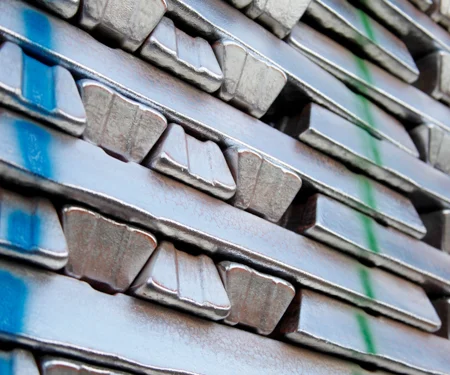
The image used in this article is generated with an AI tool and does not depict any real-time moment
A potential easing of trade tensions between the United States and Canada could reshape the North American aluminum market, with European buyers facing the risk of stronger competition for Canadian metal. Import data from ITC Trade Map shows that US purchases of Canadian unwrought aluminum fell sharply in 2025, while imports from Canada increased across six European markets, highlighting how trade flows have evolved amid tariff uncertainty.
The United States imported approximately 2.03 million metric tons of unwrought aluminum from Canada in 2025, down 25.9% from 2.74 million metric tons in 2024. The decline amounted to around 711,494 metric tons over the year. Import value also decreased, falling 22.2% from $7.82 billion to $6.09 billion.
The figures come as the possibility of a US–Canada trade agreement raises expectations of a reduction in tariffs on Canadian aluminum entering the American market. A potential cut in the existing 50% tariff to 25% could improve the competitiveness of Canadian metal in the US, making the market more attractive to suppliers once again.
Such a development could have implications beyond North America. European buyers have increased their reliance on Canadian unwrought aluminum in recent years, and a renewed pull from the US could intensify competition for available supplies.
Explore the production, demand and consumption forecasts of bauxite and alumina in our report: "Global Bauxite & Alumina Market Forecast to 2036: Supply–Demand, Trade Flows & Price Outlook"
European imports of Canadian aluminum nearly triple
ITC Trade Map data covering the Netherlands, Italy, Germany, France, Poland, and the United Kingdom shows that their combined imports of Canadian unwrought aluminum reached approximately 611,721 metric tons in 2025, compared with 205,322 metric tons in 2024. This represents an increase of around 197.9%.
The Netherlands emerged as the largest destination among the six markets, with imports rising from 138,576 metric tons in 2024 to 423,712 metric tons in 2025. The increase of 205.8% made the country the leading European destination for Canadian unwrought aluminum within the dataset.
Italy recorded an even sharper percentage increase, with imports climbing from 14,948 metric tons to 85,227 metric tons, up 470.2%. Germany's purchases increased by 51.7%, from 34,658 metric tons to 52,575 metric tons, while France's imports more than doubled to 19,071 metric tons from 9,300 metric tons.
Poland also registered a substantial rise, with imports increasing 371.1% to 28,804 metric tons from 6,114 metric tons. The United Kingdom recorded a more modest increase of 35.1%, with purchases reaching 2,332 metric tons in 2025 compared with 1,726 metric tons a year earlier.
The figures underline the growing presence of Canadian unwrought aluminum across these European markets during the period. However, the combined total represents only the six countries covered by the available datasets and should not be interpreted as the entirety of Europe's imports from Canada.
Showcase your brand, aluminum recycling initiatives and sustainability vision in our upcoming magazine: Sustainability & Recycling: Aluminium’s Commitment 2026.
US sourcing patterns also show signs of change
The decline in US imports from Canada was accompanied by changes in the country's wider supplier mix. Although Canada remained the largest supplier of unwrought aluminum to the US in 2025, its share of total US import value fell from approximately 70.7% in 2024 to 61.2% in 2025.
Other suppliers recorded increases in their export values to the American market. Imports from the United Arab Emirates rose from approximately $1.22 billion in 2024 to $1.55 billion in 2025, while South Africa's import value increased from $322.77 million to $468.58 million. Bahrain also recorded growth, with the value of US imports rising from $364.66 million to $456.37 million.
India's import value increased from $185.32 million to $393 million over the same period. These changes point to a broader diversification of US sourcing as purchases from Canada contracted. However, the supplier comparisons are based on import values and do not establish equivalent changes in physical volumes.
Could a tariff reduction change the balance again?
The prospect of lower US tariffs introduces a new variable into an aluminum trade landscape that has already undergone considerable changes. If the proposed reduction from 50% to 25% materialises, Canadian suppliers could find the US market more commercially attractive, potentially encouraging a renewed increase in shipments across the border.
For European buyers, the concern is that stronger US demand could create additional competition for Canadian aluminum. The six-country import data shows that Canadian metal became a significantly larger part of the import mix in these markets in 2025. If North American trade conditions improve, European buyers may have to compete more actively to secure supplies from Canadian producers.
The extent of any impact will depend on the terms and timing of a potential US–Canada agreement, as well as suppliers' commercial decisions and demand conditions across both regions. The 2024 and 2025 annual figures do not establish that Canadian aluminum displaced from the US was directly redirected to Europe, nor do they capture any subsequent changes in 2026.
Nevertheless, the contrasting import trends offer a clear indication of why a change in US–Canada trade policy matters to aluminum buyers beyond North America. After a year in which US imports of Canadian unwrought aluminum contracted while purchases across six European markets expanded, a reduction in American tariffs could once again alter the competitive balance for Canadian metal.
Looking for unwrought aluminum business opportunities? Explore potential leads of primary aluminum on AL Biz.
Century Aluminum prepares for next phase of $4B Oklahoma smelter, targets 2030 production
Next articleLME aluminium stocks fall 52.6% in nine months, with Q3 average down 43.6% year on year
Grow with
AL Circle












_md.webp)