Ford's 5,000-casting milestone puts aluminium at the heart of its next EV
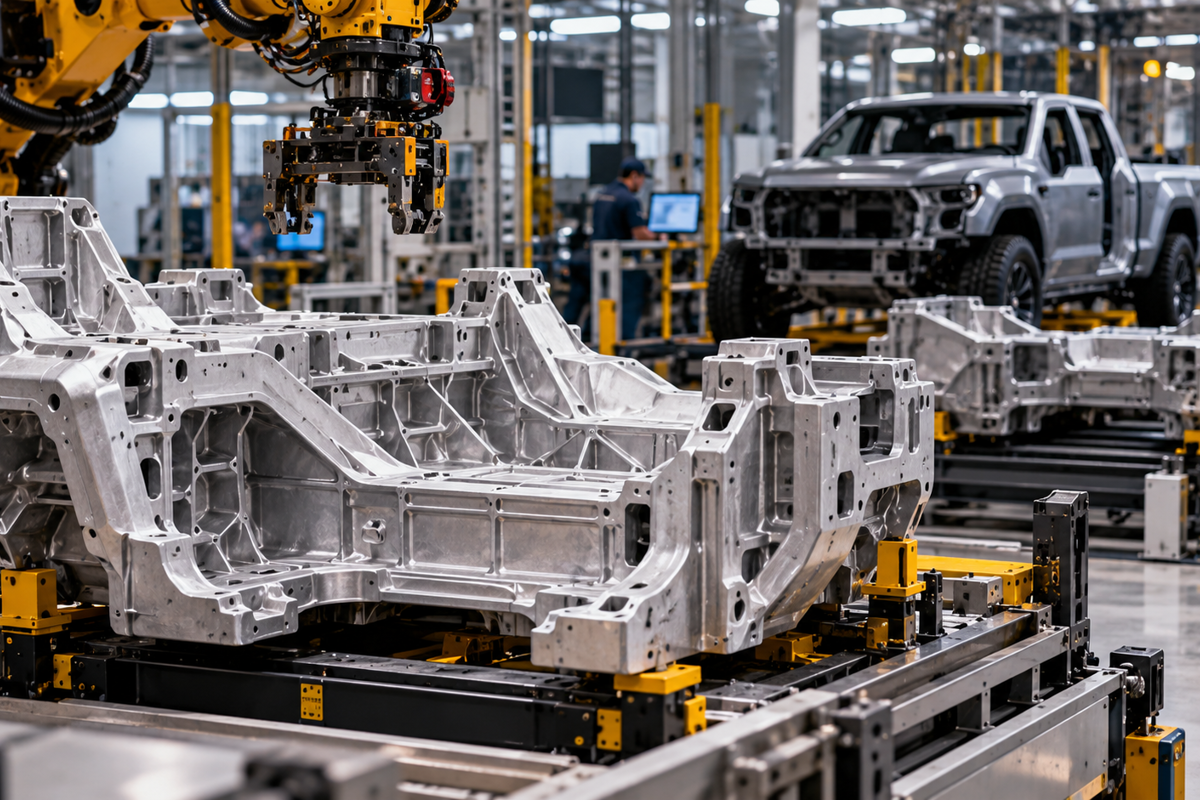
The image used in this article is generated with an AI tool and does not depict any real-time moment.
Ford has produced more than 5,000 large aluminium unicastings at its Shelbyville Technical Center as it advances manufacturing preparations for the Fathom midsize electric truck, scheduled to launch in 2027. The castings are being used for process testing and prototype assembly at the company's Louisville Assembly Plant.
The Fathom will feature two large aluminium unicastings that replace 146 individual structural parts, significantly simplifying the vehicle's architecture. Ford says the approach reduces vehicle mass and improves overall energy efficiency, while introducing a different method of assembling vehicles through its new Universal Production System.
The two large structures form the front and rear sections of the vehicle. By consolidating numerous components into fewer castings, Ford aims to streamline manufacturing while maintaining the structural requirements of the electric truck.
Aluminium unicastings reshape Ford's vehicle assembly process
The large castings have enabled Ford to divide its traditional vehicle assembly line into three main branches under the Universal Production System. This allows different vehicle sections to be manufactured simultaneously before being brought together for final assembly.
Ford is also working to reduce the cycle time required to produce each unicasting, with manufacturing efficiency a key priority as the company prepares for the Fathom's launch.
The company has specifically engineered the unicastings for modular repairability, combining extensive parts consolidation with consideration for vehicle servicing.
To know the global production, demand and consumption forecasts of aluminium extrusions, explore our report "The World of Aluminium Extrusions to 2035"
From molten aluminium to large structural castings
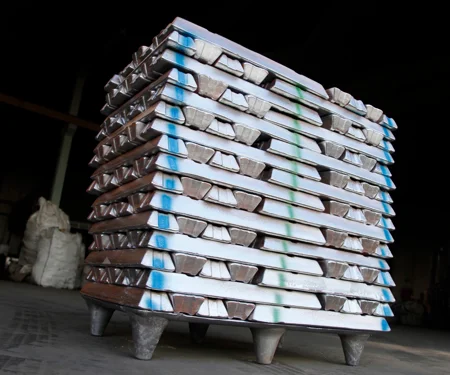
The manufacturing process begins with aluminium ingots, which are fed into a furnace and melted at approximately 700 degrees Celsius. The molten metal is transferred to a holding furnace before being injected into a mould by a casting machine.
The mould consists of two sections: a fixed cover side and a movable ejector side, which opens to release the finished casting. A robot then removes the component and transfers it to a quench tank for cooling.
Following casting, the parts undergo visual inspection, machining and several additional quality checks before being approved for shipment to Louisville Assembly Plant.
Ford uses X-ray and tensile testing to inspect castings
Quality assurance is a key part of the production process. A coordinate measuring machine in a climate-controlled room checks the castings' dimensions, hole locations and alignment, while an industrial X-ray system examines internal defects such as pores and voids.
Optical scanners map the casting surfaces to verify dimensions. Samples are also sent to a materials laboratory for tensile testing to measure strength, alongside separate tests to check the alloy's chemical composition.
Production batches remain on hold until all required inspections and tests have been completed and the castings receive approval for shipment.
Ford has now produced more than 5,000 unicastings at Shelbyville Technical Center, with the components supporting prototype assembly as the company works towards the Fathom's planned 2027 launch.
Explore downstream aluminium products from our comprehensive list on AL Biz.
Grow with
AL Circle