

AL Circle analysis: Germany’s aluminium trade surplus, Novelis’ US expansion, Asia’s EV demand & India’s underutilised downstream capacity
Aluminium’s next growth phase is increasingly being shaped by downstream processing, supply-chain resilience and demand from specialised applications. Germany continues to generate a substantial trade surplus in flat-rolled products despite a shrinking primary aluminium base, while North America is investing in recycling and rolling. Across Asia, new manufacturing capabilities and growing demand from electric vehicles, railways and batteries are creating further opportunities. However, declining exports, underutilised capacity and uneven profitability show that investment alone does not guarantee success. For industry leaders, the challenge is to identify where demand is shifting, develop products that meet customer requirements and ensure that new investments translate into sustainable...
AL Circle Analysis: From Guinea to Gulf, how bauxite, tariffs and logistics redraw aluminium map
Aluminium markets in late 2026 are being shaped by more than the headline LME aluminium price. Bauxite security, alumina availability, geopolitical disruptions, tariff negotiations, logistics diversification and regional premiums are increasingly determining where metal moves and what buyers pay. From RUSAL reassessing Caribbean assets and Vedanta securing Odisha bauxite to Brazil extending mine life and EGA rebuilding its Guinea supply chain, producers are strengthening control over critical raw materials. At the same time, the US remains heavily dependent on imported bauxite and alumina, while Europe and Asia are experiencing sharply different premium dynamics. These developments point to a market where physical availability is becoming a regional factor even as aluminium itself remains...
Grow with
AL Circle

China advances renewables marketisation by 5 years, targeting 30% electrification
Starting May 31, 2025, the electricity prices for newly commissioned renewable energy projects in China will be entirely determined by competitive bidding, with government subsidies being completely phased out. Key policy elements Full market integration: All renewable electricity will be traded in the market, with no mandatory purchase requirements for power grids. Subsidy elimination: Government subsidies will be phased out. Dual-track mechanism: A "market-based pricing + price difference settlement" model will be adopted to ensure stable revenues for renewable energy projects. Four key Q&As: 1. Why is renewables full marketisation five years ahead of schedule? Capacity milestone: China hit its 2030 wind and solar power installed capacity target six years early, with renewables...

Recycling – the United States’ fastest route to aluminium self-reliance amid tariff and energy crisis
What could be a viable solution for the United States to meet its current aluminium demand when the country is suffering from a domestic primary aluminium production shortage and high import costs due to a 50 per cent tariff on the metal? Recycling it is ! Rightfully, Trond Olaf Christophersen, chief financial officer of Hydro, has pointed out, “If the US administration wants to improve self-reliance on aluminium, the quickest way to do it will be to keep more of the scrap in the US and support recycling capacity.” Recycling – the answer to demand-production mismatch By the end of 2025, the United States primary aluminium demand is projected to reach 4.9 million tonnes. Yet until April 2025, the country’s production stood at only 222,000 tonnes, down by 2.2 per cent from 227,000 tonnes...

US aluminium scrap: will growing recovery and imports be enough?
The US aluminium market is navigating a period of shifting dynamics, as scrap recovery rates, rising import volumes, and longer-term supply considerations converge to influence its trajectory. In the first four months of 2025, the US recovered 1.222 million tonnes of aluminium from scrap up 2.7 per cent from 1.19 million tonnes during the same period in 2024. April 2025 marked a downturn in US aluminium scrap recovery, falling 7.4 per cent to 277,000 tonnes from 299,000 tonnes a year earlier. This drop followed two strong months, March saw an 8.3 per cent increase to 327,000 tonnes, while February jumped 9.6 per cent to 321,000 tonnes. January had started the year on a steady note at 297,000 tonnes, just 0.3 per cent higher than in January 2024. Imports of aluminium also saw a notable...

Aluminium stocks at Japan ports dip again in July - what’s behind the shift?
Japan’s aluminium market in mid-2025 reflects a mixed picture, with inventories steadily declining despite increased imports. The trend suggests a tightening supply environment, shaped by shifting trade flows, evolving demand patterns and broader economic dynamics. As of July 2025, Marubeni Corp., a leading Japanese general trading house, reported that aluminium inventories across Japan's three key ports, Yokohama, Nagoya and Osaka, declined by 0.4 per cent to 315,400 tonnes. The cause behind the sudden shift The demand front According to data from the Japan Aluminum Association (JAA), Japan's aluminium demand reached 895,100 tonnes in the first quarter of 2025, up by 1.4 per cent year-on-year. Domestic consumption rose by 1.3 per cent to nearly 860,000 tonnes, while exports recorded a...
WEEKLY: China alumina output rises for 7th week, stocks hit 1-year high
China's 44 alumina producers under Mysteel's regular tracking produced 1.9 million tonnes of smelter-grade alumina during the week of August 1-7, up by 4,000 tonnes or 0.2 per cent from the prior week, according to Mysteel's latest survey. Although the increase was slightly higher than the 0.1 per cent rise recorded a week earlier, it marked the seventh consecutive week of growth and reflected largely stable production levels, Mysteel Global noted. Market watchers attributed the modest output rise to a mix of maintenance stoppages and plant restarts. In Guizhou in Southwest China, one alumina producer completed a 10-day maintenance shutdown and restarted its 800,000 tonnes per year production line late last week. Meanwhile, in North China Shanxi's Jiaokou county, a refiner cut output at...

AriZona’s 33-year price legacy at risk – thanks to Trump’s 50% aluminium tariff
With global trade conflicts heating up and political alliances in flux, US companies are facing a new economic reality of soaring tariffs on imported aluminium. The 50 per cent tariff, rolled out on June 4, 2025, was intended to shield domestic producers as tensions escalated between Western nations and the BRICS group (Brazil, Russia, India, China, and South Africa). Instead, it has disrupted supply chains, sent costs spiralling, and forced industries like the beverage makers into rapid strategy overhauls. As per the latest information, the US-based famous iced tea brand, AriZona, has always managed to deal with difficult situations like pandemics, recessions, and wild market swings by not increasing the price of its most famous 99-cent iced tea. Gearing up for a potential price hike...

Aluminium pays the price, copper gets a pass – here’s solving the US tariff puzzle
The Trump administration’s latest tariff move has left a glaring question: why has aluminium been slapped with a punishing 50 per cent duty, while copper sails into US ports untaxed? At first glance, both metals are strategic, energy-intensive to produce, and integral to manufacturing. Yet Washington’s selective hammering is something that raises several questions. Washington’s contrasting policy agenda – aluminium vs copper The official rationale is rooted in two strategic objectives: reviving domestic smelting capacity and cutting reliance on imports. Aluminium ticks both boxes. In the United States, primary aluminium production has collapsed over three decades - from 3.35 million tonnes in 1995 to 675,600 tonnes in 2024, representing an 80 per cent decline. To fill the void in the...

Trump aluminium tariffs shake the industry — how are SMEs surviving the storm?
The Trump administration’s aluminium tariffs starting at 25 per cent in March 2025 and doubling to 50 per cent by June have reshaped global aluminium trade, rattling supply chains and upending industry dynamics. Major players like Alcoa, Rio Tinto, Rusal, Chalco, and Hindalco Industries have absorbed staggering costs. Alcoa alone reported USD 115 million in tariff-related expenses in Q2 2025, while Rio Tinto faced losses exceeding USD 300 million in just six months, heavily impacted by Canadian exports destined for the US market. These tariffs have not only squeezed profit margins but also forced large firms to rethink their strategies. Many have rerouted shipments to Europe and Asia, invested in tariff-resilient segments such as aluminium for electric vehicle (EV) batteries, and deferred...

PCs and Smartphones prone to being hit hardest: Vietnam and India step into the spotlight to battle the tariff quake
No one in the global tech supply chain has a clear read on where US tariffs will finally land, but one truth is already cementing, that the deepest fault line will be between Washington and Beijing. The biggest casualties? Companies welded to China’s tightly integrated technology manufacturing ecosystem, with the US as their top shelf for sales. Image source: https://www.openpr.com/ Smartphones and PCs are in the blast zone Apple’s vast production web still runs heavily through China, making it one of the most exposed names in the game. PCs aren’t far behind. The triad of Dell, HP and Lenovo earns an estimated 15-20 per cent of operating profit from US sales, and with laptops more dependent on China than desktops, the risk premium is real. Higher costs will roll downhill to consumers, who...

How Western Australia’s ongoing energy crisis is threatening the region’s alumina & aluminium supply
Australia stands as a major global player in aluminium production. As per AL Circle's report, Australia continues to be the second major producer and the biggest exporting country of alumina in the world. The country is estimated to have produced around 18.25 million tonnes in 2023-24, a decrease from 18.97 million tonnes in 2022-23. According to various sources and AL Circle's forecast , Australia's alumina production for 2024-25 & 2025-26 is to attain 16.39 million tonnes (approx.) & 16.28 million tonnes (approx.), respectively. The forecast is that there will be a dip due to the production curtailment at the Kwinana refinery. As per EnergyQuest, the alumina and aluminium sectors generate more than $13 billion in export earnings each year, underpinning a total industry value that...

BMW, Ford, Tesla, and Audi are reshaping car design with aluminium at the forefront
Aluminium has gone from being just another metal in cars to a key player shaping the auto industry’s future. Its light weight, strength, resistance to rust, and ability to be recycled without losing its quality makes it vital for improving fuel efficiency, boosting EV range, and reducing emissions over a vehicle’s lifetime. Image for representational purpose Al Circle values the automotive aluminium market at USD 97.86 billion in 2024 and projects it will almost double to USD 205.24 billion by 2032, growing at a CAGR of 9.7 per cent between 2025 and 2032. The sector’s growth is fuelled by increasing adoption of lightweight, high-performance, and sustainable materials across the automotive industry. According to other sources, the market maintained a clear upward trajectory between 2020...

SHFE aluminum, nickel, copper futures prices edge up on week
Major futures contracts for the three key non-ferrous metals – aluminium, nickel, and copper – on the Shanghai Futures Exchange (SHFE) had all risen from the previous week by the close of the daytime trading sessions on August 8. As of 3:00 p.m. on Friday, the most-traded SHFE nickel contract for September delivery had gained 1.2 per cent from the previous Friday to close at RMB 121,180 per tonne (USD 16,872 per tonne). Meanwhile, the most-traded aluminium and copper contracts, also for September delivery, posted smaller on-week increases of 0.9 per cent and 0.1 per cent, closing the daytime trading session on August 8 at RMB 20,685 per tonne and RMB 78,490 per tonne, respectively. Over the week, news that the US economy had weakened during July increased the likelihood that the US...

AL Circle x Altmin: Scaling India’s LFP battery ecosystem through innovation and automation
Anjani Sri Mourya Sunkavalli, Founder and MD of Altmin, is a visionary entrepreneur with expertise in market research, business development and political observation. With a background in Mass Communication, Political Science and Government Affairs from St. Mary’s College, Hyderabad, he has been proactive in addressing societal and industrial needs, from introducing affordable sanitiser solutions in public transport to pioneering lithium supply chain development for India. Since 2019, Mourya has focused on securing lithium resources from South America, working closely with government bodies like TSMDC, KABIL and NITI Aayog to strengthen India’s self-reliance in critical minerals and battery technologies. The interview highlights Altmin’s role in scaling India’s LFP battery ecosystem...

DAILY: China's spot alumina prices mostly stable, futures weaken
On Thursday, Mysteel assessed spot prices for smelter-grade alumina with purity exceeding 98.6 per cent unchanged on day in four key production areas - Shandong, Henan, and Shanxi provinces and the Guangxi autonomous region - averaging between RMB 3,215 per tonne (USD 447.6 per tonne) and RMB 3,325 per tonne. Meanwhile, the assessed price for the same grade in Guizhou province edged up by RMB 10 per tonne from Wednesday to reach RMB 3,320 per tonne, snapping six consecutive working days of stability. The slight price increase in Guizhou reflected more active alumina procurement activity in the southern part of China, as compared to the subdued trading seen in the northern regions, market sources noted. Mysteel heard of one deal concluded in Guizhou where an alumina producer sold 2,000...
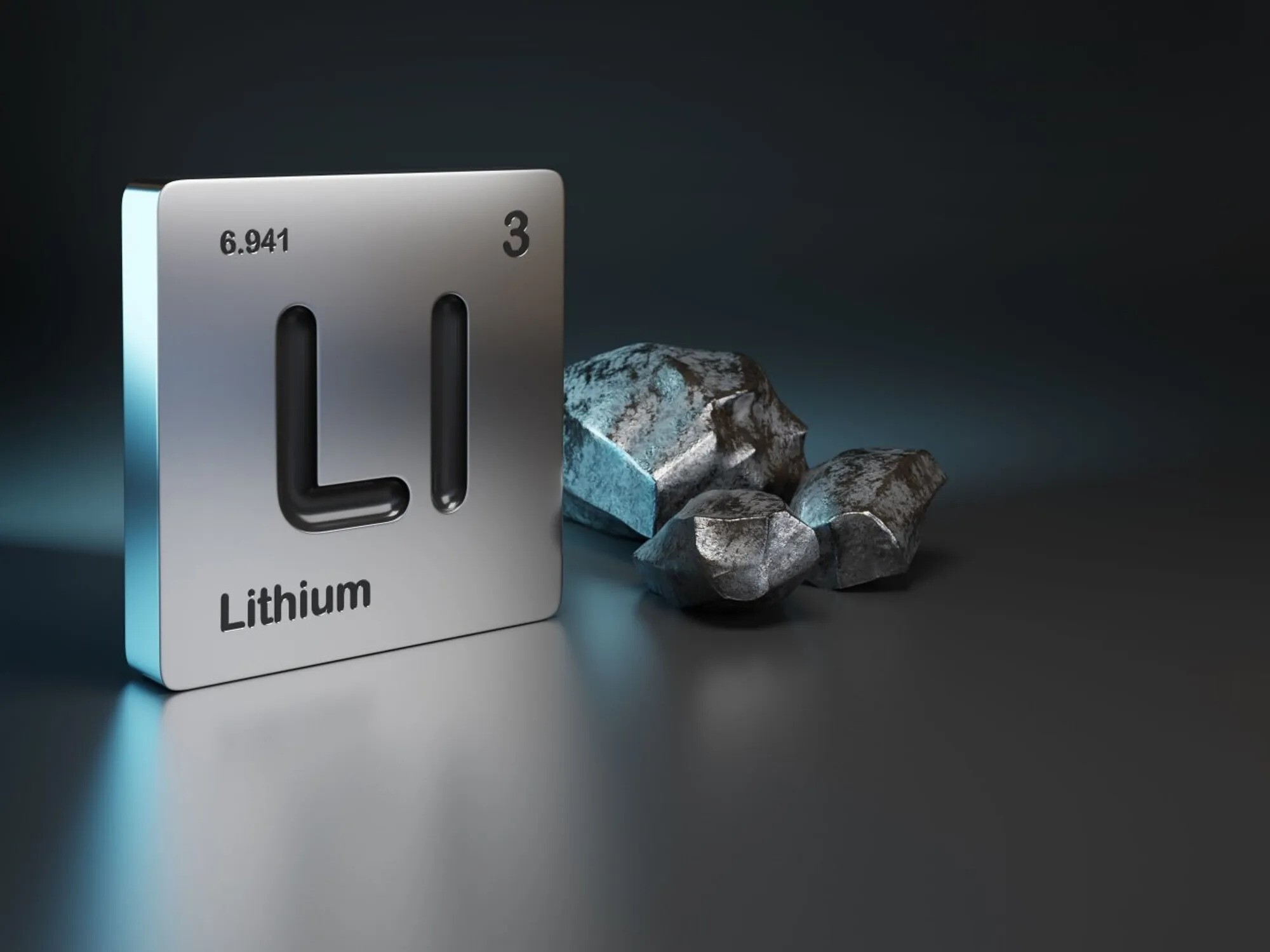
Beyond batteries: Lithium metal's pivotal role in advanced technologies
Lithium metal holds a critically important position in modern industry and science and technology, with extensive applications in lithium-ion batteries, chemicals, pharmaceuticals, ceramics, nuclear industry, aerospace, and metallurgy. I. Key applications 1. Lithium-ion battery materials Technical principles and core advantages: The lithium metal anode offers advantages such as high specific capacity and high operating voltage, which can enhance the energy density and charging speed of lithium-ion batteries, making it the future direction for anode development. Traditional graphite anode materials exhibit good cycling performance but low theoretical capacity, while silicon-based anodes have high theoretical capacity but suffer from excessive expansion during charging and discharging....

50% tariff it is! India-Russia ties over oil, aluminium, and mining irk US — what’s next: payback or patch-up?
The protectionist tariff strategy once touted by US President Donald Trump to revitalise domestic aluminium and steel production appears to be yielding the opposite effect - at least in early 2025. Industry indicators point to a clear downturn, with aluminium demand and production trending downward during the first quarter of the year. Image credit: Aluminum Association PMI signals early warning The first signs of contraction came from industrial sentiment. Both the US and Canadian Purchasing Managers’ Indexes (PMI) dipped below the critical 50-point threshold in March 2025, registering at 49 and 46.3, respectively, indicating a shrinking manufacturing sector. Historically, a PMI below 50 signals a downturn in production and purchasing activity, which typically correlates with weakening...

Molson Coors Q2 result: Profit squeeze looms as tariffs bite and demand dips
The sharp hike in aluminium tariffs under the Trump administration, from 25 per cent to 50 per cent, has significantly disrupted the aluminium industry and its dependent sectors, directly impacting corporate earnings. The beverage industry, in particular, has felt the strain. Molson Coors, which previously reported an 11.3 per cent decline in net sales for Q1 , has now released its Q2 results, indicating plans to revise its financial outlook downward due to continued softness in beer demand and the mounting pressure from aluminium tariffs. Q2 financial results Molson Coors in the second quarter reported a 1.6 per cent decline in net sales on a reported basis and a 2.6 per cent decrease in constant currency. The US GAAP income before income taxes fell by 0.9 per cent to USD 554.9 million,...

Bahrain loses ground in India’s alumina trade as China and France step up
India’s alumina trade landscape is witnessing a significant transformation, driven by expanding domestic capacity and a strategic shift away from traditional suppliers like Bahrain. The shift comes amid rising domestic alumina production and stabilising global market conditions, prompting Indian refiners to re-evaluate where and how they procure this essential input for aluminium smelting. According to data from the Ministry of Commerce, India imported just 155,563 tonnes of alumina during the financial year April 2024 to March 2025, a steep 66.27 per cent decline from the 461,078 tonnes recorded the previous year. This dramatic drop reflects both improved domestic output and a changing approach to trade partnerships. Monthly data further underscores this shift. Between January and May...

