History has repeated itself as Russia, after the 1990s, has returned to barter deals owing to geopolitical predicaments. Not a generic practice yet, but the initiation of barter deals commenced at the Kazan Expo business forum. Chinese companies cited settlement issues and Russian demands that they bring production to Russia as major issues hindering the development of bilateral trade.
“We offer innovative cooperation models aimed at reducing settlement risks,” Xu Xinjing from Hainan Longpan Oilfield Technology Co. Ltd told Reuters through a translator, adding that “we offer a model of barter trade.”
In exchange for the power equipment, his company wants to receive Russian shipbuilding metal alloys like aluminium and steel.
“In the current conditions of limited payments, this provides new opportunities for enterprises in Russia and Asian countries, the Asian region. For example, we supply marine engines in exchange for special steel materials or aluminium alloys for shipbuilding from Russia,” he said.
Russia has been here before. In the 1990s, when the rouble collapsed and liquidity evaporated during hyperinflation, barter became a substitute currency. Electricity, raw materials, and even food were traded through sprawling, often chaotic networks. The current situation is not one of economic collapse, but of deliberate isolation.
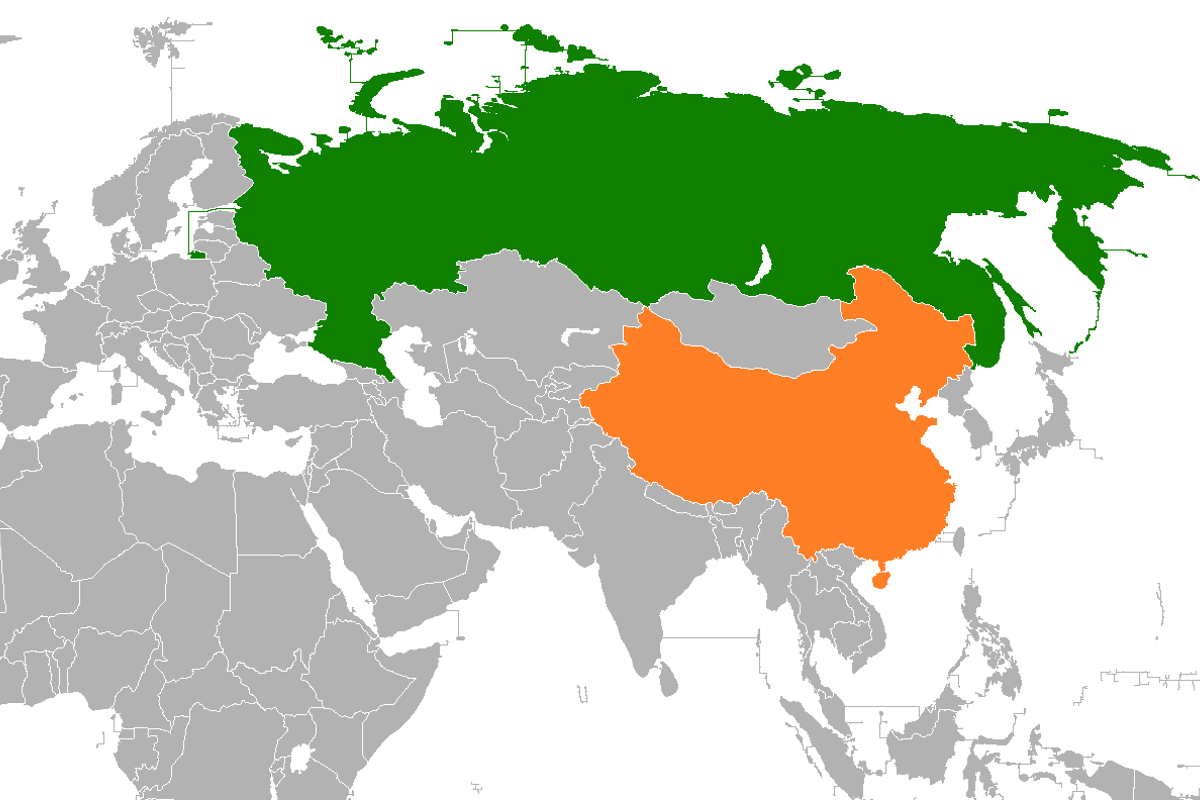
China’s role here is critical. As Moscow’s largest trading partner, Beijing has become both a lifeline and a filter. Bilateral trade between the two rose to record levels in 2024, topping USD 240 billion, but the mechanics of settlement have grown increasingly fraught.
Aluminium at the centre of the swap economy
The choice of aluminium alloys in Longpan’s Kazan offer was not incidental. Russia’s Rusal, the world’s second-largest aluminium producer, still controls a vast output base despite being cut off from many Western markets. In 2024, Russian aluminium exports fell by around 15% year-on-year, with much of the decline linked to shrinking sales in Europe. Asia, and China in particular, have picked up the slack.
China cumulatively imported 5,23,248 tonnes in 2022, which jumped to 12,44,635 tonnes in 2023 and then again slightly slumped to 12,30,168 tonnes in 2024. When the West turned away, China took the opportunity to cushion Russia’s deflating export scenario. Russia used to export 3105875 tonnes of aluminium in 2021 to the world, which has now diminished to 2493772 tonnes in 2024.
But metals are not just a volume story. Alloys used in shipbuilding, aerospace and automotive production are often customised and carry pricing premiums over primary aluminium ingot. For a company like Longpan, which supplies marine engines, acquiring these alloys directly through barter is both cost-effective and strategically advantageous. The exchange bypasses banking restrictions, secures vital inputs, and creates interdependence between supplier and buyer.
The risks, however, are structural. Barter complicates pricing. How many tonnes of alloy equal one marine engine? What if the alloy price on the London Metal Exchange fluctuates between contract signing and delivery? Disputes over quality, timing and valuation can quickly escalate. Unlike cash settlements, barter lacks a neutral arbiter beyond the trust between partners. In the metals trade, where logistics and storage costs are significant, these uncertainties can erode margins.
Earlier this year, Chinese banks quietly rolled out a ‘China Track’ netting system designed to insulate bilateral trade from SWIFT scrutiny. Barter sits alongside such innovations, applied selectively in sectors where pricing is straightforward and trust between partners is already established. Commodities like steel, aluminium and agricultural products fit this mould perfectly.
Barter’s reappearance carries broader policy implications. Sanctions were designed to choke Russia’s access to global markets by weaponising the dollar-based financial system. Yet barter, combined with parallel systems like the China Track, shows that alternatives are proliferating. For governments, these mechanisms undermine transparency. Tax authorities struggle to assess barter deals, which often fall into grey zones. Customs officials, too, face difficulties in valuing goods exchanged without a cash component.
Traditional payments, even through supposedly friendly channels, are increasingly ensnared by Western oversight. Chinese and Turkish banks, wary of secondary sanctions, have slowed or outright blocked transactions.
The risk is the emergence of a shadow trade economy, where official data understate the true scale of transactions. This is particularly relevant for commodities like aluminium, which already flow through opaque routes via re-exports from third countries. In 2024, European imports of aluminium products from Turkey, for example, rose nearly 40 per cent, even as direct imports from Russia collapsed. Barter deals, routed through intermediaries or disguised as in-kind settlements, could deepen this obfuscation.
Earlier in October 2024, Russia’s Astarta-Agrotrading and Pakistan’s Meskay & Femtee Trading Company (along with others) signed a barter deal at the Pakistan–Russia Trade and Investment Forum:
- Deal 1: 20,000 tonnes of chickpeas in exchange for 20,000 tonnes of rice
- Deal 2: 15,000 tonnes of chickpeas and 10,000 tonnes of lentils in exchange for 15,000 tonnes of mandarins and 10,000 tonnes of potatoes
According to a UN report, Libya has been engaging in a barter exchange, trading its crude oil for refined fuel, due to limited domestic refining capacity. While initially intended to meet domestic needs, some of the fuel has been diverted to the black market, financing rival armed groups and exacerbating instability. Though controversial and unlawful in nature, this demonstrates how barter schemes can emerge in fragile contexts.
Nobody suggests barter will replace modern banking. It is cumbersome, slow, and prone to disputes. But its selective use is a hint to the deeper trend of global trade fragmenting into hybridised models. Cash settlements still dominate, but barter, netting systems, and local currency swaps are filling the gaps wherever sanctions bite deepest.
For Russia, this hybridisation is survival. For China, it is a strategy. And for the global aluminium industry, it is a disruption. If barter gains traction, it could distort pricing benchmarks, shift flows away from transparent exchanges, and create new dependencies between buyers and sellers. The fact that a Chinese company is now openly proposing to take marine engines out of the bank transfer system and settle in Russian alloys is not a trivial anecdote but a signal.













_md.webp)








