Brazil’s well-established recycling system has once again propelled the country’s aluminium can recycling rate to an impressive 97.3 per cent. For more than 15 years, Brazil has consistently maintained a recycling rate above 95 per cent. This achievement is not only the result of a strong recycling infrastructure but also of a deep sense of commitment towards sustainability that encourages people consume aluminium cans. In 2024, aluminium can sales in Brazil rose 7.6 per cent, amounting to 34.8 billion units versus 32.3 billion units.
Behind this all, steady economic progress is also a factor that drives aluminium can consumption. According to the World Bank, Brazil, with a population of 205.3 million, recorded a real GDP per capita of USD 10,616 in 2024, up from USD 10,377.59 in 2023. In an interview with AL Circle, Mr Cátilo Cândido, Executive President of the Brazilian Association of Aluminum Can Manufacturers (Abralatas), emphasised that Brazil’s robust and dynamic economy—particularly the rising purchasing power of its people—fuels the demand for soft drinks and, in turn, aluminium cans.
A slight dent amid steady growth
Brazil has been seeing a steady growth in aluminium can recycling rate. While in 2020, the country’s recycling rate was 97.4 per cent, it grew in 2021 to 98.7 per cent and then to 100 per cent in 2022 and 2023. Only in 2024, the recycling rate dropped to 97.3 per cent. Why was this drop in recycling rate despite the growth in real GDP and aluminium can sales?
Increased exports – reason behind recycling rate decline
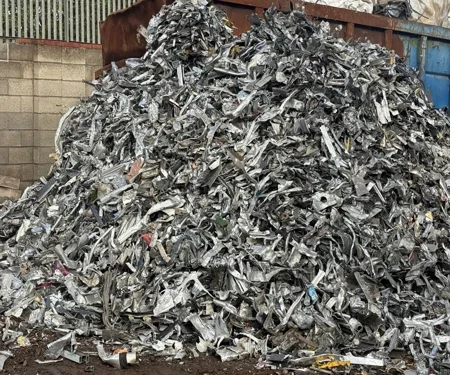
According to the UN Comtrade data, Brazil’s aluminium scrap (including UBC) exports surged by 64 per cent in 2024, amounting to 52,691 tonnes versus 32,152 tonnes in 2023. This represents a year-on-year increase of 64 per cent in aluminium scrap exports in 2024. The growth has been taking place since 2022 when Brazil’s scrap exports stood at 19,105 tonnes. So, in 2023, Brazil’s aluminium scrap exports grew 68 per cent Y-o-Y.
The Y-o-Y increase in scrap exports could be one of the factors behind the decline in aluminium recycling rate. Although the exact volume of scrap generation depends on the average weight of an aluminum can and the recycling rate, yet given that 34.8 billion aluminum cans weigh 14.9 grams each, the total aluminium generated after remelting would be 518,520 tonnes. Going by the same calculation, from 32.3 billion can units sold in 2023, the total aluminium generated was 420,000 to 484,500 tonnes of aluminium.
Thus, the surge in scrap exports could be a potential cause for recycling rate drop.
Yet recycling is at the heart of Brazil
Despite the slight Y-o-Y drop in recycling rate, Brazil remains the aluminium cans recycling hub and the country is going to host COP30 from November 10-21. Cátilo Cândido, Executive President of Abralatas, said: “The aluminum can is the most advanced example of large-scale circular economy in Brazil. In a year like 2025, with COP30 taking place in our country, this result shows that Brazil has real solutions to offer — backed by data, social impact, and environmental commitment. This is a collective achievement for the entire sector, built on dialogue, innovation, and responsibility.”
To get more insights into Brazil's aluminium cans recycling market, read our report: World Recycled ALuminium Market Analysis Industry forecast to 2032












_md.webp)