Australia’s clean energy surge is powering homes and reshaping skylines with solar projects and modern construction — but behind the progress lies a growing waste challenge, as aluminium scrap and discarded solar panels continue to pile up.
Each year, an estimated 4 million solar panels are removed from rooftops across the country, yet less than 5 per cent are recycled according to The Smart Energy Council (SEC). Without urgent intervention, experts warn solar waste could nearly double in the next five years — from 59,340 tonnes in 2025 to 91,165 tonnes by 2030.
Solar panels are taken down due to malfunctions, performance drops, or early upgrades, while fragile roofs and safety regulations further contribute, often resulting in panels being removed well before their expected lifespan.
One irony of the federal battery rebate scheme is that while it accelerates clean energy adoption, many households are seizing the opportunity to upgrade their rooftop solar. In most cases, that means replacing smaller systems with bigger, more modern ones — sending perfectly functional panels into landfill or storage.
The waste challenge extends beyond solar energy. Australia is also facing a surge in Aluminium Composite Panel (ACP) waste, driven by fire safety regulations following disasters such as Melbourne’s 2014 Lacrosse building fire and London’s Grenfell Tower tragedy. Combustible cladding is being removed from buildings across the country, creating a growing stream of aluminium waste.
Governments step in with recycling rules
At last week’s Energy and Climate Change Ministerial Council in Sydney, state and federal ministers endorsed a paper presented by NSW, calling for a national mandatory recycling scheme for solar modules. The move follows the state’s own push for mandated stewardship in batteries.
The NSW minister for energy and environment said in a statement, “We are proud to be leading the charge to create a unified approach to solar panel waste management and recycling.
“This work builds on the momentum of our nation-leading reform on batteries, and the new legislation already in place in NSW to enable a mandatory product stewardship scheme – suppliers take responsibility for the safe design, recycling and disposal of their products.”
A Regulatory Impact Statement is now being developed to weigh options for a national scheme.
The SEC has long lobbied for such a policy. Chief executive John Grimes said, “It’s been a decade since the federal government said solar panels going into landfill was a problem, now four million panels are coming off roofs a year with less than five per cent being recycled. The time for talk has passed, an immediate first step is a national solar stewardship pilot to keep the industry alive and inform the Regulatory Impact Statement.”
The SEC had pitched a stewardship scheme years ago to the former federal Coalition government, but it was rejected. With support from the Queensland Labor government, the council has since piloted its own recycling programs.
Industry turns waste into opportunity
Despite the slow policy rollout, the private sector is already working on solutions. In solar, more than 95 per cent of a panel’s materials — aluminium, glass, copper, silver and silicon — are recyclable. The SEC estimates one-third of discarded panels could be reused, potentially delivering 24 gigawatts of clean energy by 2040 — enough to power six million homes annually.
Meanwhile, the ACP problem is being transformed into an opportunity. Programmes like PanelCycle, the Aodeli Recycling Program, and dedicated facilities like Ecoloop in Lithgow, NSW, are pioneering ways to process cladding waste.
- PanelCycle manages ACP waste from collection to recycling, using mechanical separation to recover aluminium and repurpose polyethylene. They claim 100 per cent landfill diversion with traceable reporting.
- Aodeli Recycling Program works with installers and contractors to crush and separate ACPs, recycling aluminium into new building materials and converting polyethylene into products like bollards and cable covers.
- Ecoloop, the country’s first dedicated ACP recycling facility, shreds panels, extracts aluminium skins, and repurposes cores into non-combustible goods.
This ensures ACPs no longer end up in landfills, instead feeding valuable aluminium back into the recycling loop.
Why aluminium scrap matters for the circular economy
Aluminium’s role is central. Unlike many materials, it is infinitely recyclable without losing quality, and using scrap requires 95 per cent less energy than producing new aluminium. Every tonne of recycled aluminium saves around nine tonnes of CO₂ emissions.
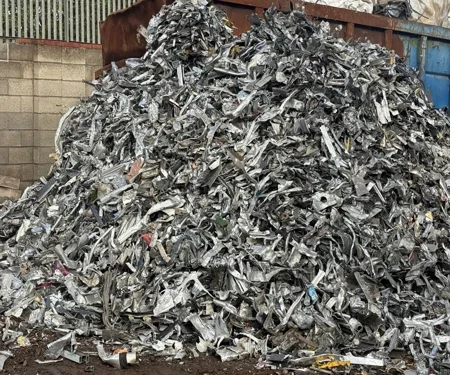
Currently, Australia exports most of its aluminium scrap due to limited domestic remelting capacity. But with ACP waste mounting and solar recycling becoming inevitable, industry is pushing to expand local infrastructure.
The potential uses are vast:
- Automotive: recycled into lightweight wheels, panels, and engine parts, supporting electric and fuel-efficient vehicles.
- Construction: repurposed for facades, staircases, windows, and roofing.
- Aerospace: converted into fuselages and wings, where strength-to-weight ratio is vital.
- Packaging: turned into beverage cans, foils, and food containers.
- Electronics: used for wiring, cabling, and electronic components.
By reusing both solar and ACP aluminium scrap, Australia can turn a looming waste crisis into a circular economy win, simultaneously conserving resources, reducing emissions, and fuelling domestic industries.













_md.webp)