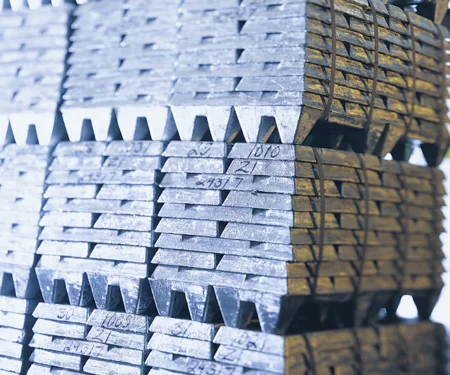
BMW Car2Car project raises aluminium recovery potential from 23% to 52%

This image has been sourced from BMW PR
The BMW Group and its consortium partners have demonstrated that a larger share of material recovered from end-of-life vehicles could return to new automotive applications, increasing the project’s “Car2Car rate” from 6 per cent to 51 per cent under expanded processing and sorting conditions.
The rate, as defined by the project, measures the percentage of material from an end-of-life vehicle that can potentially be recovered at a quality suitable for reuse in new industrial applications. It does not mean that 51 per cent of every scrapped vehicle can currently be recycled into a new car under standard commercial conditions.
The results are based on research and demonstration work conducted under optimised processing conditions. They show the potential of improved material separation, particularly for steel, aluminium and copper, while also highlighting the remaining barriers to recycling plastics and glass into high-quality automotive applications.
Aluminium recovery reaches 52 per cent
The project assessed five material groups: steel, aluminium, copper, plastics and glass.
Using processing and sorting methods currently standard in the market, the Car2Car rate across the five material groups stood at 6 per cent during a vehicle recycling trial involving minimal compulsory dismantling. After the consortium added advanced process engineering and optimised processing routes, the rate increased to 51 per cent.
The strongest results were recorded for the following metals:
Aluminium: from 23 per cent to 52 per cent.
Steel: from 1 per cent to 81 per cent.
Copper: from 48 per cent to 68 per cent.
For aluminium, the improvement depended on better classification, sensor-based sorting and more precise separation of different aluminium alloys. This is important because aluminium recovered from vehicles is not automatically suitable for every new application. Alloy composition and contamination levels determine whether the material can be returned to demanding automotive manufacturing routes.
The results indicate that higher-quality aluminium loops may be possible when dismantling, shredding and sorting systems are designed to separate material streams more accurately. However, the 52 per cent figure represents the potential achieved under the project’s research conditions, rather than the current recycling performance of the automotive industry as a whole.
To know the aluminium casting demand forecast in the transporation sector, explore our report "Global Aluminium Casting Market 2026-2032: Plant Economics, Alloy Segmentation, Pricing Intelligence, Supply Chain Analysis & Strategic Recommendations"
Recovered steel enters vehicle production
The project also demonstrated a direct industrial application for steel recovered from end-of-life vehicles.
Copper from cables, connectors and other vehicle components can contaminate steel scrap and prevent it from being used to produce high-quality automotive flat steel. The Car2Car consortium used an additional sorting step to reduce copper contamination and improve the quality of the recovered steel.
Following material and quality testing, steel coils produced through the process were integrated into industrial production. In a field test at BMW Group Plant Leipzig, more than 100,000 series parts were manufactured using the recovered steel and installed in vehicles.
This demonstration is significant because it connected end-of-life vehicle scrap with a real automotive production line, rather than stopping at laboratory testing. However, the process still requires scalable processing chains, suitable infrastructure and viable commercial models before it can be applied widely across the industry.
A patent application has been filed for the targeted steel-sorting process.
Plastics and glass remain difficult
The results were less uniform across the five material groups. While metals achieved comparatively high recovery potential under the optimised conditions, plastics and glass continue to face technological and quality challenges.
Vehicles contain a wide variety of polymers, composite structures, coatings and additives. Separating these materials into consistent, high-quality recyclates for new automotive components requires more precisely tailored processing routes.
Glass also presents challenges because of contamination, mixed material streams and the quality specifications required for automotive applications. The project therefore suggests that progress towards circular vehicle production will depend on material-specific solutions rather than a single recycling process.
Explore downstream aluminium suppliers, product listings and trade opportunities on AL Biz
Scaling requires investment
The Car2Car findings show that better recycling outcomes depend on more than simply collecting a larger number of end-of-life vehicles. Additional pre-sorting, modified shredding, material classification, sensor-based sorting and alloy separation can significantly improve the quality of recovered streams.
Scaling these processes will require investment in dismantling, sorting and recycling infrastructure. It will also require reliable access to end-of-life vehicles, stable markets for recovered materials, digital tracking systems and business models that support cooperation across the recycling value chain.
Regulation will be another factor. The project’s results provide technical and economic insights for future requirements, including the European Union’s planned end-of-life vehicle framework. Those rules will need to encourage higher recovery rates while recognising that the feasibility and cost of recycling vary substantially between steel, aluminium, copper, plastics and glass.
For the aluminium industry, the project underlines the value of alloy-sensitive sorting and stronger links between vehicle dismantlers, recyclers, metal producers and car manufacturers. For automakers, it shows that vehicle design, material selection and end-of-life processing must be considered together if recovered aluminium and other metals are to return to high-value applications.
The Car2Car project therefore demonstrates technical potential, not a finished industrial solution. Its 51 per cent rate shows what improved processing can achieve under favourable conditions, while the remaining challenge is to make those material loops economically viable and consistently available across the wider automotive market.
AL Circle is coming up with a new Magazine "ALuminium’s Frontline: OEM Edition 2026." Feature your brand and opinion in the edition
UK aluminium recycling growth depends on access to global markets
Next articleRaw material constraints coupled with marginal weakening of demand kept the operating rate of secondary aluminium producers at low levels in July
Grow with
AL Circle