Argentina’s import of Aluminium Tubes or Pipes fittings during 2018-20 unveils constant downfall
Argentina had an estimated decline in GDP of 11.8% in 2020, primarily due to the impacts of the COVID-19 pandemic. The nation had one of the strictest and lengthiest lockdowns in the world and, although the pandemic didn't cost as many lives in Argentina as it did in other large Latin American countries. The second-largest economy of South America’s is expected to rebound in the coming years, with the IMF's October 2020 estimates predicting growth of 4.9% for 2021 and 2.5% for 2022, subject to post-pandemic global economic recovery. In its most recent January 2021 update of the World Economic Outlook, the IMF has revised its GDP growth projections for Argentina to 4.5% in 2021 and 2.7% in 2022.
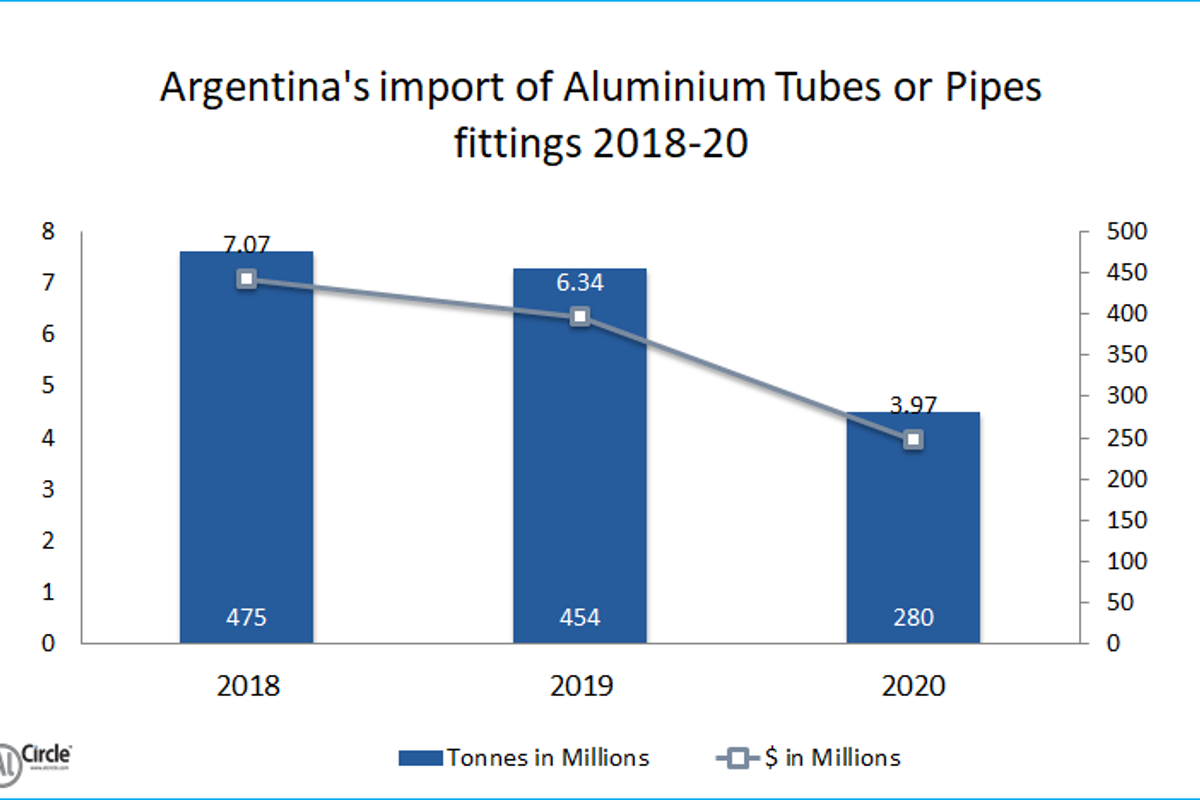
The Southern American nation’s import of aluminium tubes or pipes fittings was recorded at 929 tonnes in 2018-19 and the expenditure for the import remained at $13.41 million. The import for 2020 stood at 280 tonnes and the foreign revenue expenditure occurred for the import was $3.97 million. However, when the import volume and expenditure for 2020 gets assorted with the previous two years, it unveils 1209 tonnes and $17.38 million respectively.
Argentina’s import of aluminium tubes or pipes fitting in 2018 remained at 475 tonnes and the expenditure stood at $7.07 million, whereas, in 2019, the import saw de-growth by 4.42%, as the import volume dropped to 454 tonnes and the expenditure also dipped to $6.34 million.
The import for 2020 also demonstrated a downfall by 38.32%, as the import volume fell to 280 tonnes and the expenditure also reduced to $3.97 million.

Argentina’s major trading destinations for the importation of aluminium tubes or pipes fittings are Brazil, China, France, Italy, Japan, Paraguay, Slovakia, Taiwan, Thailand, Turkey, USA, Vietnam, etc.
China’s aluminium billet inventories grow by 27,400 tonnes this week on lower downstream demand ahead of CNY
Next articleHindalco’s aluminium wire rod and billets prices reflect third consecutive growth of INR1250/t on February 9
Grow with
AL Circle