The closure of the Strait of Hormuz has been causing concerns for primary aluminium supply around the world. At the same time, it is also raising questions about the supply of raw materials to the Middle East, a region heavily dependent on imported primary aluminium raw materials, many of which pass through the Strait of Hormuz.
Situation intensified after Iran closed the Strait of Hormuz, one of the world’s most critical maritime shipping routes linking the Persian Gulf with the Gulf of Oman and the Arabian Sea.
For the Middle East’s aluminium industry, the closure raises a pressing question: how resilient is a major aluminium-producing region that depends heavily on imported raw materials? While the region accounts for roughly 8–9 per cent of global aluminium output, its smelters rely largely on overseas shipments of bauxite and alumina-the two key inputs required to produce aluminium.
Any prolonged disruption to shipments through the Strait of Hormuz could therefore quickly translate into supply stress for primary raw materials in the Middle East. Aluminium smelters typically maintain only three to four weeks of alumina inventory, meaning extended delays in cargo arrivals could force producers to cut output, tightening global aluminium supply and pushing prices higher at a time when demand remains firm.
Alumina imports: the region’s most immediate vulnerability
The Middle East’s reliance on imported alumina makes the Strait of Hormuz particularly critical for the region’s aluminium value chain. The Middle East region-including the UAE, Saudi Arabia, Iran, Oman, Qatar, Turkey and Bahrain-has a combined aluminium capacity of about 6.92 million tonnes per year, while total alumina capacity stands at around 4.95 million tonnes annually. Read Iran's aluminium industry overview.
To produce 6.92 million tonnes of aluminium, approximately 13.08 million tonnes of alumina are required annually. This structural gap means regional smelters must depend heavily on imported alumina to sustain operations.
Kpler’s lead metals analyst Ben Ayre estimates the GCC’s average monthly alumina imports at around 680,000 tonnes. However, current shipping data highlights the fragility of these supply flows. Only 61,000 tonnes of alumina currently bound for regional smelters are already inside the Gulf.
Another 57,000 tonnes bound for Oman does not need to transit the Strait of Hormuz, which is currently closed to shipping.
The imbalance suggests that if shipments continue to be disrupted, smelters could soon begin to feel the strain.
Explore- Most accurate data to drive business decisions with Global ALuminium Industry Outlook 2026 across the value chain
Bauxite supply chains face similar pressure
The challenge extends even further upstream. Bauxite- the primary raw material used to produce alumina-is also largely imported into the region. The Middle East does not achieve self-sufficiency in bauxite and remains heavily dependent on international suppliers. Regional refineries import bauxite mainly from Australia, Guinea, Turkey and India to sustain operations.
In early 2025, about 2.9 million tonnes of Australian bauxite entered GCC-linked supply routes. Trade data also shows that in 2024, GCC countries imported around 356,000 tonnes of bauxite, of which 45 per cent - worth roughly USD 24 million-came from Turkey.
Supply patterns have already been shifting. After Guinea revoked the mining licence of Guinea Alumina Corporation (GAC), GCC buyers increasingly turned to Turkish suppliers to secure bauxite supply.
Limited refining capacity deepens the dependence
The Middle East’s limited alumina refining infrastructure further reinforces the region’s reliance on imported bauxite.
The most significant refinery in the region is the Al Taweelah alumina refinery in the UAE, which plays a major role in supplying regional smelters. The refinery produced 2.40 million tonnes of alumina in 2025, slightly lower than 2.54 million tonnes in 2024, meeting about 46 per cent of Emirates Global Aluminium’s alumina requirements.
However, the refinery itself requires more than 5 million tonnes of bauxite annually, all of which must be imported.
Operations in 2025 were heavily affected after the Guinean government revoked the mining licence of Guinea Alumina Corporation, the refinery’s primary bauxite supplier. Production trends also reflected these pressures. Output in H1 2025 reached 1.14 million tonnes compared with 1.22 million tonnes in H1 2024, while the refinery produced 2.54 million tonnes in 2024, continuing to outperform its two-million-tonne nameplate capacity every year since its start-up in 2019.
EGA later secured alternative supply from Australia, Ghana and Brazil, demonstrating the resilience of its supply chain strategy.
Kpler's Ayre meanwhile estimated there were 545,000 tonnes of bauxite - an ore refined to make alumina - on the water heading for EGA's Al Taweelah alumina refinery, the region's sole bauxite importer. Just under half of that, 263,000 tonnes, has already passed the Strait of Hormuz and is in the Mideast Gulf, he added.
One vessel, understood to be carrying Al Taweelah's first bauxite cargo from Sierra Leone, was on course for the UAE as of Saturday morning when the attacks began, but has since anchored off the Gulf of Oman, Ayre said.
Are regional raw material alternatives sufficient?
Within the Middle East, only a limited number of countries possess domestic resources that could reduce dependence on imports. Saudi Arabia is one of the few with its own bauxite reserves. Ma’aden sources bauxite from the Al Ba’itha mine in Qassim province, which supplies raw material to its refining operations.
The Ma’aden alumina refinery in Ras Al Khair has an annual production capacity of about 1.8 million tonnes and requires roughly 4–5 million tonnes of bauxite per year from the Al Ba’itha mine. As a result, the refinery does not rely on imported bauxite.
Iran’s refining capacity remains limited in comparison. The country has only one alumina refinery supported by domestic bauxite mining operations that produce about 250,000 tonnes of alumina and 650,000 tonnes of bauxite annually. India is the main supplier of alumina to Iran, accounting for 40–80 per cent of the country’s imports.
Could aluminium production be the next casualty?
The implications of raw material disruptions are already being felt across the region’s aluminium sector. There are five primary aluminium producers across five Persian Gulf countries, all members of the Gulf Cooperation Council (GCC), with combined production estimated at around 6.3 million tonnes in 2024. These producers include Emirates Global Aluminium (UAE), Aluminium Bahrain (Alba), Qatar Aluminium (Qatalum), Sohar Aluminium (Oman) and Ma’aden Aluminium (Saudi Arabia).
While Saudi Arabia and the UAE have alternative export routes, countries such as Iraq, Iran, Kuwait, Qatar and Bahrain rely almost entirely on the Strait of Hormuz for maritime trade, increasing their vulnerability during geopolitical disruptions.
Some producers are already experiencing disruptions. Aluminium Bahrain (Alba), which operates one of the world’s largest aluminium smelters with annual production exceeding 1.62 million tonnes, has halted shipments because of shipping constraints in the Strait of Hormuz and is seeking alternative solutions to meet delivery schedules.
Meanwhile, Norwegian producer Norsk Hydro said its joint-venture smelter Qatalum in Qatar, with an annual capacity of 648,000 tonnes, has declared force majeure and will shut down fully by the end of the month. The company is evaluating alternative supply channels to meet contractual commitments, though a full restart could take up to a year. If disruptions in the Strait of Hormuz persist, can the Middle East’s aluminium industry-heavily dependent on imported bauxite and alumina-sustain production without stable raw material flows?
Don't miss out- Buyers are looking for your products on our B2B platform
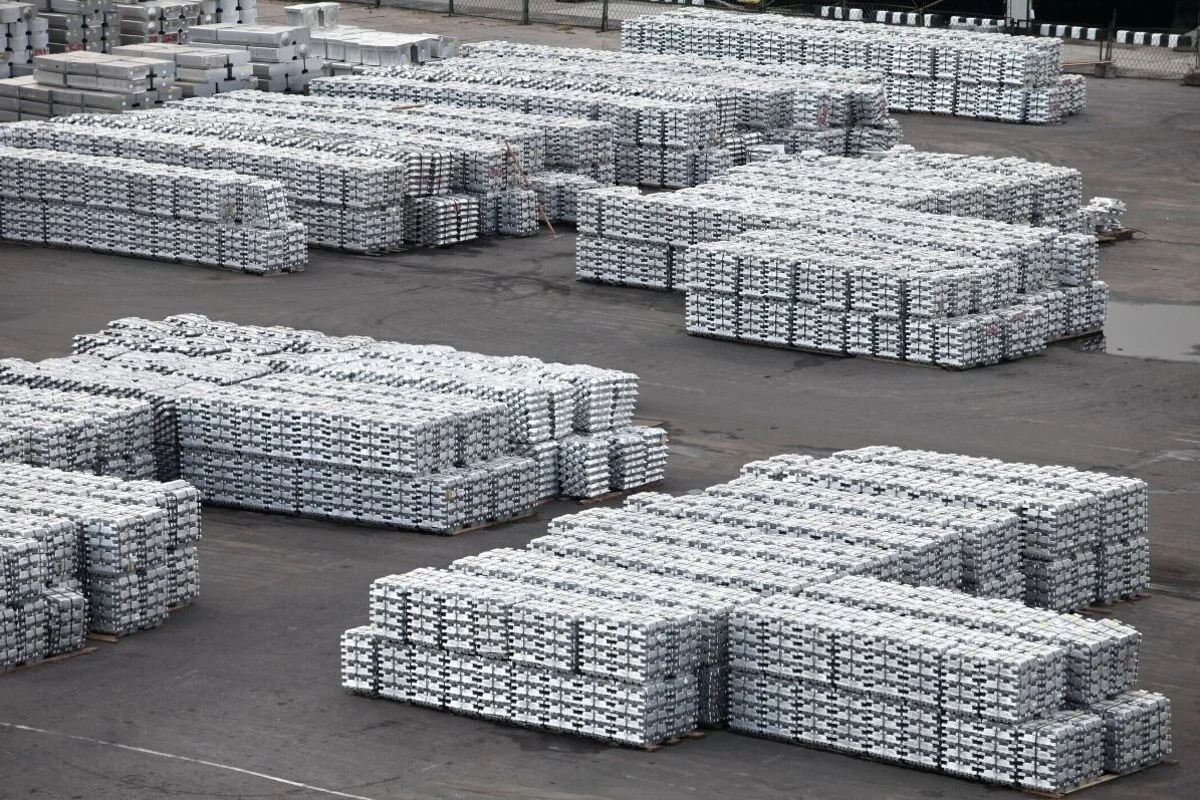
Image genertaed through AI for referential purpose













_md.webp)