您想继续阅读英文文章还
是切换到中文?
是切换到中文?

THINK ALUMINIUM THINK AL CIRCLE

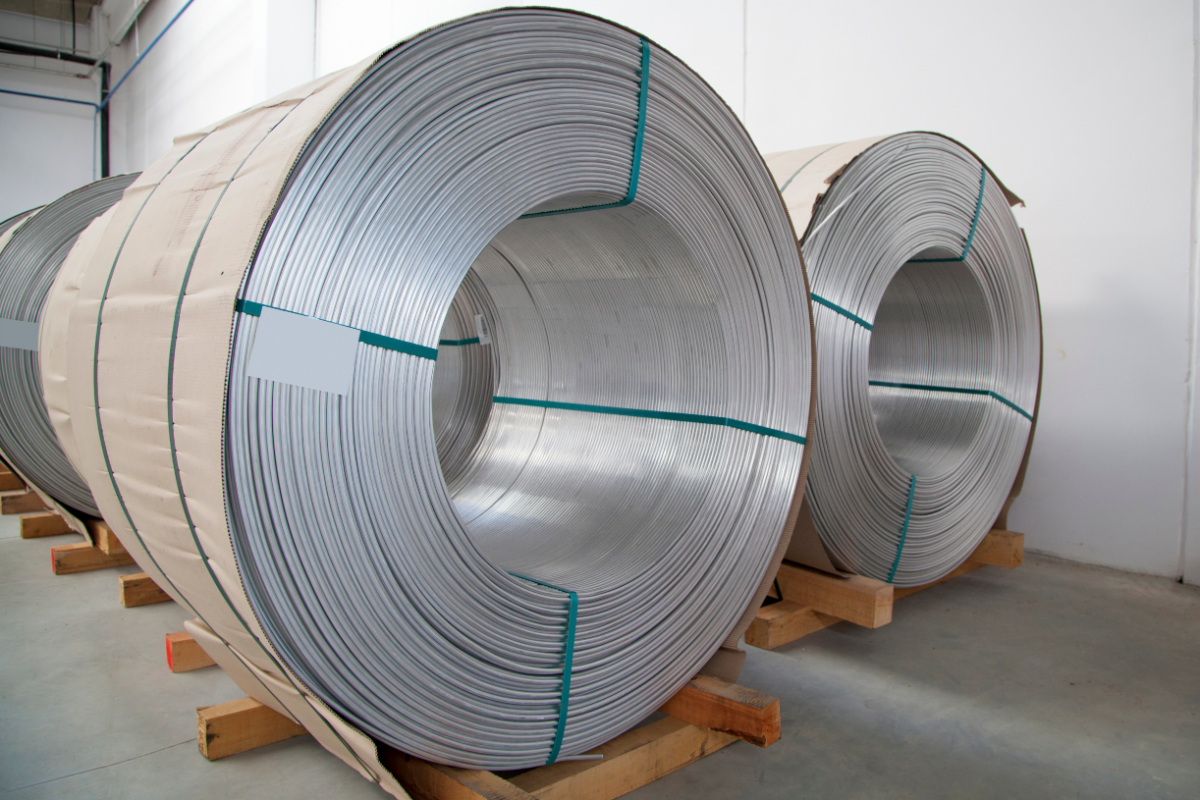
Stock image for referential purposes only
According to SMM statistics, as of June 18, days of inventories at domestic aluminium rod plants stood at 1.82 days, down 0.84 days from the same period last week (2.66 days on June 12); the inventory ratio fell from 9.28 per cent to 6.87 per cent, a decline of 2.41 percentage points, and inventory levels have dropped to an extremely low range for the year. During the same period, the comprehensive operating rate of leading aluminium rod enterprises recorded 83.40 per cent, up 1.3 percentage points W-o-W, climbing for the fourth consecutive week and hitting a new year-to-date high. The core driver behind the continued accelerated destocking is the sustained dual-line production schedule of orders for exported aluminium stranded wire and orders from State Grid, keeping aluminium rod supply tight; producers prioritised export and long-term contract deliveries, leading to a continuous contraction in spot circulation. The increase in operating rates was supported by ample order backlogs and high-capacity utilisation rates, with profits on orders on hand moderate enough to sustain high-load operations. Current inventory has approached an extreme low, leaving very limited room for further destocking, and is expected to enter a stabilisation phase. Although the operating rate remains in an upward channel, considering that the capacity utilisation rate is already at a high-level bottleneck, the room for further increase in the short term is expected to be relatively limited.
{alcircleadd}Last week, aluminium prices overall moved sideways and consolidated around RMB 24,000 per tonne, without a significant directional breakout, and their marginal impact on processing fees was limited. However, this week aluminium prices have fallen continuously, while processing fees have remained firm. As of June 23, aluminium rod processing fees across regions diverged compared with last Tuesday: Shandong reported RMB 600 per tonne, Inner Mongolia reported RMB 550 per tonne, Henan reported RMB 700 per tonne, Jiangsu reported RMB 750 per tonne, Hebei reported RMB 650 per tonne, and Guangdong reported RMB 650 per tonne. Overall, processing fees stayed high and firm; in Shandong, processing fees have touched a high range for the same period in nearly three years, mainly due to the unchanged tight supply, with producers showing a strong willingness to hold prices firm and traders having scarce spot resources. Processing fees in Henan experienced catch-up gains, reflecting a phased release of downstream restocking demand in the region. Given that aluminium rod inventories have fallen to extremely low levels and the tight supply situation is difficult to reverse in the short term, processing fees are expected to remain high, but momentum for further gains is insufficient, and price spreads between regions may narrow further. Moreover, the speed of decline in LME aluminium prices has far exceeded expectations; currently, export profits for aluminium stranded wire have turned inverted, limiting the sustainability of orders. Caution is needed regarding a marginal weakening trend in market demand.
This week, the operating rate of China's aluminium wire and cable industry recorded 69.4 per cent, up 0.8 percentage points W-o-W, continuing to run at high levels. During the week, the industry's operating rate continued to rise, with the dual-drive pattern of export orders and State Grid deliveries persisting. Enterprises steadily advanced production according to existing production schedules, and the overall capacity utilisation rate remained in a high prosperity range. Currently, there has been no substantial change in the industry's operating logic. The resilience of export demand, combined with the medium-to-long-term order backlog from power grid tenders, jointly supported the industry's capacity utilisation rate at a relatively strong range. Against the backdrop of coordinated domestic and external demand and relatively ample order reserves, the operating rate is expected to maintain high-level resilience in the short term.
Note: This article has been issued by SMM and has been published by AL Circle with its original information without any modifications or edits to the core subject/data.
Responses