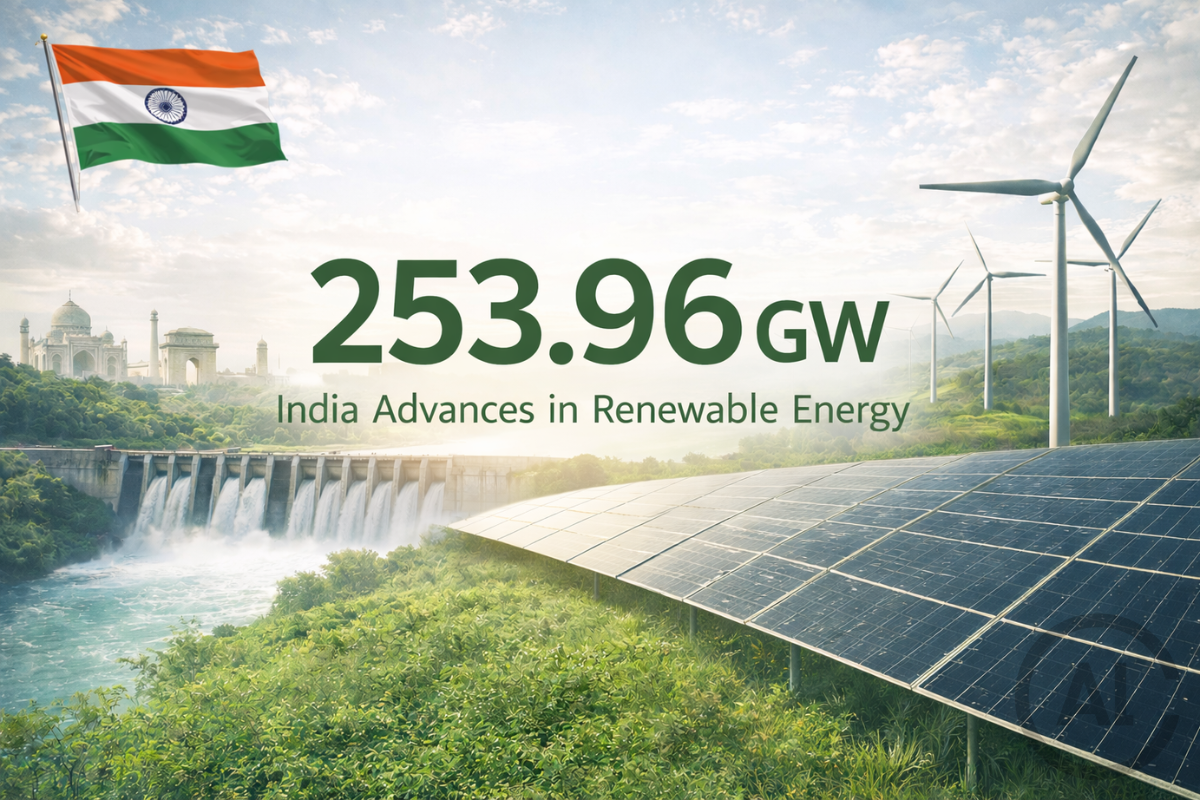
Renewable energy, a key element for a low-carbon future, has immensely flourished in the Indian power landscape. Electrification changes with solar energy, wind energy, hydropower etc., had begun with a nominal capacity of 76.37 GW in 2014, and India made significant progress in upgrading its energy sector in recent years. As of November 2025, the nation has attained a renewable energy capacity of 253.96 GW, denoting an increase of over 228 per cent. It is simultaneously meeting rising electricity demand in India and advancing sustainable practices.
Explore- Most accurate data to drive business decisions with Global ALuminium Industry Outlook 2026 across the value chain
At present, India stands as renewable energy market that is the fourth-largest on the global platform. It reflects the commitment of the Ministry of New & Renewable Energy (MNRE) to the ambitious vision announced at COP-26 of attaining 500 GW of non-fossil fuel energy capacity by 2030.
India's renewable energy transition progressed steadily from 2020 to 2025, with non-fossil capacity that combines renewable and nuclear energy. It grew steadily from 148 GW to 251 GW, raising its share from 38 per cent to 51.5 per cent of total capacity. A close study of the years throws light on the year-wise progress in electrification with milestones in renewable energy capacity.
2020 – COVID recovery phase
Solar energy reached 37 GW, wind 38.6 GW, and hydro and biomass 72.4 GW. The pandemic introduced obstacles in the Y-o-Y capacity growth, which increased by 9.6 per cent with 13 GW. Nonetheless, the sector expanded steadily. The complete non-fossil capacity grew to 148 GW.
2021 – Rooftop solar expansion
Solar growth rose to 48 GW, wind 40 GW, and hydro and biomass to 72.4 GW. Rooftop solar installations gained momentum, adding 10.1 per cent with 15 GW of Y-o-Y capacity. Total non-fossil capacity climbed to 163 GW.
2022 – Steady expansion period
Solar capacity boosted to 60 GW, wind to 42 GW, and hydro and biomass to 73 GW. A modest addition of 12 GW contributed to the 7.4 per cent of Y-o-Y growth. Utility-scale solar implementation was given top priority. The collective capacity reached 175 GW.
2023 – Achieving solar milestone
Solar power upgraded to 75 GW, and wind reached 44 GW. Hydro and biomass combined up to 79.75 GW. Hybrid and large-scale project expansions pushed the Y-o-Y progress to 23.75 GW, signifying a notable increase of 13.6 per cent. Non-fossil fuel capacity rose to 198.75 GW.
2024 – Record-setting pace
Solar energy contributed 90 GW, and wind added 47 GW. Hydro and biomass rose to 83.1 GW. Y-o-Y additions of over 21 GW were enabled by transmission, denoting a 10.7 per cent rise. Overall, renewable capacity reached 220.1 GW.
YTD November 2025 – Apex of acceleration
Renewable energy capacity saw a massive hike as solar power hit 132.85 GW after exceeding 100 GW in January 2025. Wind power, exceeding the 50 GW capacity in March 2025, surged to 53.99 GW. Large hydro power, playing a critical role in grid stability, touched 50.35 GW. Concurrently, the region-specific contributor, small hydro power, reaching 5.16 GW, generated clean energy. Bioenergy capacity, contributing to decentralised generation and waste-to-energy solutions, stood at 11.61 GW.
Among the non-fossil fuel supplies, nuclear power accounted for an installed capacity of 8.78 GW.
Cumulative of India’s renewable energy sources consolidated, added up to a massive capacity of 253.96 GW, increasing by 49.83 per cent over the years. Adding the non-fossil baseload to the totality, the installed capacity reached 262.74 GW and increased by 51.55 per cent. This figure represents over 51.5 per cent of the country’s total installed electricity capacity of 509.64 GW.
An average monthly capacity as recorded from January to November 2025 shows approximately 4.05 GW that can be achieved in December 2025.
India’s progress has been reinforced by record renewable energy, meeting 51.5 per cent of national energy demand on 29 July 2025. According to IRENA RE Statistics 2025, as of December 2024, India stood 3rd in the solar power sector, 4th in wind, and 4th in total renewable capacity globally. These milestones depict India as one of the leading countries in the renewable energy industry and its steady progress toward the 500 GW non-fossil capacity target by 2030.
Aluminium as a key factor in the renewable energy mix
The Indian aluminium market has been undergoing several transformations that are modifying its structure and growth chart. This shift comes in parallel with the nation’s push toward green aluminium, which is produced using renewable energy sources like hydropower. Aluminium’s 100 per cent recyclability enhances its demand from the renewable energy industry.
Hindalco, Vedanta and other such companies in this sector are investing in sustainable aluminium manufacturing practices in order to lower carbon emissions for meeting global ESG norms. The aluminium demand is being fostered by the government’s focus on the expansion of the renewable energy sector.
Must read: Key industry individuals share their thoughts on the trending topics












_md.webp)
_md.webp)
_md.webp)