US aluminium revival puts Alcoa, Kaiser and Century in focus
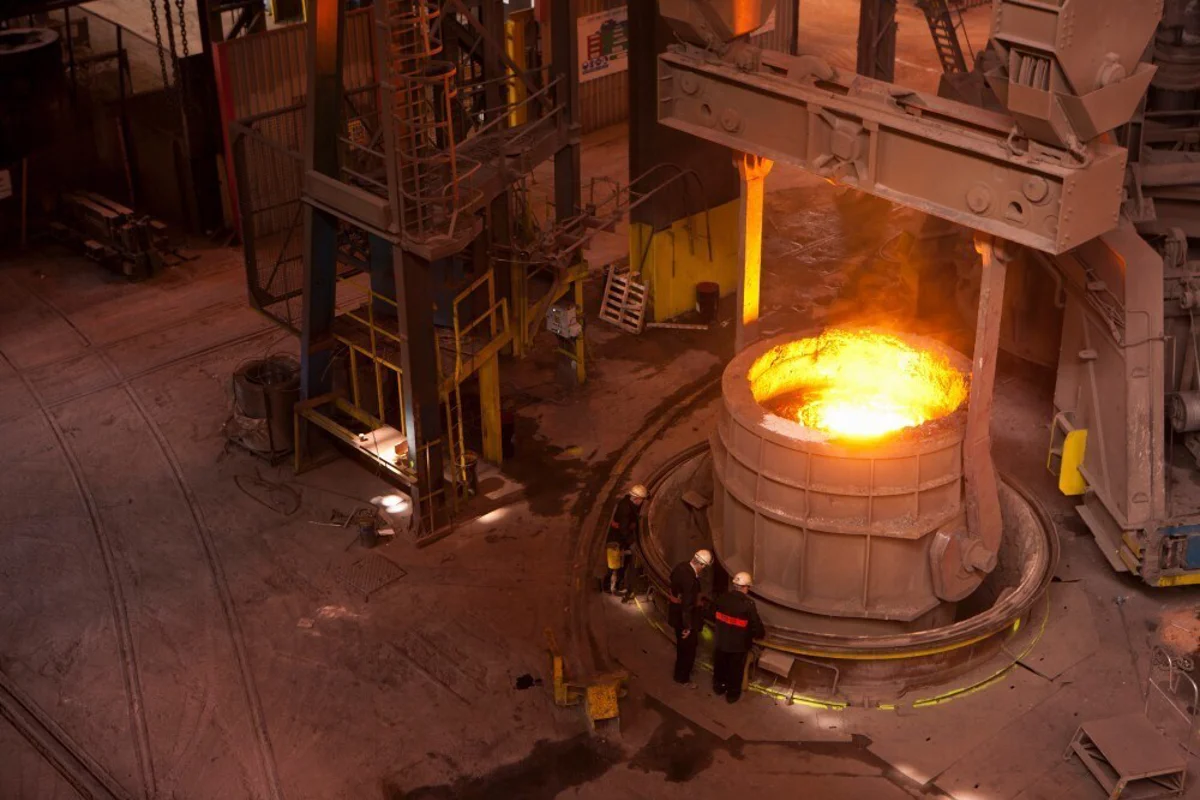
Stock image for referential purposes only
The US aluminium industry is showing signs of recovery after years of declining domestic primary production, with tariff support, new investment and the restart of idled capacity creating opportunities across the value chain.
Century Aluminum’s Mount Holly smelter in South Carolina has returned to full production after the company restarted more than 50,000 metric tonnes of previously idled capacity. The restart lifted total US primary aluminium output by nearly 10 per cent and brought the plant back to a production level it had not reached since 2015.
The revival is also being supported by proposed new projects. Century and Emirates Global Aluminium are advancing plans for a large smelter in Oklahoma, while Magnitude 7 Metals is seeking to partially restart its New Madrid operation in Missouri.
However, the expansion of US primary aluminium capacity is not guaranteed. Electricity costs, power-contract negotiations, environmental concerns and community opposition could all slow the pace of new investment.
Against this backdrop, Alcoa, Kaiser Aluminum and Century Aluminum offer three different ways to assess the US aluminium recovery.
Power remains the key challenge
Primary aluminium smelting is highly energy intensive, making electricity availability and pricing critical to the financial viability of US smelters.
Century’s Mount Holly restart was enabled by an agreement with South Carolina utility Santee Cooper to secure the additional power required to return the plant to full capacity. The company has also been pursuing plans for a new Oklahoma smelter with Emirates Global Aluminium.
The proposed Oklahoma project would have annual capacity of approximately 750,000 metric tonnes and is backed by a USD 500 million grant from the US Department of Energy. However, the project still requires a final energy agreement with the local utility.
It also faces opposition from the Muscogee (Creek) Nation, the Cherokee Nation and Oklahoma’s attorney general. These challenges underline the difficulty of adding energy-intensive industrial capacity, even when government policy supports domestic aluminium production.
In Missouri, Magnitude 7 Metals aims to partially restart its New Madrid smelter by the end of 2026. The project faces uncertainty over the state’s “large load” electricity tariff, which could result in data-centre-like power costs for the smelter.
The US administration has also introduced measures intended to encourage domestic primary aluminium investment. A July 2026 policy allows the Commerce Department to establish an incentive programme for companies that build, expand or refurbish US aluminium smelters.
To know the production, demand and consumption forecasts on bauxite and alumina, explore the report "Global Bauxite & Alumina Market Forecast to 2036: Supply–Demand, Trade Flows & Price Outlook"
Alcoa offers integrated exposure
Alcoa is one of the world’s largest integrated aluminium producers, with upstream operations spanning bauxite mining, alumina refining and aluminium smelting.
The company operates seven bauxite mines across Australia, Brazil, Guinea and Saudi Arabia, as well as six alumina refineries. Approximately 86 per cent of the electricity used across its smelting portfolio comes from renewable sources, according to the source material.
Alcoa reported annual production records at five smelters and one refinery in 2025. Aluminium output increased 5 per cent, while revenue rose 8 per cent.
The company ended the first quarter of 2026 with a cash balance of USD 1.4 billion. In May, it also announced a USD 65 million investment to expand casting capacity at its Norwegian smelter.
Alcoa’s position differs from that of companies focused mainly on the US primary market. Its integrated resource base and international operating footprint provide exposure to bauxite, alumina, primary aluminium and downstream casting.
Kaiser benefits from downstream demand
Kaiser Aluminum is a North American producer of semi-fabricated aluminium products, operating 13 manufacturing facilities across the region.
Its products are used in aerospace, packaging, automotive and general engineering applications. The company’s exposure is therefore more closely linked to demand for processed aluminium products than to the restart of US smelting capacity.
Three longer-term trends support Kaiser’s downstream position:
The substitution of plastic packaging with aluminium cans.
Increasing global air travel and aerospace demand.
Greater use of aluminium for lightweighting in cars and electric vehicles.
Kaiser offered a dividend yield of approximately 1.7 per cent in mid-2026, compared with an average of 1.1 per cent for the S&P 500, according to the source material. Its shares were trading at approximately USD 189.49 at the time of the report.
The company’s performance will depend not only on aluminium prices, but also on demand from its end-use sectors, manufacturing costs and the ability of customers to maintain production levels.
Explore primary aluminium suppliers, product listings and trade opportunities on AL Biz
Century is closest to the revival
Century Aluminum has the most direct exposure to the expansion of US primary aluminium capacity among the three companies.
It operates three smelters in the United States and one in Iceland, and owns a 55 per cent stake in the Jamalco alumina refinery in Jamaica.
The Mount Holly restart added more than 50,000 metric tonnes of annual production and returned the South Carolina smelter to full capacity. Century has also been advancing its proposed Oklahoma project with Emirates Global Aluminium. If completed, the project could more than double US primary aluminium output, with estimated investment of approximately USD 4 billion and first metal expected by the end of the decade.
Century’s shares were trading at approximately USD 48.17 at the time of the report.
The company’s direct exposure to US smelting gives it significant upside if domestic capacity expansion proceeds. It also creates greater exposure to electricity costs, construction delays, permitting, community opposition and changes to tariff policy.
Different routes into US aluminium growth
The three companies represent different parts of the US aluminium opportunity:
Alcoa: Integrated exposure to bauxite, alumina, primary aluminium and casting, supported by a broad international asset base.
Kaiser Aluminum: Downstream exposure to semi-fabricated products used in aerospace, packaging, automotive and engineering.
Century Aluminum: Direct exposure to the restart and expansion of US primary aluminium smelting.
The revival of US aluminium production is therefore not a single-company story. It depends on whether producers can secure affordable electricity, obtain permits, manage environmental concerns and convert tariff support into lasting investment.
Mount Holly shows that idled capacity can return to production when power and market conditions become favourable. The larger projects in Oklahoma and Missouri will show whether the US can move beyond restarts and build a new generation of primary aluminium capacity.
Unlock key insights from leading companies and experts across the aluminium ecosystem with our e-Magazine - Mine to Market: Aluminium Producers & Manufacturers 2026
Alunorte production recovery by Norsk Hydro pressures Indian aluminium shares
Next articleKey takeaway from Global Commodity Conclave 2026 - Oil shocks, supply risks and shrinking stocks keep aluminium prices volatile in 2026
Grow with
AL Circle





















