The United States Federal Government has strategised to tackle the import gap of metals, including aluminium, with an enhanced focus on recycling. According to mining.com, the Department of Energy (DOE) has announced that it will invest US$ 22 million to exalt Golden Aluminum's recycling operations in Colorado.
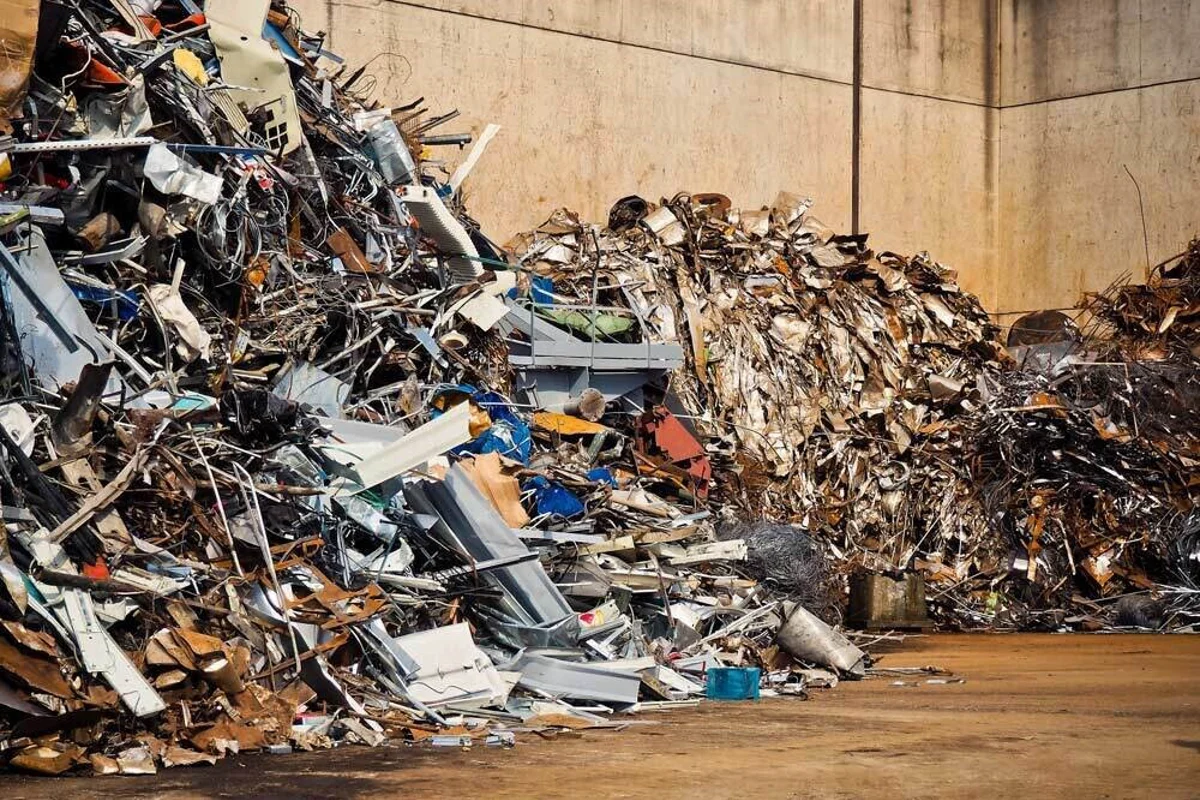
Image Source: https://globalscraptrading.com/
The department is also in search of building from scratch opportunities for an electric vehicle (EV) battery recycling chain. It has allocated financial aid for the latest scrap sorting technology and processing capacity. In the stance of B2U Storage Solutions, they have even considered transporting used batteries.
Urban mining is the process of exploring, extracting and refining metal from anthropogenic stocks such as buildings, infrastructure, industries, products (in and out of use), electrical and electronic equipment (EEE), waste tailings, and landfills. The anthropogenic stock is the cumulation of all substances used or stored by humans over a while. Here, the anthroposphere itself is treated as a 'mine'.
The potential scrap recovery from urban mines depends on the release of wastage from these sources into the garbage stream, including tailings and landfills. The notions of recycling and landfill mining follow similar paths with urban mining; the priors are indeed a part of an urban mine. Quantitatively, urban mining is a sum of end-of-life recycling of varied products and a few scarce material retrievals from landfills and tailings.
How is urban mining aiding the metals' demand-supply scene in the US?
Urban mining has many advantages over ore mining and smelting into primary aluminium. Recycling metals is not just environmentally friendly but also significantly cheaper than producing virgin metal, saving up to 90 per cent of the energy for aluminium production.
It is subsequently 'greener', emitting 80 per cent less greenhouse gas than primary metal, according to the International Energy Agency's (IEA) recently released special report on recycling. Most importantly for the nation's supply-chain planners, boosting domestic critical metals production by expanding recycling capacity means a much shorter permitting process than building new mines.
There are auxiliary supports needed, too...
Only opting for recycling may not replace the need for new mines. But, it still can make a prominent difference, potentially reducing transnational demand for new mining activity by 25-40 per cent by 2050 in a plan that meets national climate pledges, according to the IEA.
However, urban mining's full utilisation is far from achievement. Aluminium tugged the trend with an increase from 32 per cent to 35 per cent thanks to well-established waste management programs and supportive regulations, the IEA noted.
The country is the world's largest exporter of both aluminium and copper scrap, with much of the outbound flow reaching China. Of the 2.06 million tonnes of aluminium scrap exported, China (including Hong Kong) received 212,000 tonnes in the H1 of 2024, which accounted for 10 per cent of the exports. This figure equates to about 3.5 per cent of aluminium scrap collected in the US last year (2023).
Speed-breakers in the process
The primary challenge facing the US recycling industry is the significant decline in domestic scrap processing capacity, particularly for end-of-life materials that require detailed sorting and dismantling prior to entering remelting furnaces. A robust recycling economy is essential and hinges on an efficient collection system—a critical component still underdeveloped in the United States.
For instance, aluminium can recycling, one of the most straightforward materials to reintegrate into the supply chain, needs to be higher, with US recycling rates below 50 per cent, according to the US Aluminum Association. This shortfall results in approximately US$800 million worth of resources being discarded in landfills annually—nearly enough to fund the construction of a new primary smelting facility.
The challenges become even more complex when addressing the recycling of electric vehicle (EV) batteries. While extracting valuable metals like nickel and cobalt from spent batteries can be economically viable, the increasing prevalence of lithium-iron-phosphate (LFP) battery chemistry poses new difficulties. LFP batteries, which now account for approximately 40 per cent of the global market, contain lower-value metals, weakening the economic justification for recycling. This shift may necessitate alternative pricing models, such as toll-based recycling, to sustain the sector.
Additionally, the regulatory landscape for recycling spent EV batteries needs to be more cohesive. Waste classifications for 'black mass' — the concentrated mixture of cathode and anode materials in spent batteries—vary significantly across countries and regions. This regulatory inconsistency complicates global recycling efforts and highlights the need for a unified framework.
China's dominance in the midstream processing stage further exacerbates these challenges. The country's control over converting recycled metals into precursor elements for new batteries underscores a growing dependency on Western nations. Notably, the world's top 20 companies in spent battery pre-treatment and material recovery are all Chinese, reflecting a potential geopolitical and economic vulnerability for Western economies reliant on a sustainable battery supply chain.
Of these challenges, the majority can be combatted with apt policy amalgamation, both at the national and international levels, according to the IEA. As the United States government has come across, investing in new scrap processing capacity is by far cheaper and greener than building newer mines. Most importantly, from a national security standpoint, the metal is also already captive in the domestic market.