EU approves Germany’s power relief instrument: Could aluminium producers save €459m annually?
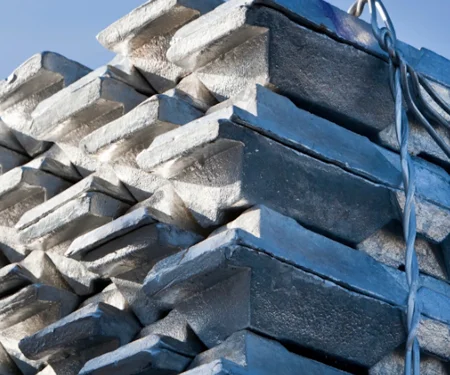
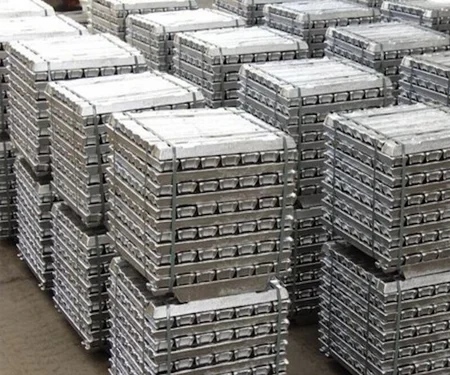
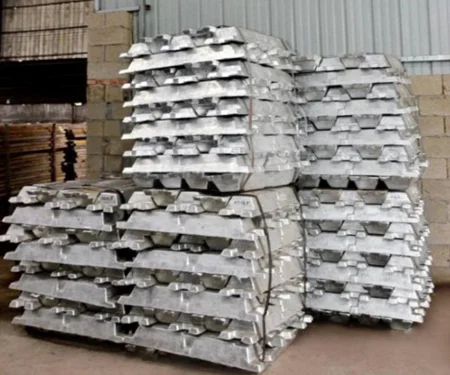
The image used in this article is generated with an AI tool and does not depict any real-time moment
Germany’s aluminium industry could receive some relief from persistently high electricity costs after the European Commission, under the European Union (EU) approved the country’s industrial electricity price scheme for 2026–2028. The measure is intended to ease the burden on energy-intensive businesses, strengthen industrial competitiveness and support Germany’s position as a manufacturing hub.
The stakes are particularly high for aluminium producers. Electricity can account for 30–40 per cent of primary aluminium production costs, making power prices a critical factor in operating margins and investment decisions.
Explore- Most comprehensive and forward-looking industry-focused report — Global Bauxite & Alumina Market Forecast to 2036: Supply–Demand, Trade Flows & Price Outlook
Germany’s industrial electricity price: What does the new policy offer?
The German Federal Government’s scheme covers eligible companies in 91 energy- and trade-intensive sectors. It targets an electricity price of 5 Euro cents per kWh, with the actual compensation calculated against wholesale electricity prices rather than reducing the entire electricity bill to that level.
The eligible sectors include chemicals, rubber and plastics, glass and semiconductor manufacturing. Additional subsectors may be included later, subject to European Commission approval and evidence of the required electricity and trade intensity.
Federal Minister for Economic Affairs and Energy Katherina Reiche described the Commission’s approval under state aid rules as “a major success and an important signal for Germany as an industrial location.” She also pointed to earlier measures to reduce energy costs, including lowering electricity taxes, subsidising network costs and abolishing the gas storage levy for “a strong industry and a competitive Germany.”.
The Federal Office for Economic Affairs and Export Control (BAFA) will administer applications. The application and payment process is expected to begin in early 2027, with companies able to apply retrospectively for the full year 2026.
Explore primary aluminium suppliers, product listings and trade opportunities on the AL Biz platform.
Germany’s electricity-price disadvantage persists across Europe
The new policy comes against a backdrop of elevated electricity costs for German industry. Wattlas’s 2025 comparison, based on Eurostat data for a mid-sized industrial consumer using 500–1,999 MWh annually, placed Germany’s industrial electricity price at 27.3 cents/kWh. This compared with 18.9 cents in France, 16.3 cents in Spain and 10.2 cents in Norway.
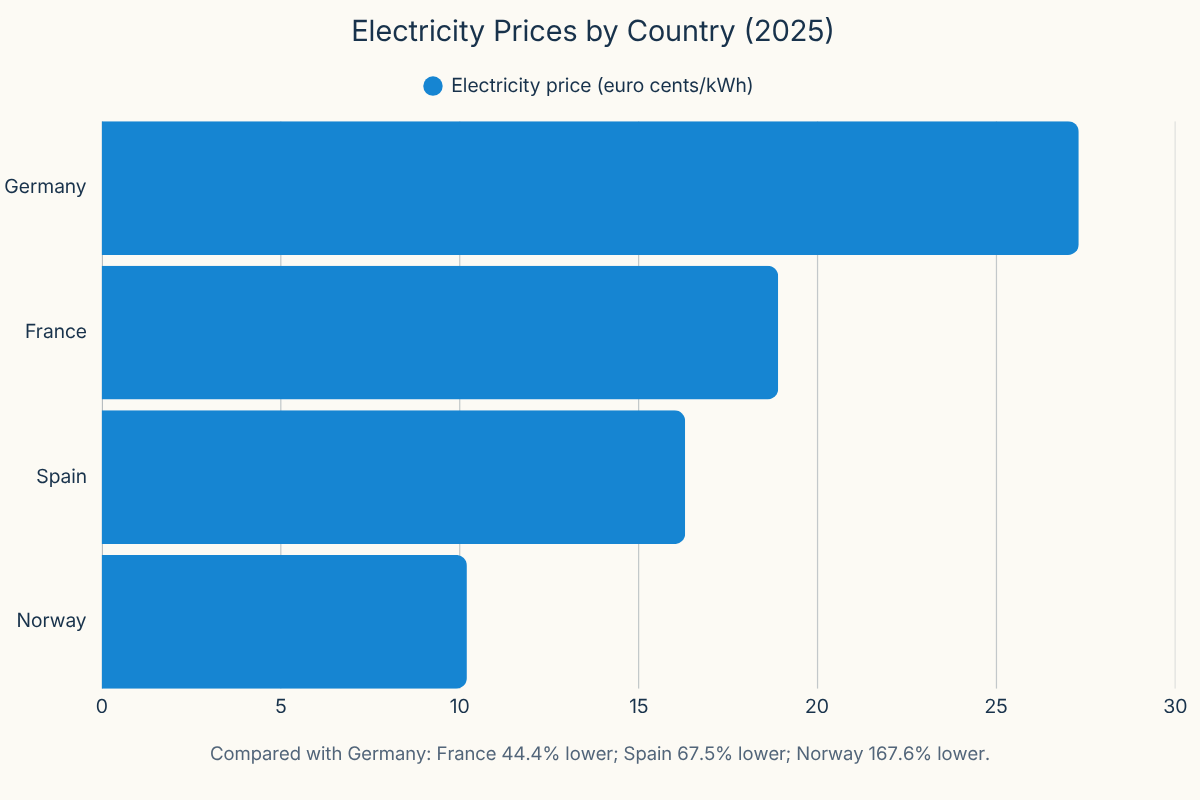
Germany’s price was therefore approximately 44 per cent higher than France’s, 68 per cent above Spain’s and 168 per cent above Norway’s in that comparison.
The similar trend continued in 2026. Eurostat data cited for the first half of 2026 put Germany’s industrial electricity price at 15.72 cents/kWh.
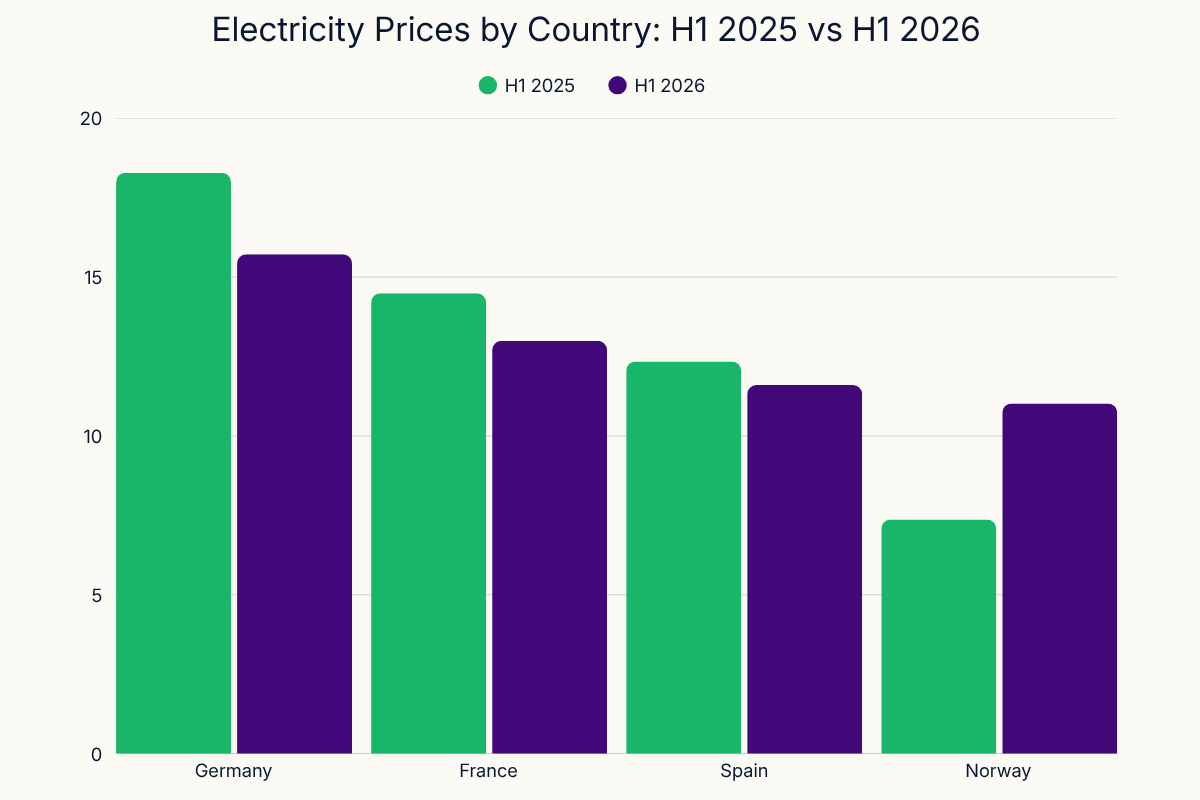
Interestingly, when it comes to the aluminium industry, even this lower figure represents a substantial production expense.
Germany’s current electricity price and the power demands of aluminium
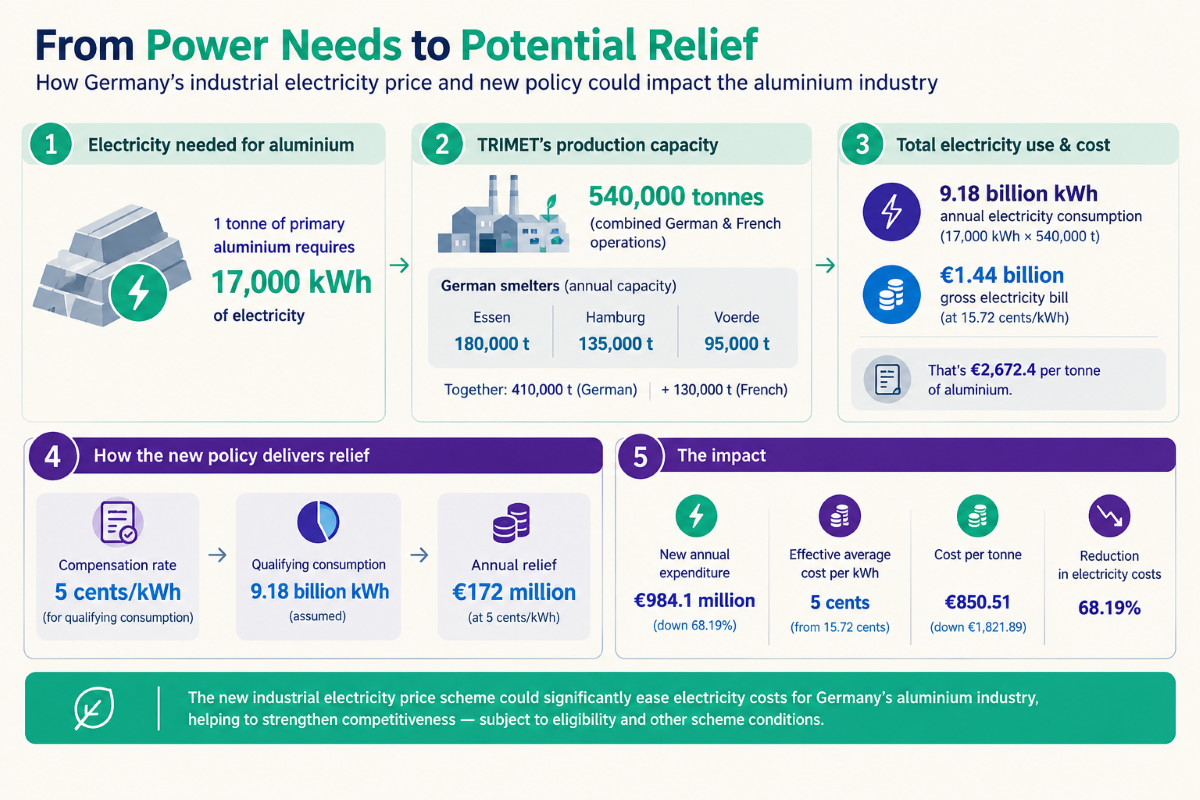
Producing one tonne of primary aluminium requires around 17,000 kWh of electricity. Germany’s nameplate capacity stands at approximately 540,000 tonnes when TRIMET’s German and French operations are combined.
TRIMET’s three German smelters, located in Essen, Hamburg and Voerde, have stated annual capacities of 180,000 tonnes, 135,000 tonnes and 95,000 tonnes, respectively. Together, they account for approximately 410,000 tonnes, while the combined 540,000-tonne figure also includes the company’s French smelter at Saint-Jean-de-Maurienne.
At an electricity requirement of 17,000 kWh per tonne, producing 540,000 tonnes would consume approximately 9.18 billion kWh annually. At 15.72 cents/kWh, the implied gross electricity bill would reach around EUR 1.44 billion.
Unlock key insights from leading companies and experts across the aluminium ecosystem with our e-Magazine - Mine to Market: ALuminium Producers & Manufacturers 2026
New policy to deliver electricity-cost relief to the German aluminium industry?
Germany’s industrial-electricity-price scheme could reduce the annual electricity burden for producing 540,000 tonnes of primary aluminium by approximately EUR 172 million, subject to eligibility and restrictions on overlapping compensation.
BAFA’s 2026 parameters provide compensation of 5 cents/kWh on the qualifying consumption.
Hence, for 9.18 billion kWh of qualifying consumption, this would lower the effective average electricity cost from 15.72 cents/kWh to 5 cents/kWh, and reduce annual expenditure to EUR 984.1 million, i.e., a decline of 68.19 per cent. Electricity costs per tonne, therefore, would fall by EUR 1,821.89, from EUR 2,672.4 to EUR 850.51.
Renewable energy offers another route to cost relief
Alongside government support, German aluminium producers are turning to renewable electricity to manage costs and cut emissions. Novelis signed a ten-year agreement with Statkraft in 2024 for around 58 GWh of wind and solar power annually for its Nachterstedt operations.
Other companies are combining green electricity procurement with rooftop solar: Hammerer Aluminium Industries generated around 251 MWh at its Soest facility in 2023, while ST Extruded Products Group switched its German operations to entirely green electricity sourcing in 2022.
Battery storage and flexible production are also gaining ground. Hydro is expanding solar and storage installations at its German sites, while Speira’s EUR 1.9 million battery system at Grevenbroich can reduce peak electricity demand by up to 3 MW. Constellium’s solar power agreement for Gottmadingen and Singen is expected to cover more than 25 per cent of their combined electricity needs from 2027.
TRIMET, meanwhile, has adapted its Essen smelter to accommodate fluctuations in wind and solar generation. These initiatives offer additional ways to manage power costs and emissions, although renewable procurement and operational flexibility alone cannot remove Germany’s wider electricity-cost disadvantage.
Trading aluminium across borders? Find out the exact cost you need to bear for the embedded carbon in the product by using this CBAM calculator.
A step towards stronger aluminium competitiveness
Germany’s industrial electricity price scheme offers a potential cushion for electricity-intensive manufacturers, but its impact should be assessed against the scale of the sector’s power requirements and the country’s wider European cost disadvantage.
In case of Germany’s nameplate 540,000-tonne production capacity, the estimated EUR 172 million in annual relief could lower effective electricity expenditure by around 11.9 per cent. However, the calculation is not a confirmed saving for TRIMET or the German aluminium industry as a whole.
As the EU approves Germany's policy, its longer-term significance will depend on how effectively it reduces costs for eligible producers while supporting reliable electricity supply and industrial investment. The central question for Germany’s aluminium sector is whether this targeted relief can help restore competitiveness in a market where power costs remain a decisive factor in production economics.
Note: This is exclusive coverage by AL Circle and may not be reproduced, republished or shared without prior permission.
Grow with
AL Circle