From lower metal losses to higher yields: How ABB is advancing sustainable aluminium production
This image has been by ABB in an exclusive interview with AL Circle
For aluminium producers who are seeking productivity improvement while reducing material loss, energy consumption and emissions, accurate measurement, integrated automation and process optimisation are crucial. AL Circle, in its latest magazine, "Sustainability & Recycling: Aluminium’s Commitment 2026", spoke with Marko Sydänlammi, Global Portfolio Manager at ABB, during ALUMINIUM 2026 in Düsseldorf, Germany, to understand how connected technologies can translate sustainability objectives into measurable operational improvements.
Improving operational efficiency by integrating automation and robotics
Via this conversation, AL Circle wanted to comprehend how automation, digitalisation and electrification together support sustainable aluminium production and the role of robotics in the industry’s next phase of operational development.
As shared by Sydänlammi, integrating automation and digitalisation aids in delivering the greatest value when integrated rather than implemented independently. Across electrification, automation, digitalisation and measurement, ABB’s capabilities enable producers to bring different operational disciplines together within a unified solution. With accurate measurement, the foundation for effective process control, optimisation and continuous improvement can be attained, which directly influences productivity and production yield.
Robotics, as he identifies, are becoming an important component for any broader automation strategy. This, instead of just automating individual tasks, helps manufacturers to improve workplace safety, operational consistency and production efficiency while adapting to the changing work environment.
This integration, for the aluminium producers, indicates an opportunity to strengthen manufacturing performance while addressing operational challenges associated with resource utilisation and workforce management.
As Sydänlammi explains, "It all starts with measurement, and that goes hand in hand with the productivity and yield improvements that our customers continuously strive to achieve."
Digitalisation and process control: Measuring sustainability through operational performance
AL Circle explored the operational key performance indicators (KPIs) that the aluminium producers should monitor to determine whether digitalisation is helping to reduce energy consumption, emissions and scrap generation in real time, rather than just expanding production output.
On this, Sydänlammi emphasised that sustainability and productivity are interconnected. By incorporating the accurate measurement systems, control and automation mechanism implementation alongside collection of operational data via a facility’s lifecycle is possible and are also essential for achieving result-driven improvements.
Therefore, it is safe to say that digitalisation can be used beyond just data collection. The information generated must be used to optimise production parameters and improve performance in line with clearly defined business objectives.
For aluminium manufacturers who are actively seeking systems to measure the effectiveness of their sustainability investments, this approach has particular significance. By effectively tracking operational performance as well as productivity, it enables the producers to identify and prioritise improvement opportunities and understand how process optimisation contributes to resource efficiency.
"You need to digitalise operations and collect information, then use that data to optimise processes and improve performance in line with your business objectives," Sydänlammi explains.
Managing recycled aluminium variability through precision measurement
Further into the conversation, AL Circle wanted to understand whether closed-loop process control and digitalisation can aid manufacturers to manage variations in alloy chemistry while maintaining commercially viable production.
To this, Sydänlammi adds that the majority of ABB’s technologies are fully alloy-independent, offering manufacturers flexibility while working with different material inputs. He further explains his stance with ABB’s Millmate Thickness Gauge (MTG) Box Gauge, which is designed to measure strip thickness in both hot and cold rolling applications. Using Pulsed Eddy Current technology, the system eliminates the complexity and safety considerations associated with X-ray systems.
Conventional thickness gauges usually require recalibration for various aluminium alloys, but ABB’s MTG Box Gauge issues measurement consistency irrespective of the alloy composition. With this, manufacturers can simply change production set-ups, minimise downtime and maintain continuous operations across mixed rolling schedules.
However, Sydänlammi stresses that successful digitalisation still depends on accurate measurement, robust process control and clearly defined performance targets.
Reducing process losses: An overlooked opportunity for aluminium sustainability
Given the industry’s growing focus on raising the recycled aluminium content, AL Circle wanted to understand whether this leads to overlooking a major sustainability opportunity: Recovering valuable metal which is already lost through off-spec production, dross formation, excessive processing and inadequate process control.
Both sustainability and profitability can be improved by reducing production losses and unnecessary waste, as shared by Sydänlammi. No matter if the manufacturer is using recycled or primary aluminium, optimising every stage, from material collection and preparation to production and final product delivery, remains essential.
Moreover, in rolling operations, precision measurement is crucial where small variations in flatness and thickness can influence surface finish, product quality and dimensional tolerances. For the aluminium foil producers, this means a change in the roll bite can lead to fractions of a micron, making consistent measurement and control critical.
Owing to this, Sydänlammi further explains that reducing flatness-related rejects by 2–3%, alongside fewer strip breaks and tighter thickness control, can help some operations achieve overall yield improvements of 0.5–2% or more.
These improvements, for a mid-sized aluminium producer, may mean recovered margins annually along with reduced energy consumption, material waste and emissions. This, for aluminium manufacturers, indicates a business consideration: Improving the utilisation of existing metal resources can deliver environmental benefits while directly strengthening financial performance.
ABB's innovation priorities: AI-supported technologies and remote assistance
AL Circle also ventured and talked about ABB’s latest innovations that is supporting aluminium producers to manage operational challenges and improve manufacturing performance.
According to Sydänlammi, the company has been and is actively investing in AI-supported functions, advanced diagnostic capabilities and condition monitoring for identifying process deviations and unusual operating conditions. This, for the manufacturers, translates to responding before potential issues escalate.
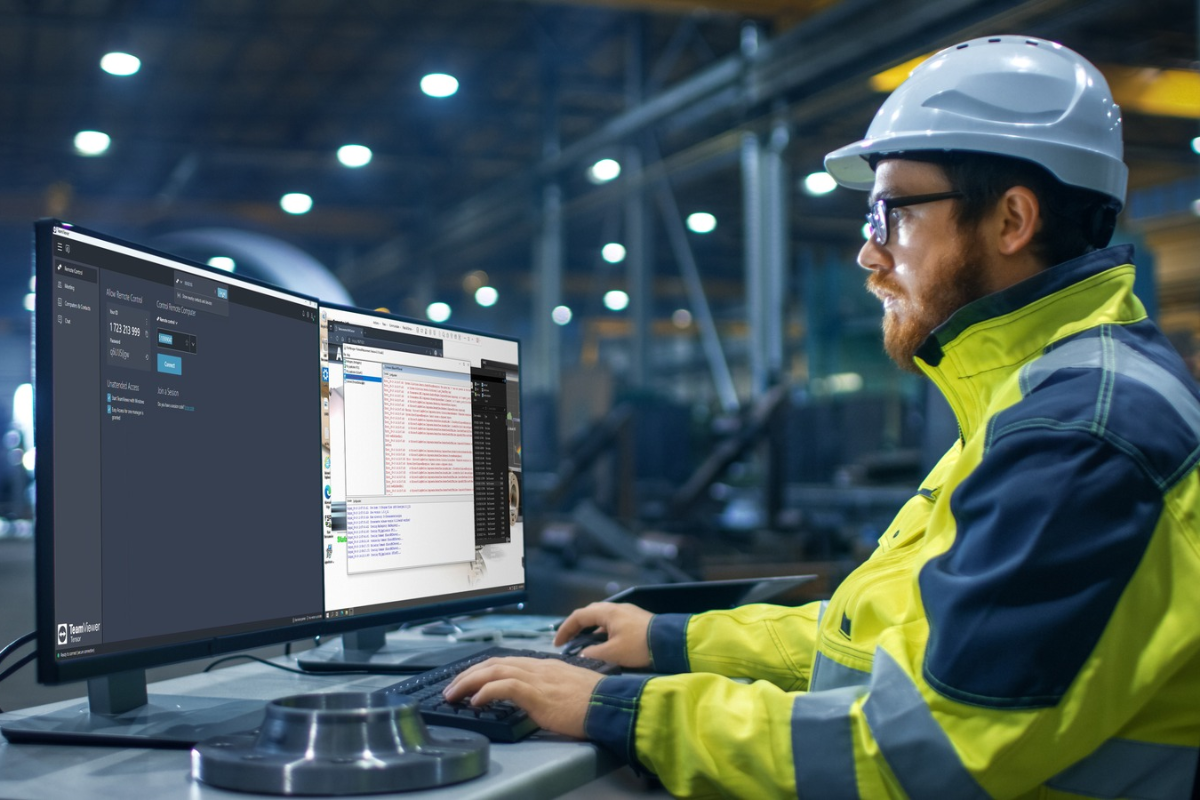
ABB's Remote Assistance for Stressometer Systems, which is another vital innovation, have enabled ABB service engineers to securely access the flatness computer installed at a customer's facility, troubleshoot issues and oversee system performance when requested.
With this system, manufacturers can gain access to specialised technical expertise without requiring every intervention to be managed through on-site support. Such capabilities can strengthen equipment performance and operational continuity.
Ultimately, Sydänlammi's perspective reinforces the importance of connecting sustainability ambitions with operational performance. Accurate measurement, effective process control and continuous optimisation are not separate objectives but interconnected requirements for improving productivity, yield and resource efficiency.
This conversation with Marko Sydänlammi, the Global Portfolio Manager at ABB, is part of AL Circle's interview in its magazine, "Sustainability & Recycling: Aluminium's Commitment 2026". Read the full interview in the magazine to understand ABB's perspective on the technologies and operational strategies shaping more productive and sustainable aluminium manufacturing.
Grow with
AL Circle













_md.webp)
_md.webp)







