waste-management-world.com
ShredderSort to introduce new solutions for the aluminium recycling industry
Edited by : AL CIRCLE
2 min read

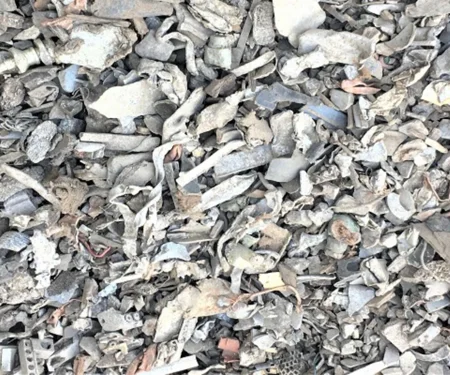
Although the number of end of life vehicles (ELVs) needing recycling is growing, due to processing limitations aluminium recycling rates are being hindered. A European-funded project - ShredderSort - aims to contribute to new solutions to the aluminium recycling industry.
More than 10 million tons of automotive waste from end of life vehicles (ELV) are generated yearly in the EU and the values are continuously increasing. ELV wastes are managed by the auto-shredder plants which process ELVs through a series of mechanical and physical operations in order to separate the materials into different streams: ferrous, non-ferrous, heavy non-metal and fluff. Ferrous materials, constituting more than 60wt% (percentage by weight), are sent to steel-making plants, while the non-ferrous (NF) fraction, rich in aluminium and representing slightly less than 10wt%, is processed to separate some alloys.
Copper alloy fragments are usually obtained by hand sorting, heavy media separation and even by color sorting devices. The aluminium rich fraction obtained contains a wide range of aluminium alloys with different chemical compositions due to the presence of different alloying elements (e.g. Si, Mg, Mn, Cu, Zn). The different concentrations of such metals confer specific properties to each alloy, which are arranged within a standard series classification.
Several aluminium alloys are difficult to separate due to their similar physical-chemical properties. Some technologies have been proposed to separate them using vision/colour sorting systems, but requiring firstly a surface cleaning and a chemical treatment by etching in baths in order to modify the surface colour of some alloys. However this kind of technology becomes expensive since is highly intensive regarding water, chemicals and energy consumptions and subsequently has not been successfully applied.
As a result, aluminium fragments containing several alloys are still downgraded to produce some types of cast alloys, hindering the recycling rates of aluminium, mainly in what respects to the manufacture of wrought alloys from secondary materials. Moreover since the separation processes being used, like hand picking, are labour-intensive, aluminium scrap continues to be exported from the EU to foreign countries, increasing the European dependence on raw-materials. The improvement of recycling of the NF fraction can have important implications in the recycling efficiency, with subsequent advantages from the economic, environmental, and resources conservation point of view.
More than 10 million tons of automotive waste from end of life vehicles (ELV) are generated yearly in the EU and the values are continuously increasing. ELV wastes are managed by the auto-shredder plants which process ELVs through a series of mechanical and physical operations in order to separate the materials into different streams: ferrous, non-ferrous, heavy non-metal and fluff. Ferrous materials, constituting more than 60wt% (percentage by weight), are sent to steel-making plants, while the non-ferrous (NF) fraction, rich in aluminium and representing slightly less than 10wt%, is processed to separate some alloys.
Copper alloy fragments are usually obtained by hand sorting, heavy media separation and even by color sorting devices. The aluminium rich fraction obtained contains a wide range of aluminium alloys with different chemical compositions due to the presence of different alloying elements (e.g. Si, Mg, Mn, Cu, Zn). The different concentrations of such metals confer specific properties to each alloy, which are arranged within a standard series classification.
Several aluminium alloys are difficult to separate due to their similar physical-chemical properties. Some technologies have been proposed to separate them using vision/colour sorting systems, but requiring firstly a surface cleaning and a chemical treatment by etching in baths in order to modify the surface colour of some alloys. However this kind of technology becomes expensive since is highly intensive regarding water, chemicals and energy consumptions and subsequently has not been successfully applied.
As a result, aluminium fragments containing several alloys are still downgraded to produce some types of cast alloys, hindering the recycling rates of aluminium, mainly in what respects to the manufacture of wrought alloys from secondary materials. Moreover since the separation processes being used, like hand picking, are labour-intensive, aluminium scrap continues to be exported from the EU to foreign countries, increasing the European dependence on raw-materials. The improvement of recycling of the NF fraction can have important implications in the recycling efficiency, with subsequent advantages from the economic, environmental, and resources conservation point of view.
Unlock full access – sign up for FREE.
Key benefits
Find exclusive data-driven insights and in-depth analysis
Get our daily newsletter delivered straight to your inbox
Access real-time and historical price trends from global indices
Post and respond to latest business leads
Stay ahead with alerts on learning tools
...and so much more!SIGN UP / LOGIN
Previous article
Hydro’s Recycling Head named to European Aluminium post
Next articleIncreased aluminium recycling could reduce China's metal industry energy use
Grow with
AL Circle