When the European Union rolled out its Carbon Border Adjustment Mechanism (CBAM) in 2023, a few energy-intensive industries felt the tremors more. Aluminium was one of them, while the rest were iron and steel, cement, fertilisers, hydrogen, and electricity industries. For them, CBAM appeared not just as another climate regulation but as a structural shift in its basic operational values. Apparently, CBAM is a bespoke tariff policy designed to target imported goods with high carbon emissions. But its underlying goal is also to introduce a level playing field in the domestic market by imposing the same carbon costs on importers that indigenous manufacturers pay under the ETS (Emissions Trading System).
Among all the sectors caught in the net, aluminium and iron/steel are poised for the most profound impacts, given their energy-intensive nature. They record high carbon footprint, especially in countries with high-emission electricity sources. That is why the global aluminium industry is closely watched as they are racing to brace for what lies ahead. So, here are some essentials that every aluminium producers should know.
CBAM regulations effective from January 1, 2026
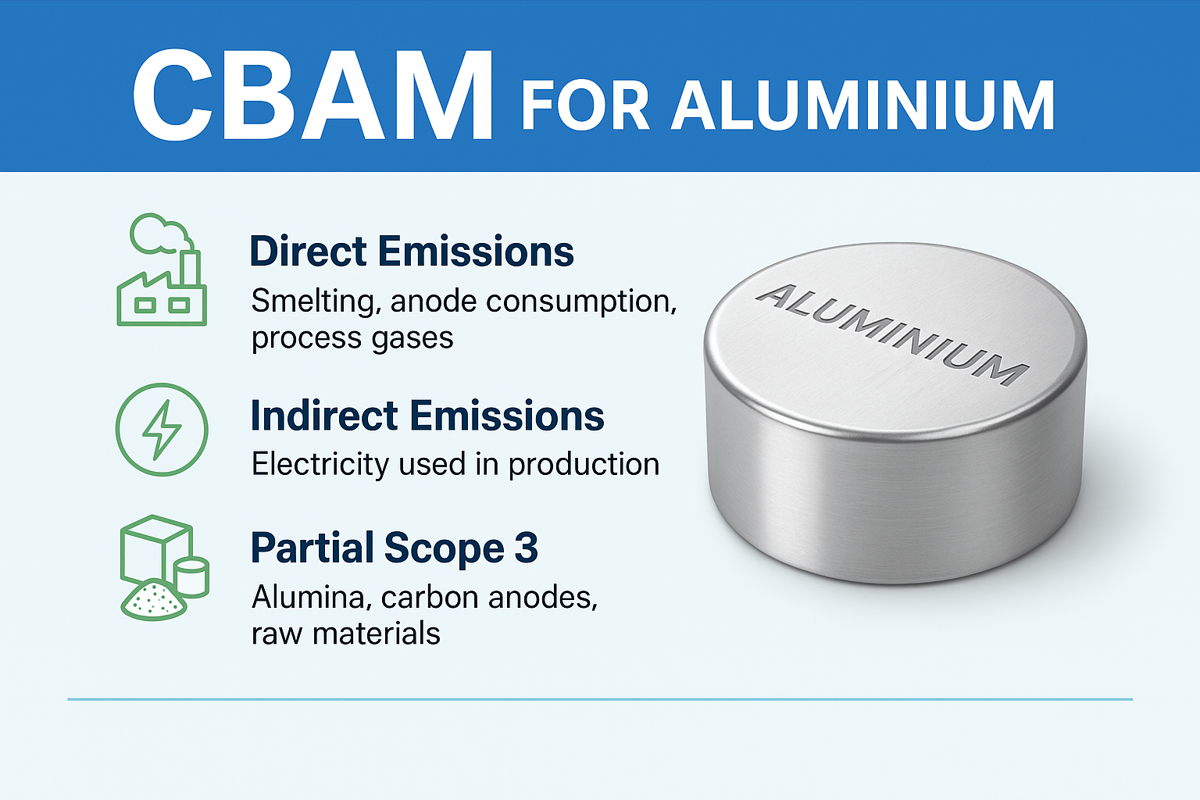
Starting on January 1, 2026, CBAM will graduate from its transitional “report-only” phase to full-fledged regime. For aluminium, the policy covers:
- Direct or Scope 1 emissions generated during smelting, anode consumption, and process gases
- Indirect or Scope 2 emissions generated from electricity used in production
- Partial Scope 3 emissions emitted primarily from alumina, carbon nodes, and other raw materials.
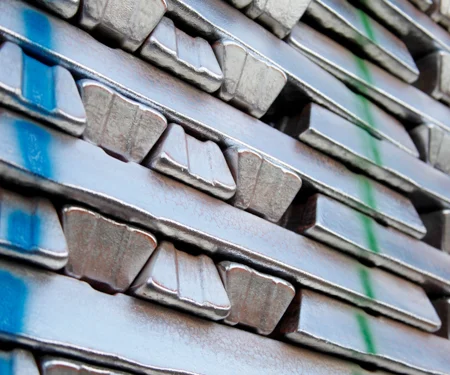
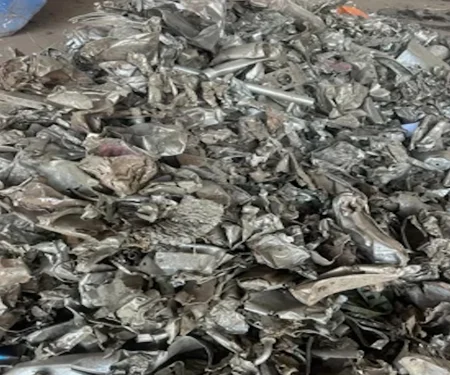
While primary and semi-finished aluminium, such ingot, billet, slab, foil, sheets, and extrusions, come under CBAM rule, finished downstream products found in final goods made of aluminium, such as automotive components, building materials, and packaging, are exluded, at least for now. So are imported aluminium scrap and remelted products.
From the specified date, importers will have to start purchasing CBAM certificates for goods with emissions above the EU benchmarks. Under the Omnibus simplification introduced in October 2025, importers less than 50 tonnes of aluminium annually are exempted from CBAM – a shift from the previous EUR 150 value-based threshold that penalised small and medium-sized enterprises. Under the latest regulation, importers can continue importing after January 1, 2026, provided they apply for authorisation by March 31, 2026.
From February 1, 2027, CBAM certificates will be available via a European Commission platform, and by September 30 of the same year, CBAM needs to be declared and certificates need to be surrendered. Importers must hold certificates covering at least 50 per cent of year-to-date embedded emissions at the end of each quarter. 31st of October, 2027, is the deadline of repurchase of surplus certificates – any remaining certificates are cancelled thereafter.
How CBAM costs are calculated?
CBAM begins with a single metric: embedded emissions. The exporter must calculate the total carbon emissions, both direct and indirect, of goods generated during production. If actual emissions data are available, those must be used; else, the default emission-factors provided by the EU shall come into force i.e. weighted averages of CO2 intensity from fossil fuels in the country of origin, provided via the CBAM registry. Once embedded emissions are determined, the amount of emissions subject to CBAM may be reduced by accounting for allowances that would be been granted under the EU ETS. This rule is to avoid double-disadvantage for foreign producers. If embedded emissions are below the threshold, the CBAM obligation is zero for that year. Otherwise, the importer must surrender as many CBAM certificates as the tonnage of CBAM-chargeable emissions is determined. Each certificate covers one tonne of CO₂e. The cost ultimately depends on the prevailing carbon price in the EU. The exporters who have already paid some carbon price in their home country will have to pay less in CBAM – again to avoid double burden.
CBAM cost integration as proposed by Fastmarkets
In October 2025, Fastmarkets, the price reporting agency, proposed incorporating the cost of the CBAM directly into the aluminium P1020A benchmark premiums for Italy and Spain. For Italy, the specification (designated MB-AL-0316) applies to P1020A aluminium with a minimum purity of 99.7 per cent (maximum 0.10 per cent Si and 0.20 per cent Fe). The offer is valid for a minimum quantity of 100 tonnes, delivered free-carrier duty-paid (FCA DP) across northern and southern Italy. Prices are quoted as a premium on top of exchange-listed aluminium, with delivery timelines set within four weeks. For Spain, the MB-AL-0319 specification covers the same quality and quantity parameters, with FCA DP delivery across the country.
However, when the proposal was opened to public opinion, traders and industrial buyers voted for paying separate carbon costs over and above the LME aluminium benchmark price rather than integrated pricing model.
Exemptions: alumina, finished aluminium, and scrap
Alumina, finished aluminium, and scrap remain outside CBAM, but subject to change as the EU finalises its regulations. Let us analyse if these exemptions truly work in the industry’s favour. For sure, the exclusion of alumina from CBAM saves the primary aluminium prices from a sharp hike, given that alumina is typically energy-intensive and can incur havoc carbon costs. Study shows carbon costs for all Energy Intensive Industries, including alumina, under the current CBAM and ETS, would have been increased by up to 1,216 per cent by 2030. It warns that the inclusion of alumina in CBAM without similar treatment for downstream and end-use products would distort the playing field, harming the competitiveness of EU alumina refineries.
The exclusion of pre-consumer and post-consumer scrap from carrying carbon costs is also a massive cost-saving policy for importers into the EU. A study commissioned by European Aluminium shows that by simply increasing the share of pre-consumer scrap by 20 per cent in extruded profiles can reduce CBAM fees by 24 per cent, amounting to EUR 40 per tonne saved, which is a 1.8 per cent discount off the current average LME price of EUR 2,260 per tonne. And if both pre-consumer and post-consumer scrap content can be increased by 45 per cent, the CBAM fee may drop by EUR 102 per tonne or 4.5 per cent of base aluminium value. By 2034, as CBAM scales up to full implementation, this advantage will grow. Importers can save up to EUR 146 per tonne (6.5 per cent of LME price) just by gaming up the scrap composition.
If this sounds great to you, then here are the challenges attached to it. Imagine all the high scrap content, real or claimed, are routed to Europe, while high-emission, primary-metal-based products are diverted elsewhere. Exporters will be allowed to supply low-carbon aluminium to the EU while maintaining high emissions operation globally. Not fair for the world – right? On the other hand, European companies like Hydro point out that while non-EU producers can avoid paying carbon costs on aluminium scrap, European producers will have to pay the cost under Emissions Trading System. In the EU, these costs are embedded in aluminium prices across the value chain, including for scrap. As a result, European recyclers and manufacturers will face a full carbon cost burden unlike their foreign competitors. The current exclusion of scrap allows almost 50 per cent of aluminium globally to evade carbon costs. By 2035, this loophole may result in European recyclers facing more than 10 per cent higher input costs compared to non-EU counterparts, amounting to EUR 200 per tonne.
Bottom line: winners, losers and steps to be taken
Exporters with low-carbon electricity, scrap-rich producers, and EU importers with high recycling content emerge as the winners. While coal-powered smelters, primary producers outside the EU, and EU recyclers who face carbon costs foreign competitors escape come in the list of losers. Sitting in the grey zones are alumina refiners, finished downstream aluminium makers, and markets dependent on integrated value chain,
For importers, the viable ways to avoid the burden of carbon costs are:
1) Check whether the foreign counterpart has purchased CBAM certificates
2) Ensure customs representative or third-party logistics partner are authorised
3) Importers if expecting to exceed the “de minimum” threshold must apply for authorization before further imports
4) Request from overseas supplier to declare embedded emissions for each consignment
5) Ensure suppliers provide documentation containing data about the amount of energy use and production process footprint
1) Engage an accredited verifier for evaluating your facility’s carbon footprint and prepare supporting documents like energy bills, production logs, and furnace/anode data
2) Share verified emissions data with EU importers in CBAM format
3) Track carbon footprint from bauxite to smelting, casting, and rolling/extrusion
4) Improve energy efficiency in production process












_md.webp)