India's coal power share declines to 65.7% as renewable generation hits record high
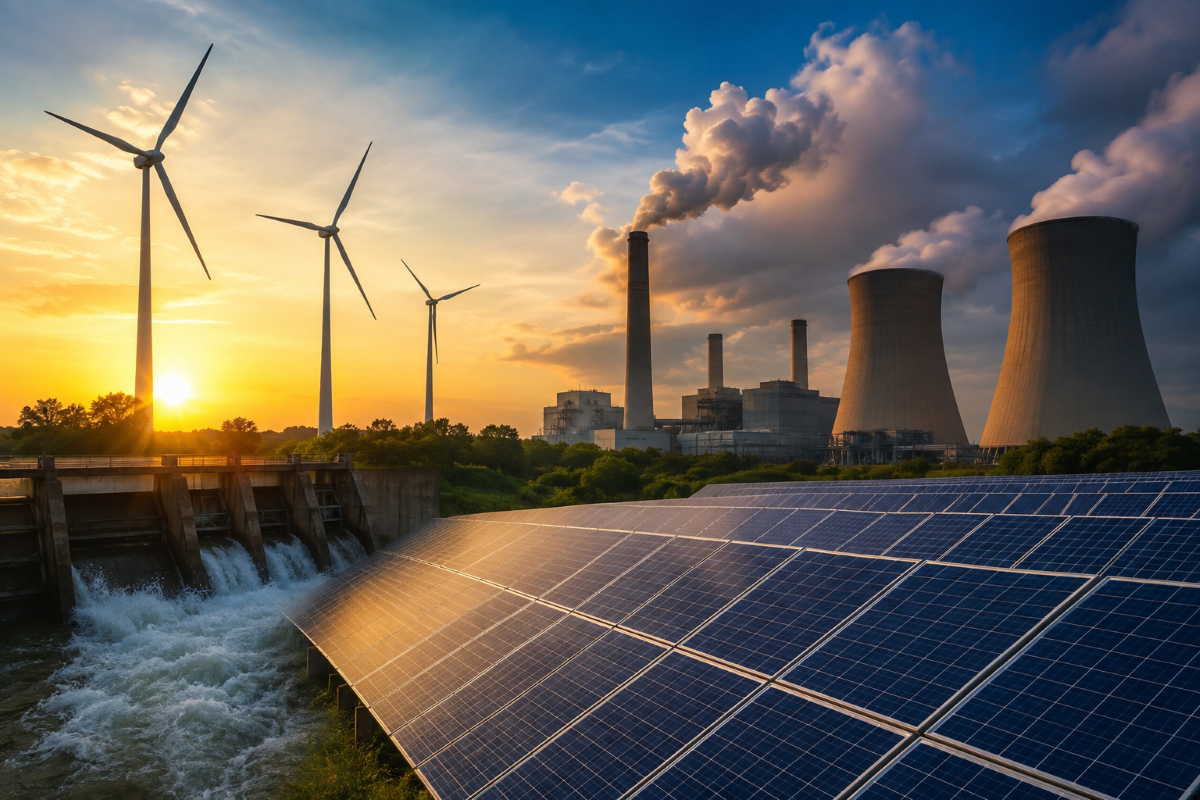
The image used in this article is generated with an AI tool and does not depict any real-time moment
India's electricity mix underwent a notable shift in July as record renewable energy generation reduced coal's share of power production to its lowest level in a year, even as overall electricity demand continued to climb.
Government data showed renewable energy generated 36.25 billion kilowatt-hours (kWh) during the month, marking a 30 per cent increase from July last year and raising its share in the country's power mix to 20 per cent. At the same time, coal's contribution declined to 65.7 per cent from 69 per cent in June, according to Reuters calculations based on daily data from Grid-India.
The changing generation pattern coincided with a rise in overall electricity production, which increased 10.4 per cent year on year to 181.79 billion kWh in July.
Solar and wind drive the demand
The momentum in renewable energy was supported by a milestone in solar and wind generation, which crossed 100 gigawatts for the first time and supplied a record 42.8 per cent of India's electricity on July 13, government data showed.
According to Manoj Kumar, an analyst with the Centre for Research on Energy and Clean Air, a growing share of daytime peak power demand is now being met by solar energy, reflecting the increasing contribution of renewable sources to India's overall power generation.
To explore trade opportunities of aluminium consumables, visit AL Biz
Coal output rises as weaker hydropower offsets renewable gains
Despite coal's declining share in the overall power mix, coal-fired generation increased 12.8 per cent year on year to 119.40 billion kWh in July.
Analysts attributed the increase to weaker hydropower generation and the effects of a strong El Niño pattern, with higher nighttime temperatures driving greater cooling demand after sunset.
Hydropower generation declined for a second consecutive month to 22.1 per cent following lower rainfall linked to El Niño, which significantly alters rainfall patterns and results in above-normal temperatures.
According to the Centre for Research on Energy and Clean Air (CREA), reduced hydropower output combined with rising electricity demand could create a power generation gap of nearly 18 billion kWh, increasing reliance on coal-fired power in India.
To learn about the market potential of aluminium dross, explore "ALuminium Dross Processing: Generation, Recovery & Strategic Roadmap"
Arun Misra named Vedanta CEO as company posts 72% rise in June-quarter profit
Next articleVedanta Aluminium veteran Rajiv Kumar joins Jindal Steel as COO
Grow with
AL Circle