The first two days of India Energy Week (IEW) 2026 were not short on announcements, but one development cut through the noise — India and Canada quietly reset their energy relationship, anchoring it in trade, supply security and investment logic rather than political symbolism.
Explore- Most accurate data to drive business decisions with Global ALuminium Industry Outlook 2026 across the value chain
The revival of the India-Canada ministerial energy dialogue and the signing of a joint statement between India’s Ministry of Petroleum and Natural Gas and Canada’s Ministry of Energy and Natural Resources came against a backdrop of tightening global energy markets and an increasingly explicit Indian strategy, one that treats hydrocarbons, gas, nuclear fuel and clean energy as parallel growth tracks, not sequential ones.
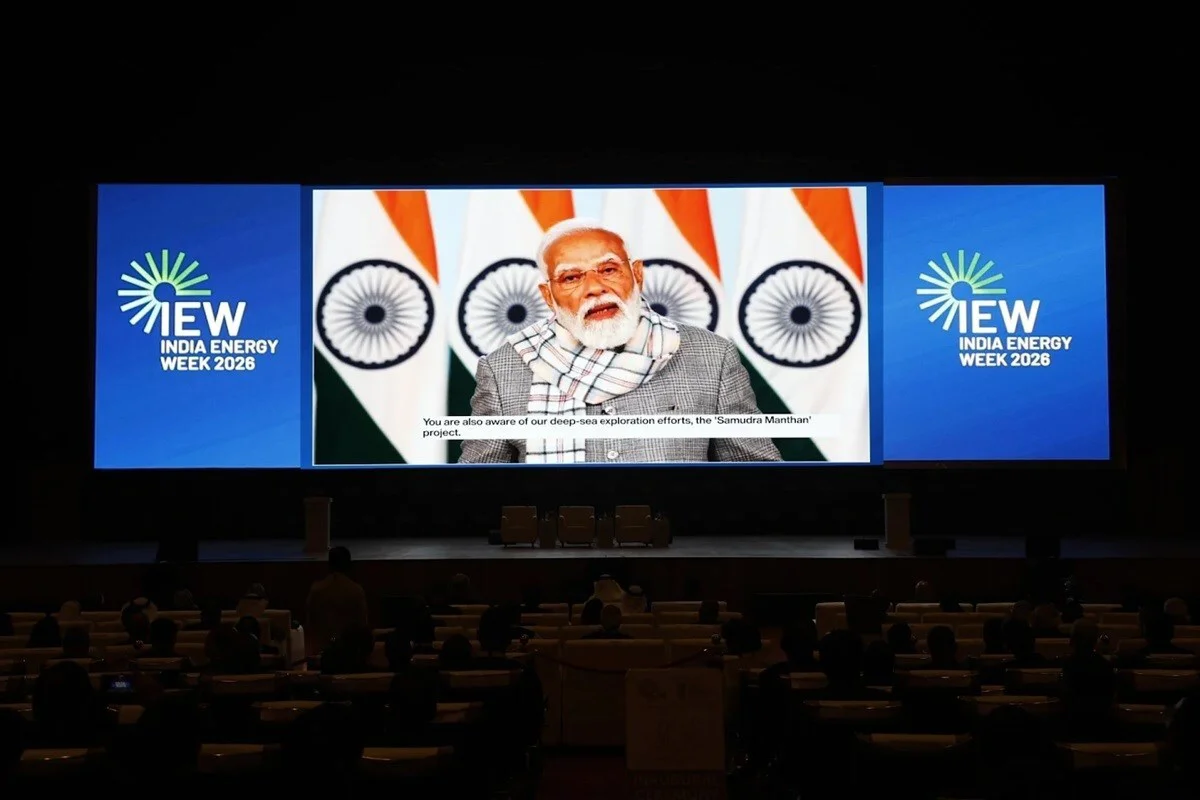
During the inauguration of the 4-day event, Prime Minister Narendra Modi’s message at India Energy Week set the frame. India, he said, is now “one of the top five exporters of petroleum products globally”, supplying fuels to over 150 countries, even as domestic energy demand continues to rise sharply. Evidently, India sees itself as both a market and a platform, consuming energy at scale while exporting value downstream.
That framing was echoed by India’s Petroleum and Natural Gas Minister Hardeep Singh Puri, who underlined that one-third of the incremental growth in global energy demand in the coming years will come from India.
A day after the joint statement was signed, Canada’s Energy and Natural Resources Minister Tim Hodgson was forthcoming about the nation’s intent. Bilateral trade between the two countries currently stands at about CAD 30 billion, he said, and Ottawa expects that figure to double to CAD 60 billion by the end of the decade. Energy, he made clear, will do much of the heavy lifting.
The logic is straightforward. Canada produces around 6 per cent of the world’s oil, yet India sources less than 1 per cent of its oil imports from Canada. “If we just sort of paired up to a normal percentage, it will make us both stronger, more resilient, and more secure,” Hodgson told delegates at IEW — a rare instance of a minister reducing geopolitics to basic arithmetic.
Gas and LNG sit at the centre of that arithmetic. India’s policy target to raise natural gas to 15 per cent of its energy mix by 2030 featured repeatedly across IEW discussions, not as an aspiration but as an infrastructure challenge already underway. Petronet LNG’s management laid out what that means in volume terms: LNG imports crossing 100 million tonnes annually, driven by power generation, industry and transport. Converting just a fraction of India’s long-haul trucking fleet to LNG could alone add 10–12 million tonnes of demand.
For Canada, whose west-coast LNG projects are looking for long-term Asian buyers, India represents scale with policy visibility.
The partnership, however, does not stop at hydrocarbons. Nuclear energy and critical minerals emerged as quieter but strategically heavier pillars of engagement. India’s plan to reach 100 GW of nuclear capacity by 2047 brings uranium supply back into focus. Canada, which officials described at IEW as holding the highest-grade uranium resources globally, already supplies India for peaceful use and sees room to expand.
Critical minerals add another layer of convergence. Hodgson positioned Canada as an opportunity for India to diversify away from concentrated supply chains, framing resilience as a shared interest rather than a zero-sum contest.
What made the India–Canada engagement at IEW 2026 notable was its tone. There was little talk of idealised transitions or distant net-zero endpoints. Instead, the emphasis stayed on energy addition, supply reliability, and investable pathways.
In that sense, the reset is less about optics and more about alignment. Canada is looking to reduce over-dependence on traditional markets. India is locking in supply diversity while expanding its role as a refining, trading and consumption hub. The ministerial dialogue gives both sides a mechanism to convert those interests into contracts, capital flows and infrastructure.
Don't miss out- Buyers are looking for your products on our B2B platform













_md.webp)
_md.webp)
_md.webp)







