US commits $2B to rare earths, taking equity role in strategic minerals push
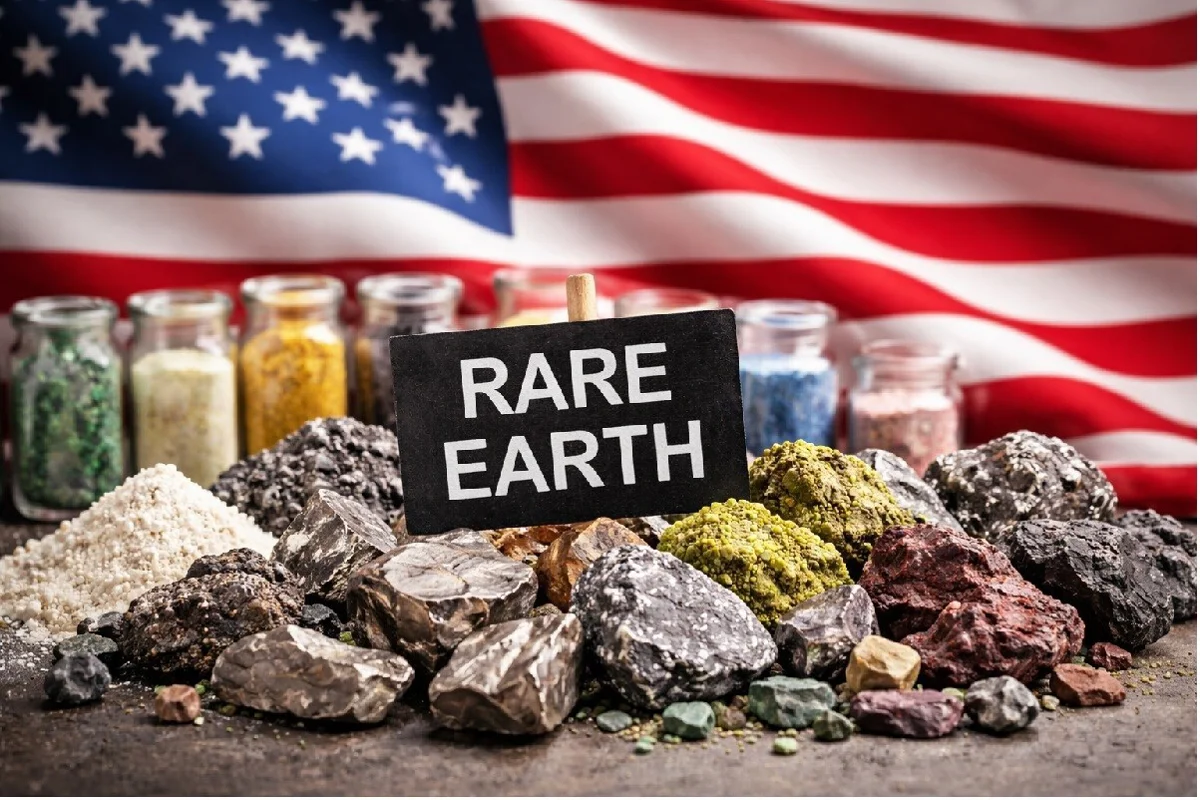
Washington’s role in the rare earth market changed on January 26, 2026. The US government announced a USD 2 billion commitment to the domestic sector, moving beyond its usual reliance on subsidies and guarantees and into direct ownership.
Stocks linked to the sector jumped sharply, with investors treating the announcement less as a policy signal and more as confirmation that rare earths have moved into a different category altogether. What had long been a niche mining space is now tied directly to national strategy.
The shift reflects a growing recognition in Washington that supply chains once considered stable can no longer be taken for granted. Rare earths, used across defence systems, electric vehicles and clean energy technologies, are increasingly viewed through a security lens rather than a commercial one.
To know more about the global primary aluminium industry 2026 outlook, book the report “Global ALuminium Industry Outlook 2026."
A policy line quietly crossed
The centrepiece of the announcement was a USD 1.6 billion financing package for USA rare earth. It includes a USD 1.3 billion senior secured loan and USD 277 million in federal grants. The defining element, however, is the government’s decision to take a 10 per cent equity stake, equivalent to 16.1 million shares. The funding is part of a broader USD 2 billion reallocation of federal money that had originally been linked to the CHIPS and Science Act. Instead of semiconductors, those funds are now being directed upstream, toward mineral supply chains that officials increasingly describe as a bottleneck for U.S. manufacturing and defence.
By taking an ownership position, the Department of Commerce has gone further than previous industrial policy tools. Rather than simply supporting projects, it is now directly exposed to their success or failure. Markets appear to be treating the move as a long-term commitment, not a temporary intervention.
China’s shadow over the decision
The backdrop to the decision is months of rising tension with Beijing. In April 2025, China imposed export bans on seven heavy rare earths, triggering an abrupt spike in prices. Dysprosium and terbium values tripled within weeks, underscoring how concentrated global supply remains.
While the “Busan Truce” reached in October 2025 reduced the risk of fresh tariffs, it left earlier restrictions on dual-use materials such as gallium and antimony untouched. For US policymakers, that partial thaw offered little comfort.
Against that backdrop, the Department of Commerce, led by Secretary Howard Lutnick, moved to secure domestic supply more decisively. The push has been reinforced by the Department of Defense, which received an additional USD 2 billion under the One Big Beautiful Bill Act of 2025 to expand the National Defense Stockpile.
Investors pick their favourites
Markets moved quickly to identify who stands to benefit. USA rare earth, which listed in early 2025 following its merger with Inflection Point Acquisition Corp. II, saw its shares rise more than 30 per cent in early trading. Federal backing is expected to accelerate development at its Round Top project in Texas, a deposit central to plans for a domestic “mine-to-magnet” supply chain, with heavy rare earth output targeted by 2027.
Hecla Mining also drew renewed attention. Traditionally known as the largest US silver producer, the company’s shares jumped 24 per cent as investors focused on its Libby Exploration Project in Montana, now designated a priority for advancing critical mine development. With silver prices reaching a record USD 110 per ounce, Hecla’s exposure to both precious metals and strategic minerals has broadened its appeal.
Not everyone benefits from the shift. International processors and traders dependent on Chinese refining capacity face a tougher outlook as the US looks to bypass established supply routes. Smaller domestic explorers without federal backing or critical designation may also find access to capital narrowing as funds concentrate around government-supported projects.
A narrower, more strategic market
The longer-term implications extend beyond individual companies. The move points to a gradual unwinding of the globalised model that defined the rare earth market for decades. Although partners such as Australia and Canada remain part of the Minerals Security Partnership, Washington’s willingness to take equity stakes at home suggests a more inwardly focused approach.
Analysts increasingly describe a two-track market taking shape: one anchored by government-secured domestic supply for defence and infrastructure, and another, more volatile global market serving civilian demand.
Some comparisons have been drawn with the strategic oil stockpiling of the 1970s. The difference now is the depth of involvement. By embedding itself directly in corporate ownership, the US government has made clear that rare earths are no longer treated as speculative mining plays.
As 2026 progresses, volatility is likely to remain a feature. Technology manufacturers are expected to pursue long-term offtake agreements to reduce exposure to spot markets, while companies such as Hecla face pressure to advance projects quickly to meet Washington’s 2030 targets.
What is already evident is a shift in how these companies are valued. Reserves and production timelines still matter, but strategic relevance now carries its own premium. January 26 may ultimately be remembered less for the size of the market rally and more for marking the moment when rare earths became embedded in US industrial and security policy.
Don't miss out- Buyers are looking for your products on our B2B platform

India’s transport energy balance: why petroleum, diesel and electricity must move in parallel, not in opposition
Next articleNew 400 MW solar cell units boost Premier Energies’ manufacturing base
Grow with
AL Circle