In a week of proud announcements, Emirates Global Aluminium (EGA) has unveiled two noteworthy investment decisions with an intent of sweeping diversification and localisation strategy, while simultaneously contending with mounting geopolitical pressure in its upstream supply chain.
On May 16, EGA signed a landmark Memorandum of Understanding (MoU) with the UAE’s Tawazun Council and US-based RTX (formerly Raytheon Technologies) to extract and refine gallium, a strategic rare metal, at its Al Taweelah alumina refinery in Abu Dhabi. Once operational, this initiative would elevate the UAE to the second-largest global producer of gallium, following China, reinforcing its ambitions to become a central node in the critical minerals supply chain for semiconductors, defence systems, and next-gen electronics.
Gallium, found in trace amounts in bauxite ore and typically viewed as an impurity in aluminium production, is now being reimagined as an industrial asset. With RTX as an anchor partner and Tawazun’s backing through its Economic Programme, EGA is positioning itself as a dual-sector player, serving both commercial aluminium and strategic minerals for national security applications.
Just three days later, on May 19, EGA announced another cornerstone project: a joint venture with China’s Sunstone, the world’s largest independent producer of pre-baked anodes. Together, they will construct a 300,000 tonnes-per-annum anode manufacturing facility at the Khalifa Economic Zone in Abu Dhabi (KEZAD). With Sunstone holding a 55 per cent share and EGA the remaining 45 per cent, construction is slated for 2026, and first output is targeted by 2028.
EGA already produces 1.35 million tonnes of anodes annually at its Jebel Ali and Al Taweelah plants but continues to rely on imports to meet full smelting demand. This new plant will not only substitute the bulk of these imports but also position the UAE as the second global exporter of anodes after China, an unprecedented shift from dependency to autonomy.
Abdulnasser Bin Kalban, CEO of EGA, underlined the broader vision: “This project will enable EGA to further increase our contribution to Make it in the Emirates, by localising the manufacture of a key raw material for our process here in the UAE as well as potentially supplying other aluminium smelters in the region and beyond. In our supply chain, EGA already spends more than AED 8 billion each year on goods and services locally, which is around 40 per cent of our total global spend. Our goal is to progressively increase that proportion, to further spur the development of UAE industry.”
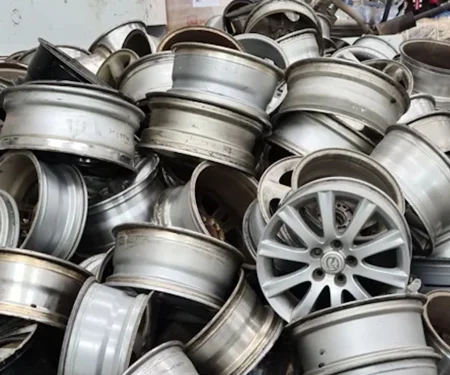
EGA’s geographic footprint and decarbonisation goals are also evolving. In 2024, the company acquired an 80 per cent stake in Spectro Alloys, a leading aluminium recycling firm in Minnesota, USA. The move cemented EGA’s commitment to low-carbon aluminium production and secured a strategic foothold in the North American circular economy.
In 2025, EGA doubled down, announcing a capacity expansion at Spectro by 55,000 tonnes per year, with full ramp-up expected by year-end. This investment aligns with global trends, aluminium produced from recycled content consumes up to 95 per cent less energy than primary aluminium, and supports the surging US demand for sustainable metal, particularly from the automotive and construction sectors.
Amid these ambitious expansions, a major uncertainty looms. The Republic of Guinea, home to EGA’s Guinea Alumina Corporation (GAC), a USD 1.4 billion investment and one of the largest greenfield mining projects in the country, is reportedly moving to revoke EGA’s mining licence. Although official revocation has not been confirmed, sources suggest the move is part of Guinea’s broader policy shift to reassert sovereign control over its mineral wealth, a trend increasingly visible across Africa’s resource-rich economies.
If Guinea proceeds, the fallout could be global. GAC’s output plays a pivotal role in EGA’s vertically integrated model, supplying bauxite to its Al Taweelah refinery and reducing dependence on third-party sources. The revocation could disrupt bauxite flows, tighten global alumina supply, and potentially shift trade patterns, particularly for markets in Asia and the Middle East.
Risk-managed growth outlook
EGA’s current strategy reflects a layered response to a rapidly shifting aluminium and critical minerals landscape:
- Downstream & midstream localisation through anode production.
- Upstream diversification via recycling and critical minerals.
- Supply chain de-risking amid geopolitical shifts, particularly in West Africa.
In essence, EGA is not merely investing in capacity but recalibrating its industrial identity — from a conventional aluminium major to a multi-material powerhouse embedded in both the decarbonisation and defence-industrial complex.
For an industry navigating price volatility, decarbonisation mandates, and trade barriers, EGA’s roadmap may well be a blueprint for aluminium players of the future.












_md.webp)
_md.webp)
_md.webp)