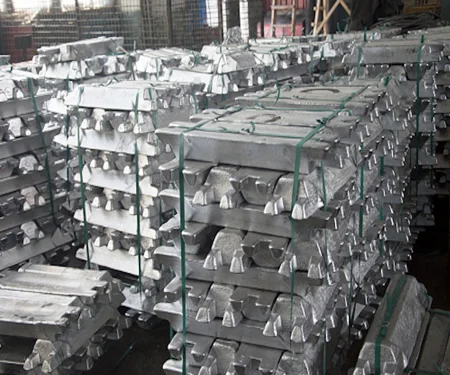
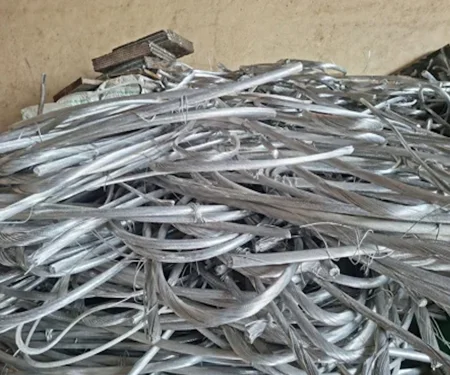
China's Yangzhou University researchers have developed a solar cell using tunnel oxide passivated contact (TOPCon) technology. This innovation significantly cuts costs by replacing the traditionally expensive silver paste with a screen-printed aluminium (Al) paste.
A spokesperson from the research team mentioned that they are still refining the innovation. However, they are currently undertaking tests with JA Solar, a leading Chinese solar module manufacturer, and Ruxing Technology Development Co. Ltd., a specialist in paste manufacturing, to test and enhance the technology.
The group constructed an 182 mm x 182 mm cell on a 140 μm n-type Czochralski wafer. The rear-side passivation contact structure was designed with a 1.6 nm silicon monoxide (SiOx) layer and a 250 nm phosphorus-doped polycrystalline silicon layer, both deposited using low-pressure chemical vapour deposition (LPCVD). Additionally, the device includes an aluminium oxide (AlOx) layer, which was applied via atomic layer deposition (ALD).
The researchers applied a mixed paste of silver (Ag) and aluminium (Al) to the front side of the cell and a full aluminium paste to the rear side. Silicon was added to the aluminium paste to mitigate the aggressive reaction between the aluminium paste and n+-poly-Si. However, this addition also reduced the conductivity of the grids. Consequently, aluminium paste with varying weight percentages of silicon was used in the metallisation process.
Another research team member stated that adding silicon to aluminium paste can inhibit the reaction between the aluminium paste and poly-Si, thereby reducing metal recombination and enhancing open-circuit voltage. The formation of an Al-Si alloy establishes an ohmic contact, and as the aluminium paste's silicon content increases, the Al-Si alloy's thickness decreases.
Establishing a high-quality ohmic contact between the emitter and the metal in silicon solar cells is essential for optimal electrical performance. This is typically achieved using silver and aluminium paste. Several factors, including the chemistry of the paste, the process conditions, and the characteristics of the solar cell wafers, influence the contact's effectiveness.
The scientists found that the solar cell sample with the highest silicon content delivered the best performance. Under standard illumination conditions, this cell achieved a power conversion efficiency of 22.56 per cent, an open-circuit voltage of 663.6 mV, a short-circuit current density of 40.73 mA/cm², and a fill factor of 83.48 per cent.
They elaborated that although the efficiency of the TOPCon solar cells printed with aluminium paste was 9.40 per cent, which is lower than those printed with silver paste, the cost of aluminium paste is only 10 per cent of silver paste. Looking ahead, the efficiency of TOPCon solar cells printed with aluminium paste on the rear side is expected to match that of commercial TOPCon cells that use silver paste. This advancement will be achieved by applying laser doping selective emitter (SE) technology and a bifacial poly-Si passivation structure.













_md.webp)
_md.webp)
_md.webp)