Canada’s recycled aluminium sector: Key initiatives since 2021

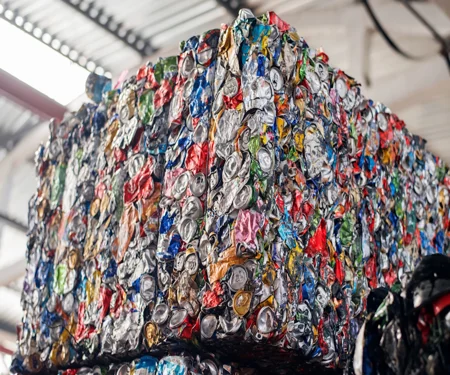
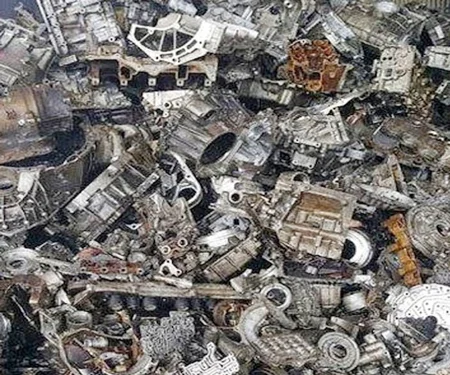
Stock image for referential purposes only
Canada is using a mix of federal funding, provincial recycling rules and private investment to build a stronger market for recycled aluminium. Over the past five years, policy changes and new projects have improved scrap collection, added remelting capacity and reinforced the country’s position as a low-carbon aluminium hub.
Recycled aluminium requires up to 95 per cent less energy than primary metal and emits far less carbon dioxide. That makes it strategically important for decarbonisation, supply security and cost control in automotive, construction, packaging and other sectors. Canada already has a large primary aluminium industry and well-established scrap systems; recent initiatives are now focused on tightening the loop between scrap collection, recycling and end use.
ELYSIS low-carbon aluminium funding
In May 2026, the federal government announced a CAD 100 million investment to support deployment of ELYSIS inert-anode, carbon-free smelting technology in Canada’s aluminium sector. While the technology targets primary smelting, it strengthens Canada’s overall low-carbon aluminium ecosystem. That, in turn, supports demand for high-quality recycled aluminium in downstream applications where buyers seek verified low-emission metal.
Canada’s Critical Minerals Strategy update in 2026 highlighted new funds, including a CAD 1.5 billion First and Last Mile Fund and a CAD 2 billion Critical Minerals Sovereign Fund over five years. These programmes are not aluminium-specific but are designed to strengthen mineral value chains and related infrastructure. Where recycling and secondary-metal projects intersect with critical-mineral supply chains, they can benefit from this broader push to secure and upgrade domestic mineral processing.
Ontario’s full producer responsibility for packaging
Ontario amended its Blue Box Regulation in 2025 and completed the transition to full extended producer responsibility for packaging and paper products on January 1, 2026. Circular Materials now manages recycling on behalf of producers, who are responsible for meeting mandatory recycling targets. This directly affects collection and recycling of aluminium beverage cans and other aluminium packaging, improving the quantity and quality of scrap available to recyclers.
Alberta’s expanded producer responsibility
Alberta’s EPR programme for packaging and paper products launched Phase 1 in April 2025 for communities with existing recycling services. Phase 2 is scheduled for October 2026 and will expand the programme to communities without current infrastructure. The expansion is expected to raise collection rates for aluminium packaging and other recyclables across the province, feeding more material into the recycling stream.
Join the fourth edition of webinar "Hedging for recyclers - Become an expert in 6 hours" by Jorge Dyszel.
Quebec’s coffee-capsule aluminium recycling
In 2025, Nespresso partnered with Éco Entreprises Québec to roll out a “green bag” coffee-capsule recycling programme across all Quebec municipalities. The initiative ensures that aluminium capsules are collected and recycled, with coffee grounds processed through biomethanisation. Quebec became the second Canadian province to adopt this model, with plans to expand nationally over time.
New recycled aluminium billet plant in British Columbia
In 2026, RevoCast launched an aluminium remelting facility in Langley, British Columbia, designed to produce around 80,000 tonnes per year of recycled aluminium billets. The plant will primarily supply 6xxx-series billets to extrusion markets on the US West Coast and Pacific Northwest. This is a direct capacity addition to Canada’s recycled-aluminium supply chain and reduces reliance on exporting scrap for processing elsewhere.
Technology upgrades and market growth
Industry analyses for 2025–2026 describe Canada’s scrap aluminium recycling market as valued at over USD 3 billion, with steady growth and high recycling rates. Recycling facilities in Ontario, Quebec and Western provinces are adopting advanced sensor-based sorting, X-ray transmission and other technologies to improve recovery and quality of high-value aluminium alloys from complex scrap streams. These upgrades help recyclers produce more consistent secondary alloys and capture greater value from mixed scrap.
What this means for the recycled aluminium market
Taken together, these initiatives improve the economics and reliability of recycled aluminium in Canada:
Better scrap collection and sorting through EPR programmes and upgraded facilities increases the volume and quality of aluminium scrap available to recyclers.
More domestic remelting capacity, such as the new British Columbia billet plant, keeps more scrap within North American value chains and supports local secondary-alloy supply.
Stronger low-carbon positioning via ELYSIS and related measures aligns Canadian aluminium with automotive, construction and packaging customers seeking lower-emission metal and verified sustainability data.
For buyers and recyclers, the direction of travel is clear: Canada is moving from a system that collects and exports a large share of scrap towards one that upgrades, remelts and uses more secondary aluminium domestically, within a tighter regulatory and low-carbon framework.
Showcase your brand, aluminium recycling initiatives and sustainability vision in our upcoming magazine: Sustainability & Recycling: Aluminium’s Commitment 2026.
Can old trains become new ones? Hydro joins Train2Train aluminium loop
Next articleBAMA calls for industry-wide action to improve aerosol recycling messaging
Grow with
AL Circle