Can the US afford to cut Canada off? 75% aluminium and $100b energy tell the story

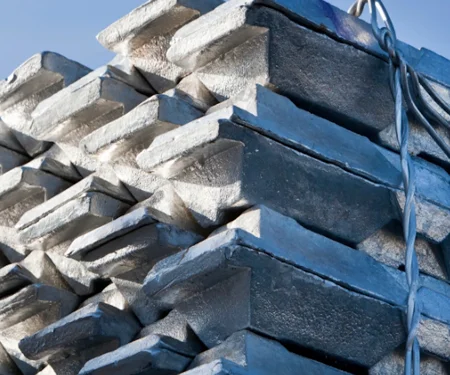
The image used in this article is generated with an AI tool and does not depict any real-time moment
The US aluminium industry’s dependence on Canada extends far beyond primary aluminium imports. While Canada supplies around 75 per cent of US imported primary aluminium, covering roughly 60 per cent of the country’s annual aluminium usage, it is also a major supplier of crude oil, natural gas and electricity to the US. With 50 per cent tariffs on Canadian aluminium, the resulting pressure could therefore extend beyond metal costs, raising broader questions about energy security, industrial competitiveness, data-centre expansion and the feasibility of rebuilding US aluminium capacity.
Canada supplies more than just US aluminium
The scale of the US–Canada relationship becomes clearer when energy is added to the aluminium equation.
In 2025, Canada exported around 6.5 million barrels of oil equivalent per day (boe/d) of hydrocarbons worldwide, of which the US accounted for 90.8 per cent, or roughly 5.9 million boe/d. Crude oil made up 66.6 per cent of Canada’s hydrocarbon exports, followed by natural gas at 24.5 per cent, refined petroleum products at 5.7 per cent and natural-gas liquids at 3.2 per cent.
Join the webinar by Alberto Monje Gama to learn about recycled aluminium, CBAM and trust
Canada also supplied the US with approximately 8.6 billion cubic feet per day (Bcf/d) of natural gas and exported 32.7 TWh of electricity to the country in 2025.
The financial metrics indicate the extent of the trade relationship between the countries. Canadian hydrocarbon exports to the US were worth approximately CAD 157.5 billion (USD 113.08 billion), while electricity exports were valued at around CAD 3.3 billion (USD 2.37 billion).
Thus, Canada is not only a major source of the metal entering the US market, but is also embedded in the energy system supporting American industry.
The US power-generation equation
The US generated a record 4,430 TWh of electricity in 2025, up 2.8 per cent from 2024. The country also added approximately 53 GW of generating capacity, its largest annual addition since 2002.
That expansion may appear substantial, but electricity demand from new industrial and digital infrastructure is simultaneously increasing.
The result is an increasingly competitive electricity market in which aluminium production, data centres, manufacturing and other industrial projects will all require dependable power.
Power demand in the US aluminium industry
Primary aluminium production is particularly power-intensive. Producing one tonne of primary aluminium requires approximately 14,821 kWh, or 14.8 MWh, of electricity.
At that intensity, if the Emirates Global Aluminium (EGA) and Century Aluminum’s joint venture of building Inola’s 750,000-tonne-per-year aluminium smelter in Oklahoma is successful, it would require about 11.1 TWh of electricity annually.
Hence, efforts to rebuild US primary aluminium capacity and reduce import dependence would require more than capital, technology and raw materials. They would also require access to large volumes of reliable, competitively priced electricity.
This is especially relevant because US primary aluminium production in 2024–2025 remained well below historical peaks, declining by about 1.8 per cent year-on-year to 660,000 tonnes, with only four smelters operating.
Any meaningful expansion would therefore add a significant new power requirement to an already increasingly competitive electricity market.
To explore trade opportunities of secondary aluminium, visit AL Biz
Data centres add another layer of power demand
The pressure becomes more pronounced when data-centre development is added to the picture.
Data centres are becoming another major source of electricity demand in the US. They consumed 176 TWh in 2023, equivalent to around 4.4 per cent of total US electricity consumption, and this is projected to rise to 325–580 TWh by 2028, or roughly 6.7–12 per cent. That represents an additional 149–404 TWh of electricity demand compared with 2023.
This creates an important link between the two industries. Data centres require more electricity, while their expansion also creates additional demand for aluminium used to distribute that electricity and manage the heat generated by increasingly power-intensive computing. Aluminium demand from data centres therefore grows alongside the very energy demand that puts pressure on the US power system.
For the US, this makes Canada’s plays a significant role. Canada is already a major supplier of primary aluminium to the US, while it also supplied the US with 8.6 Bcf/d of natural gas and 32.7 TWh of electricity in 2025. In other words, a key material used in data-centre infrastructure and a key source of energy needed to operate that infrastructure, are both connected to the same Canadian supply relationship.
The result is a strategic overlap: the US wants to expand domestic aluminium production while simultaneously building power-intensive data-centre infrastructure. As US data centres expand, the country will need more aluminium for power and cooling infrastructure and more electricity to run it. Canada already sits on both sides of that equation supplying hydro-powered aluminium to the US market while also supplying energy that supports the broader US power system.
If domestic power falls short, US falls back on Canada
This is where the energy side of the US–Canada relationship becomes particularly important. The US has expanded its generating capacity, but rising requirements from aluminium production, data centres and broader industrial expansion will continue to place pressure on the power system.
For instance, if the proposed 750,000-tonne-per-year Oklahoma smelter proceeds, its electricity requirement can be estimated at:
750,000 tonnes × 14,821 kWh/tonne = 11.12 TWh per year.
Adding this to the projected US data-centre electricity demand of 325–580 TWh by 2028 gives a combined additional requirement of approximately 336.1–591.1 TWh per year.
Against the US’s 4,430 TWh of annual electricity generation in 2025, this additional requirement represents roughly 7.6 per cent–13.3 per cent of current annual generation.
Canada’s 32.7 TWh of electricity exports to the US in 2025 could cover only about 5.5 per cent to 9.7 per cent of that additional requirement, leaving a substantial 303–558 TWh to be met domestically or from other sources. The figures point to a heightened reliance on Canada as an indispensable source.
Showcase your brand, aluminium recycling initiatives and sustainability vision in our upcoming magazine: Sustainability & Recycling: Aluminium’s Commitment 2026.
Tariffs could complicate the industrial equation
The US–Canada interdependence therefore goes deeper than aluminium. Canada is not simply an external supplier of aluminium-related inputs, but remains deeply ingrained in the US energy system.
For American aluminium producers, any disruption to Canadian metal supplies can raise sourcing and production costs. But if weaker trade ties also affect the energy flows supporting US manufacturing and power markets, the consequences could extend well beyond aluminium.
Therefore, any attempt to weaken US–Canada trade ties might impact both aluminium and energy security. A tariff may be designed to protect a domestic producer from foreign competition, but if the wider trade relationship also affects the energy inputs required to operate that producer, and to run the data centres and factories competing with it for power, the policy equation becomes considerably more complicated.
Note: This is exclusive coverage by AL Circle and may not be reproduced, republished or shared without prior permission.
Inola aluminium smelter faces new test over DOE funding, environmental review
Next articleCoal-heavy Australian aluminium vs renewables-led New Zealand: How Oceania is balancing decarbonisation
Grow with
AL Circle