Bauxite volume vs price in 2026: Here’s how Guinea's supply growth coincides with the sharpest shift in the cost curve
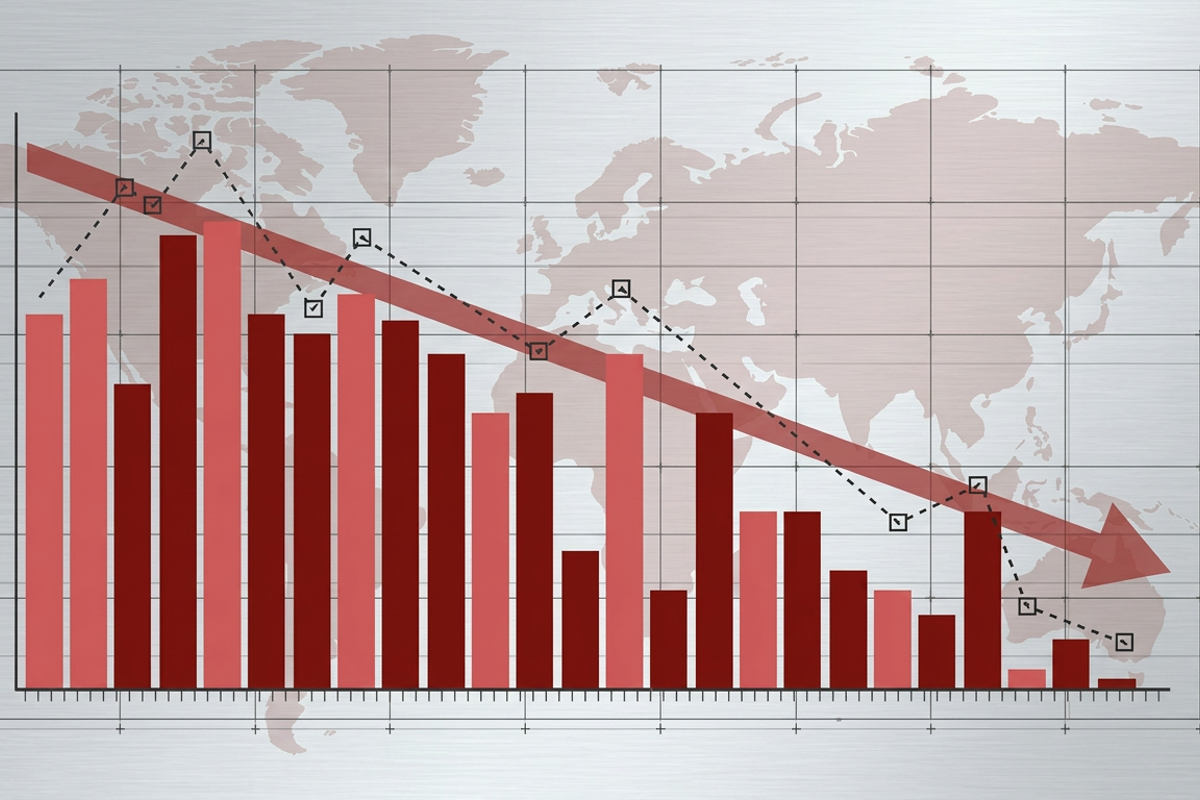
The images used in this article is generated with an AI tool and does not depict any real-time moment
The first part of this series traced the sharp rise in bauxite trade volumes, the growing concentration of supply from Guinea and Australia, and the destination patterns shaping the global market. But the increase in tonnage tells only one side of the story. As more bauxite entered the trade system, costs moved in the opposite direction, while stock accumulation in China, expanding export infrastructure in Guinea, disruption to UAE-bound flows and the prospect of tighter Guinean export controls added new dimensions to the market. Part 2 looks at these developments through the available cost, inventory, infrastructure, trade-flow and forecast data.
The source-by-source comparison shows that the overall decline in China's average import cost occurred alongside lower average costs from almost every major supplier.
The wider regional price series in the supplied research material also shows the downward movement from the higher levels recorded during 2025.
In China, the reported price curve moved from USD 86 per tonne in Q1 2025 to USD 99 in Q2, before falling to USD 83 in Q3. Prices stood at USD 87 in Q4 2025 and USD 84 in Q1 2026.
Germany recorded a sharper movement. Prices increased from USD 82 per tonne in Q1 2025 to USD 107 in Q2, before declining to USD 77 in Q3, USD 74 in Q4 and USD 71 in Q1 2026. From the Q2 2025 high to Q1 2026, the decline amounted to USD 36 per tonne, or 33.64 per cent.
The US price series moved from USD 80 per tonne in Q1 2025 to USD 82 in Q2, followed by USD 77 in Q3, USD 75 in Q4 and USD 76 in Q1 2026.
Australia's series declined from USD 95 per tonne in Q2 2025 to USD 75 in Q3, before moving to USD 76 in Q4 and USD 75 in Q1 2026. India's series moved from USD 71 per tonne in Q2 2025 to USD 82 in Q3, USD 80 in Q4 and USD 78 in Q1 2026.
In Guinea, the decline was more pronounced. FOB prices reached approximately USD 32-38 per tonne by late April 2026, the lowest level since March 2022, according to CRU figures reported by Reuters.
To know the long-term bauxite market forecast, book our report: “Global Bauxite & Alumina Market Forecast to 2036: Supply–Demand, Trade Flows & Price Outlook”
Port expansion raises Guinea’s ability to move ore
The supply increase has also coincided with the expansion of Guinea's export infrastructure.
Expert research records an increase in the country's export facilities from five to nine during 2025, expanding the infrastructure available for mine-to-port movement and vessel loading.
The operator-level data also shows the scale of the country's shipment base. In January 2026 alone, total exports from the licensed operators reached 20.26 million tonnes.
Société Minière de Boké, or SMB, accounted for 6.57 million tonnes, equivalent to approximately 32.43 per cent of the January total. Chalco Guinea followed with 2.64 million tonnes, or 13.03 per cent, while Compagnie des Bauxites de Guinée shipped 1.64 million tonnes, representing 8.09 per cent.
Zhicheng Guinee Mining/GBT and CDM China each shipped 940,000 tonnes. Cobad shipped 820,000 tonnes, Alliance Mining Commodity 790,000 tonnes, Bauxite Alumina Mining 630,000 tonnes and Kimbo Bauxite Mining 580,000 tonnes.
Chinese-affiliated entities directly controlled more than 55 per cent of the total volume shipped from Guinea in January 2026.
Trade routes change as Hormuz disruption hits UAE flows
The higher global flow curve has also been accompanied by changes in destination markets.
Signal Ocean recorded no bauxite shipments departing for the UAE in March 2026. In April, shipments resumed at 126,000 tonnes, but remained more than 71 per cent below the corresponding 2025 level. The UAE's share of global seaborne bauxite flows fell to 0.6 per cent, compared with its typical share of around 3 per cent.
India's arrivals increased during the same period. The country received 2.5 million tonnes in Q1 2026, up 285 per cent year-on-year, followed by 781,000 tonnes in April, an increase of 24 per cent.
The Commodity Radar also reports that the higher bauxite receipts were accompanied by an increase of more than 66 per cent in India's alumina exports between January and the end of April 2026.
China remained the dominant destination. Signal Ocean's April flow distribution placed China at 87.2 per cent, followed by India at 3 per cent, Ireland at 1.9 per cent, Canada at 1.6 per cent, Mauritius at 1.3 per cent, the Philippines at 1.1 per cent, the US at 1 per cent and the UAE at 0.6 per cent.
Guinea's export policy becomes the next major supply variable
The increase in Guinean exports and the decline in prices have been followed by discussions over export controls.
Guinea has considered limiting bauxite exports to 150 million tonnes in 2026, according to Signal Ocean's Commodity Radar. Against its 2025 flow measure of 178 million tonnes, the proposed ceiling would represent a reduction of 28 million tonnes, or 15.7 per cent. Signal Ocean estimated that the reduction could release capacity equivalent to around 46 Capesize vessels.
The 150 million-tonne figure must be read against the pace of 2026 shipments. China alone received 82.57 million tonnes from Guinea during January-May, while May arrivals reached 19.61 million tonnes.
The additional dataset accompanying the article notes that, if Guinea's shipments to China reach approximately 100 million tonnes during the first six months of 2026, a 150 million-tonne annual ceiling would leave only 50 million tonnes for the second half of the year before accounting for exports to non-Chinese destinations.
The dataset specifically notes that the China figures exclude Guinea's non-Chinese export flows, including shipments associated with CBG and EGA settlement exports.
Signal Ocean's analysis also states that the proposed 150 million-tonne ceiling, if implemented, could alter Capesize demand during the second half of 2026. The Commodity Radar identifies Guinea's export policy as a major factor in the bauxite and dry-bulk freight outlook.
Explore the relevance of red mud in the sustainable aluminium industry in A Comprehensive Analysis of Bauxite Residue (Red Mud): Sustainability, Resource Recovery and Strategic Recommendations
What do the forecasts say?
The available bauxite trade outlook continues to show demand growth alongside uncertainty over future Guinean supply volumes.
CRU expects Guinea's production growth to slow later in 2026, with export controls, seasonal disruption, high fuel costs and production reductions by some miners cited among the factors affecting the outlook.
Signal Ocean separately expects aluminium demand to grow by close to 2 per cent in 2026. Its Commodity Radar identifies two principal headwinds to the bauxite flow outlook: disruption to Arabian Gulf demand associated with the Strait of Hormuz and Guinea's move towards lower export volumes.
Note: This is Part 2 of AL Circle’s two-part series on the changing global bauxite trade landscape. Read Part 1 for a detailed breakdown of the January-May 2025 versus 2026 trade curve, country-wise contributions and the export destinations of Guinea, Australia, Brazil, Turkey and Ghana. Also, this is exclusive coverage by AL Circle and may not be reproduced, republished or shared without prior permission.
Metro Mining’s June bauxite shipments jump 29% as Q2 volumes hit record 1.8 million WMT
Next articleChina, Taiwan's bauxite trade on disruption alert as Super Typhoon Bavi approaches ports
Grow with
AL Circle