America’s new aluminium smelter hangs on a power deal amid supply shocks
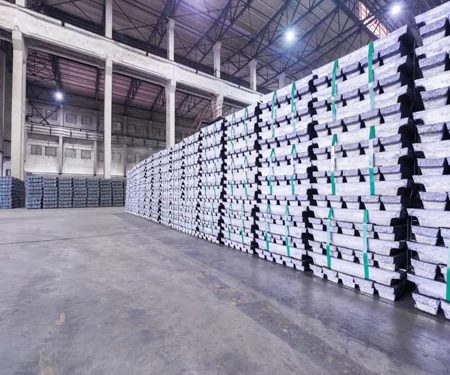
Stock image for referential purposes only
Given the ongoing Middle East conflict, it is creating a strain on the global aluminium supplies, a metal considered vital, especially for everything from fighter jets and soda cans to clean energy technologies like solar panels and electric vehicles. After Iran's attack on two aluminium smelters in the Gulf and the extended blockade of the Strait of Hormuz, production has further come into disarray and has pushed the prices further high, indicating a possible aluminium crisis globally.
The US is now planning to develop a major new smelter, which will be designed in a way that will aid in shielding the country from any potential global disruptions in the future. However, the timeline of this project, whose investment is worth USD 4 billion, highly depends on securing a long-term power contract, which is something that the developers have been working on for almost a year now.
Emirates Global Aluminium (EGA), back in May 2025, revealed that it has the intention of setting up a new smelter in Oklahoma, a state which is deemed to be rich in renewable energy, like wind, solar and natural gas.
Additionally, earlier this year, Century Aluminum, which is based in Chicago, announced its partnership with EGA for conducting the project and set the plant up via a joint venture, which is known as Oklahoma Primary Aluminium, which is expected to produce up to 750 thousand tonnes annually.
This new smelter will mark the first energy-intensive facility that will be built in the US since 1980. It is projected that the facility will be able to double the country’s primary aluminium production capacity. The companies have stated that construction is likely to kick off in late 2026, with production aimed for the end of the decade.
Ryan Plotkin, an Oklahoma-based manufacturing executive who helped lure the smelter to the state, wrote in a Tulsa World opinion piece this week, "Finalising the power agreement is the next critical step. Oklahoma was chosen because of our resources and reliability. Now we must follow through."
The smelter is expected to use over 11 terawatt-hours of electricity to turn raw materials into aluminium, which is the same amount of power that cities like Boston or Nashville consume in a year, according to a report from the Aluminium Association. To meet this electricity need, Oklahoma Primary Aluminium has been working on a competitive agreement with Public Service Company of Oklahoma, a subsidiary of the major utility AEP. The project is set to gain significant financial incentives from the state of Oklahoma, including power discounts and a USD 500 million grant from the US Department of Energy.
The project director for Oklahoma Primary Aluminium, Ziad Fares, told Canary Media, "Negotiations are ongoing and remain aligned with our original timeline."
He further added that, "The project will source power from the grid, and its energy mix will evolve based on decarbonisation goals, market conditions and demand for low-carbon aluminium.” This adds to the decisions about expanding electricity capacity in order to meet the smelter’s demand, either via gas, wind, or solar, which will be made by the utility.
Don’t miss out- Buyers are looking for your products on our B2B platform
A spokesperson for Public Service Company of Oklahoma didn’t directly address the contract talks but said that the utility “works closely with large prospective customers early in the planning process to ensure safe, reliable, and cost-effective electric service.”
The US smelting industry is deemed to have witnessed a drop in the recent decade as the electricity for industrial purposes rose, and from 33 facilities in 1980 to just 4 operating plants at the current time.
Producers are still grappling with the ongoing struggle to secure affordable, long-term power contracts. This challenge has only intensified due to increasing competition from data centres and the growing demand for electrified transport and buildings, all vying for a share of the nation’s limited power supply.
Charles Johnson, president and CEO of the Aluminium Association, said on an April 23 press call, "There’s a future in which American manufacturing in general will have more competition from other sectors for the energy that we need to be successful."
Considering the changing market dynamics, Century Aluminum sold an idle smelter in Kentucky to a data centre company that plans to make use of the existing grid capacity at the site.
Must read: Key industry individuals share their thoughts on the trending topics
At the same time, Alcoa Corporation is reportedly to conduct the sale of its closed smelter in New York to a bitcoin mining firm, as part of a larger strategy to offload ten facilities that are either closed or curtailed to the tech sector.
Over the past year, the Trump administration has been working to reverse the decline in the country’s aluminium sector by imposing hefty tariffs on imported metals. While these measures might help boost margins for some domestic primary producers, the fundamental energy challenges that smelters face remain.
Moreover, the current policies have made it difficult to implement some of the quickest and most cost-effective solutions for expanding grid capacity, like utility-scale wind and solar projects.
At present, the members of the Aluminium Association have been able to adapt to rising commodity prices and ongoing supply chain issues that have arisen following the escalation of conflict between the US and Israel with Iran in late February.
Iran subsequently targeted two major smelters in the Middle East: Emirates Global Aluminium’s Al Taweelah facility in Abu Dhabi and Aluminium Bahrain’s smelter. The Gulf region accounts for about one-fifth of the primary and alloyed aluminium imports into the United States.
Check out the forecast of the global bauxite and alumina market till 2036, book the report “Global Bauxite & Alumina Market Forecast to 2036: Supply–Demand, Trade Flows & Price Outlook”
However, Johnson warned that “We do think that as the conflict drags on and the strait stays closed, that the impacts on our supply chains could be more profound.”
Despite its size, the planned smelter in Oklahoma will only meet a fraction of the US demand for primary aluminium, which is nearly 5 million tonnes per year, which is nearly four times the combined capacity of both new and existing smelters.
To reduce reliance on imports, multiple additional smelters will need to be developed, a goal that seems unlikely to be reached without federal policies that support more affordable and reliable electricity.
Trading aluminium across borders? Find out the exact cost you need to bear for the embedded carbon in the product by using this CBAM calculator.
_0_0.png)
Norsk Hydro’s Q1’26: Mixed alumina financials; strong ops in aluminium and recycling
Next articleASI certifies Henan Mingtai Al. Industrial Co., Ltd., against Performance Standard V3.1
Grow with
AL Circle